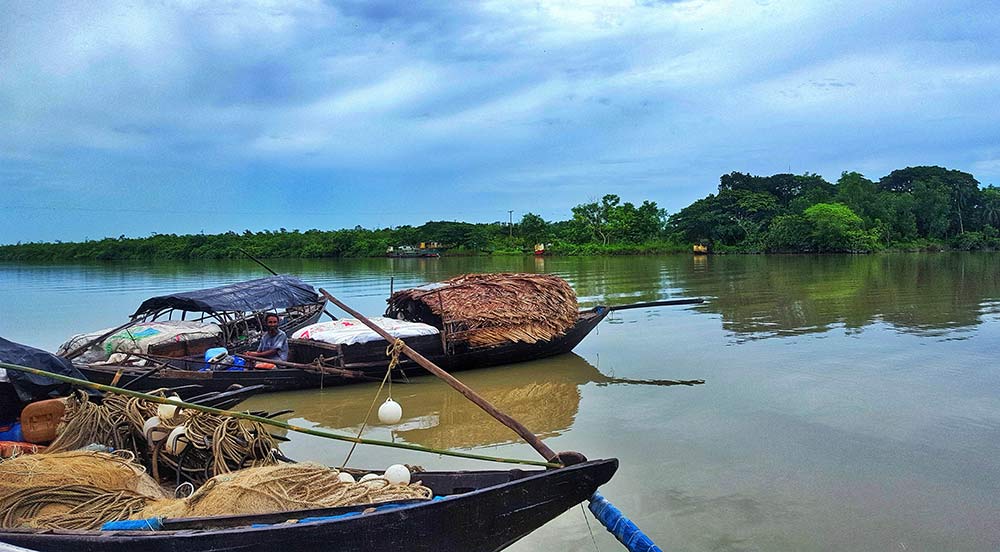
FAKIRHAT, BAGERHAT, Dec 31: The Sundarban, the world's largest mangrove forest, sees hundreds of thousands of fishermen, woodcutters, and honey collectors enter its depth every year in search of livelihood. Yet, despite this constant human presence, there is no permanent hospital within the forest. From minor illnesses to life-threatening injuries caused by tigers, crocodiles, or venomous snakes, forest-dwellers remain perilously exposed. Many lose their lives simply because medical care is out of reach.
According to sources at the Forest Department, a proposal was sent to the Ministry of Environment and Forests in February 2010 to establish two floating hospitals in the eastern and western divisions of the Sundarban. Fifteen years have passed, but the project has seen no visible progress.
Forest-dependent communities enter the eastern and western ranges seasonally. From October to February, thousands flock to collect and dry fish. Between April and July, it is the season for hilsa, honey, and wax. At other times, people harvest golpata, garan, and other forest resources.
During these months, scarcity of safe drinking water, absence of medical facilities, and attacks by wild animals are daily realities. Forest dwellers say that if someone falls seriously ill or suffers an accident, there is no system for immediate treatment.
According to the forest department, the nearest government hospitals are in Mongla and Sharankhola-about 90 km and 70 km away from Dublar Char respectively. For anyone injured deep inside the forest, it takes at least 14 to 15 hours by trawler or boat to reach these hospitals. Many die on the way.
Snakebite victims face even greater odds. Even if they reach Mongla or Sharankhola, anti-venom is not available there.
Patients must then travel another 60 to 70 km to Bagerhat Sadar Hospital. As a result, most snakebite victims cannot be saved.
Interviews with fishermen, honey collectors, and forest guards reveal that in areas like Meher Ali's Char, Alor Kol, Office Killa, Majher Killa, Shelar Char, Narikelbaria, Ambaria, Manikkhali, and Kokilmoni, there are five to six pharmacies. But none have doctors.
"Beyond fever or diarrhoea medicine, nothing is available," one forest dweller said. "If someone is gravely ill or loses a limb, we have no option but to pray to God."
Abul Hossain, President of the Sharankhola Fishermen and Owners Association, said: "Hundreds of thousands of people work in the Sundarban year-round. Yet there is no government arrangement for their healthcare. We heard about hospitals long ago, but nothing has been implemented."
Kamal Uddin Ahmed, General Secretary of Dublar Fisherman Group, added: "Forest dwellers contribute the most to Sundarban revenue. Ensuring their healthcare is a basic responsibility of the government. But the demand for hospitals remains ignored." Tourism is also affected. Rasel Ahmed, proprietor of Mangrove View Bangladesh, said: "Local and foreign tourists fall sick in the Sundarban, but there are no doctors. This is a major obstacle for tourism."
It is not only forest dwellers. Forest guards protecting the Sundarban also suffer the same crisis. In the eastern division's Sharankhola and Chandpai ranges, 243,000 hectares of forest are guarded by 31 unit offices. None of the staff have access to medical facilities.
Azad Kabir, Officer-In-Charge of the Karamjal Wildlife and Crocodile Breeding Centre said, "We work under constant risk from tigers, crocodiles, and venomous snakes. If someone is injured, it takes 14-15 hours by boat to reach a locality. Rescue boats and floating hospitals would benefit everyone."
Sharankhola Range Assistant Conservator of Forests Rana Deb said, "Ensuring healthcare for forest dwellers and guards is a major challenge. Sudden illness or injury often makes rescue impossible. Bad weather and the forest's remoteness make it even harder."
Rezaual Karim Chowdhury, Divisional Forest Officer of the eastern Sundarban said, "Hospitals are essential for both forest dwellers and guards. Under the Sundarban Protection Project, a specialist doctor visits Sharankhola and Chandpai ranges twice a month. But this is not enough. A project has been taken to establish two seasonal floating hospitals in the eastern and western divisions. With funding from the World Health Organization and the government, we hope to implement it by 2028."
Yet forest dwellers remain sceptical. Based on long experience, they fear these assurances may never materialise. They point out that every year; the Sundarban generates crores in government revenue. Their demand is simple: healthcare must be treated as a priority.
Published by the Editor on behalf of the Observer Ltd. from Globe Printers, 24/A, New Eskaton Road, Ramna, Dhaka.
Editorial, News and Commercial Offices : Aziz Bhaban (2nd floor), 93, Motijheel C/A, Dhaka-1000. Phone: PABX- 41053001-06; Online: 41053014; Advertisement: 41053012.
E-mail: district@dailyobserverbd.com, news@dailyobserverbd.com, advertisement@dailyobserverbd.com, For Online Edition: mailobserverbd@gmail.com