The interim government has granted policy approval to two major ordinances aimed at eradicating sexual harassment and domestic violence across the country.
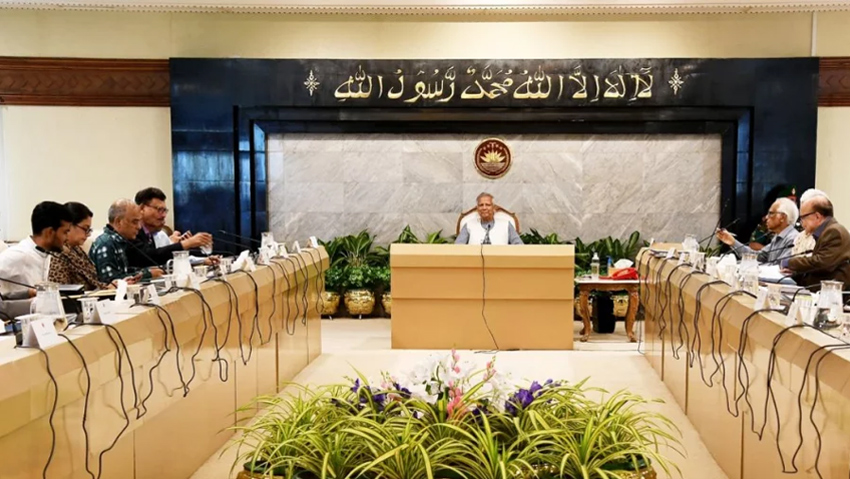
Chaired by Chief Adviser Professor Muhammad Yunus, the advisory council approved a total of six ordinances and several policy proposals during its weekly meeting on Thursday, to institutionalise gender-based protections and survivor-centric justice.
The Prevention of Sexual Harassment at Workplaces and Educational Institutions Ordinance 2026 introduces an expansive definition of harassment that includes physical, verbal, and non-verbal misconduct, as well as digital and online abuse.
Under this new legal framework, unwanted or insulting gender-based activities conducted via social media, email, and messaging platforms are explicitly categorized as offenses. To ensure enforcement, the ordinance mandates that all workplaces and educational institutions establish internal complaint committees within a strictly defined timeframe. These committees are empowered to receive complaints, conduct investigations, ensure the protection of survivors, and recommend appropriate disciplinary actions.
In a bid to prioritize the safety and dignity of victims, the government has adopted a survivor-centric approach that strictly prohibits any form of retaliatory behavior against those filing complaints. For the informal sector where internal committees may not be feasible, the ordinance provides for the formation of local committees led by District Collectors and Upazila Nirbahi Officers.
Furthermore, the government has moved to establish a special fund to provide survivors with financial assistance, rehabilitation, counseling, and legal aid, while also including provisions to prevent the misuse of the law through false allegations.
Simultaneously, the Prevention of Domestic Violence Ordinance 2026 was approved to address physical, mental, sexual, and economic abuse within domestic settings. This comprehensive ordinance, consisting of seven chapters and 33 sections, guarantees victims the right to shelter, medical care, and emergency security measures. It empowers courts to issue temporary protection orders to limit a perpetrator's access to the victim during an ongoing investigation. To ensure swift justice, the ordinance mandates that preliminary investigations must begin within seven days of a formal complaint, with a full report submitted within 30 days.
Beyond these social reforms, the advisory council also approved several other legislative measures, including the National Sports Council (Amendment) Ordinance, the Bangladesh Animal and Animal Product Quarantine Ordinance, and new development authority ordinances for the Narayanganj and Cumilla regions.