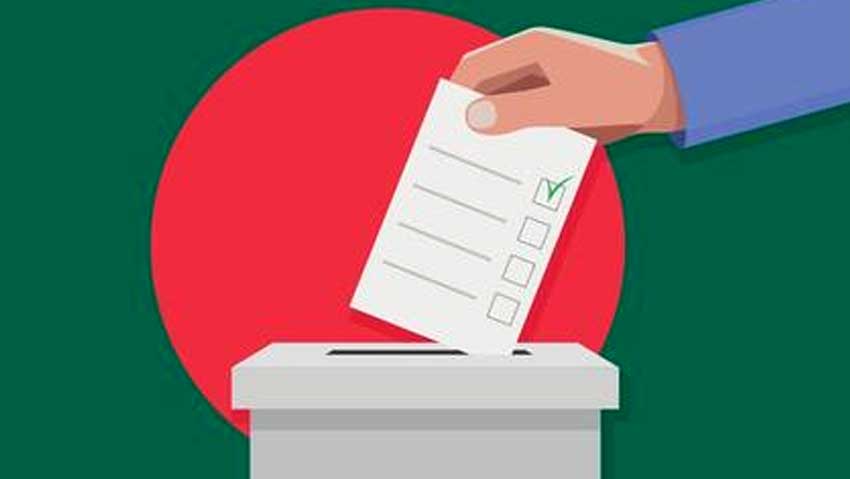
The national parliamentary election is scheduled to be held on February 12. After a long period, Bangladesh once again stands at a crucial political juncture. It can be said that the entire country has now boarded the election train. From city alleys to remote villages, election-related discussions are everywhere. Tea stalls, bus terminals, social media, television talk shows; everywhere there is only one topic: voting and the future of Bangladesh. Political parties and alliances have also launched vigorous campaigns in line with this reality. Major political leaders, including BNP Chairperson Tarique Rahman and Jamaat-e-Islami Ameer Dr. Shafiqur Rahman, are joining the campaigns either directly or virtually. At the grassroots level, leaders and activists are showing intense enthusiasm and widespread excitement. After a long period of stifled political atmosphere, this vibrancy has emerged as a new message of hope for many.
Many observers are saying that such a festive and competitive election has not been seen since 2008. After nearly 17 years, the country seems to have returned to a genuine electoral atmosphere. This election, therefore, is not merely about a change of power; it is also a major test for Bangladesh’s democratic journey. Following the end of Sheikh Hasina’s prolonged authoritarian rule, a clear dream of building a new country has emerged among the general people. Citizens are not only seeking a change of government; they want a transformation in the way the state is governed. Reform of political culture, administrative accountability, the rule of law, and freedom of expression have all come to the center of election-related discussions this time.
Amid this reality, the most important question that arises is whether this election will be completed peacefully. Bangladesh’s political history teaches us that elections often carry the risk of violence. In the past, we have witnessed various incidents ranging from occupation of polling centers and tearing of posters to bloody clashes. Often, such violence does not remain confined to political activists alone; ordinary people also become its victims. Carrying the burden of these past experiences, the country is once again moving toward a national election.

In the current context, there is no moral or political justification for violence. Rather, violence at this time would cast serious doubt on the entire electoral process. Especially in this election, significant changes are being observed in the configuration of political forces. Jamaat-e-Islami appears to be in what may be its strongest position in its political history. It is now in direct competition with its former political ally, the BNP. In a democracy, competition is natural and even essential. But if this competition turns into conflict and violence, the consequences will be disastrous. In that case, beyond calculations of victory and defeat, the entire nation will suffer.
Elections inevitably involve cycles of victory and defeat; this is a natural rule of politics. Unfortunately, however, the practice of accepting defeat gracefully remains weak in our political culture. Often, defeat is viewed as the end of political existence. This mindset is where violence originates. Yet the beauty of democracy lies precisely here: the party that loses today may win tomorrow. Power should come and go through the ballot, not through sticks or fire.
The impact of violence is not limited to election day alone. In the long term, it shakes the very foundations of the state. Violent elections damage the country’s image on the international stage. They create reluctance among foreign investors and negatively affect diplomatic relations. The greatest damage, however, is done to public trust in democracy. For a person who is afraid to go out to vote, or a parent who feels anxious about sending a child to school, both democracy and schooling become empty words.
In this situation, the responsibility of political leadership is paramount. The statements, language, and behavior of top leaders directly influence grassroots leaders and activists. Provocative rhetoric, portraying opponents as enemies, or using the language of revenge can make the situation far more dangerous. Responsible politics does not mean merely seeking votes; it also involves practicing tolerance, restraining supporters, and setting examples of adherence to the law.
At the same time, the neutrality of the administration and law enforcement agencies is extremely important for the success of this election. In the past, allegations of bias have fueled electoral violence. If the administration can maintain a professional and neutral role this time, the risk of violence will be significantly reduced. The firmness of the Election Commission, prompt decision-making, and transparent actions can help restore public confidence.
The role of the media is also undeniable in this regard. Responsible journalism can help reduce tensions, while exaggerated or rumor-based reporting can push the situation toward explosion. Misinformation spreading through social media has become a major threat during this period. Therefore, the combined responsibility of the media and conscious citizens is to adopt a truthful and fact-based stance.
Finally, it must be said that this election is not only about political parties; it is tied to the future of the entire nation. If violence occurs, everyone will suffer—both winners and losers. At this critical moment in history, we must prove that we have embarked on the path of democracy and matured within it. We want to demonstrate that Bangladesh is capable of changing power peacefully. Therefore, the truth that violence in elections is never desirable should not remain confined to words alone; it must be transformed into a national commitment.