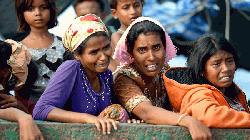
The government of Bangladesh on Friday strongly rejected Myanmar’s recent submissions to the International Court of Justice (ICJ), in which they portrayed Rohingyas as “Bengalis” distorts history, undermines their identity,and attempt to justify the atrocities committed against them during 2016–17 violence.
In a statement issued by the foreign ministry, Dhaka called on Myanmar and authorities in Rakhine to recognize the Rohingya as an integral part of Myanmar society and state, and to create conditions for their safe and dignified return with full rights.
Bangladesh said Myanmar’s framing of the Rohingya as illegal migrants is part of a false narrative portraying them as internal security threats, meant to divert attention from the crimes committed against the community.
The Rohingya, Bangladesh stressed, are a distinct ethnic group with historical roots in Arakan dating back long before modern borders or incorporation into the Barman Kingdom in 1785. Their presence is well-documented in historical records, colonial censuses and independent research.
The statement noted that the term “Rohingya” evolved historically from the old Arakan capital, Mro-Haung (Rohang) and became the community’s self-identifier amid systematic marginalization in Myanmar. Attempts to label them as foreigners contradict historical evidence.
Bangladesh highlighted that the Rohingya were active participants in Myanmar’s political and social life until the 1982 Citizenship Law stripped them of citizenship.
They retained voting rights until fully disenfranchised in the 2015 general elections. Myanmar’s sustained denial of constitutional guarantees culminated in the mass evictions of 2016–17, rendering the Rohingya stateless in what Bangladesh calls a planned effort to destroy the community.
Referring to past agreements, Bangladesh emphasized that Myanmar had recognized the Rohingya as lawful residents in the 1978 bilateral repatriation accord and assured their reintegration in subsequent agreements. Yet, for over eight years, Myanmar has failed to create a safe and enabling environment in Rakhine for voluntary returns, violating the 2017–18 arrangements and signalling an intent to permanently marginalize the community.
The foreign ministry also recalled its protest on July 18, 2023 against Myanmar’s baseless claim that half a million Bangladeshis sought refuge in Rakhine during Bangladesh’s 1971 Liberation War, noting a complete lack of supporting evidence.
Bangladesh concluded that the systematic labelling of the Rohingya as “Bengalis” not only denies their right to self-identify but has been used to justify persecution, exclusion and ethnic cleansing, calling for immediate action to ensure their safe return and protection.
SH