



| HEADLINE |

|
Pramatha Chaudhury and his legacy
Published : Wednesday, 9 August, 2017 at 12:00 AM
Eduvista Desk


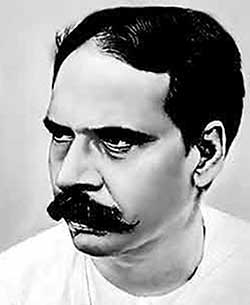 *** Pramatha Chaudhury, famous Bengali writer and criticist, was born on 7 August 1868 in Jessore . He is a pioneer in using regular Bengali language in his writings rather than using Sanskrit Bengali (Chalita Bhasa). ***
Pramatha Chaudhury (1868-1946) litterateur, essayist, and one of the architects of Chalita Bhasa, was born on 7 August 1868 in Jessore, son of Durgadas Chowdhury. His parental home was at Haripur in pabna. He passed the Entrance examination from Calcutta Hare School and FA from St. Xaviers' College. He stood first class first both in BA (1889) honours in Philosophy and MA (1891) in English. He was also fluent in French. He went to England (1893) to study for the Bar. After becoming a barrister he returned home and joined the Calcutta High Court. He married Indira Devi Chowdhurani (1891), a daughter of Satyendranath Tagore.
Pramatha Chowdhury served variously as lecturer at Law College, manager of the Tagore Estate and the Dakshineshwar Devottar Estate, but he was more interested in literary pursuits, either editing and publishing journals or writing. He edited and published the monthly journal Sabujpatra, which introduced and popularised chalita prose, and promoted a host of writers, including Rabindranath Tagore. Many satirical essays of Pramatha Chowdhury, under the pseudonym 'Birbal', were also published in this journal. He also edited other journals such as the Vi�va-Bharati (quarterly) and Alaka (monthly).
He was vice president (1938-39) of the Vangiya Sahitya Parishad and president of the All-India Bangiya Sahitya Sammelon in Delhi (1926) and the Krishvanagar Babgiya Sahtiya Sammelon. Apart from essays, he also wrote poems and short stories. Among his books are Tel Nun Lakdi (essays, 1906), Sonnet Pavchashat (poems, 1913), Char Yeari Katha (short stories, 1916), Birbaler Halkhata (essays, 1917), Nana Katha (essays, 1919), Padacharan (1919), Ahuti (short stories, 1919), Amader Shiksa (essays, 1920), Birbaler Tippani (essays, 1921), Rayater Katha (essays, 1926), Pramatha Chowdhurir Granthavali (1930), Nana Charcha (essays, 1932), Nila Lohit (short stories, 1341), Nil Lohiter Adi Prem (short stories, 1341), Ghare Baire (essays, 1936), Prachin Hindustan (essays, 1939), Galpa Sanggraha (1941), Atmakatha (1946), The Story of Bengali Literature (1946), Tales of Four Friends (with Indira Devi, 1944).
Pramatha Chowdhury was awarded the Jagattarini Gold Medal (1938) by Calcutta University. Pramatha Chowdhury died on 2 September 1946.
Quotes on Bengali language
1. �Bengali language can be revitalized only if our writers avoid the tendency to make it sweet and sonorous. What they should do, instead, is to make it lively and living.� (Malat Samalochana or Jacket Criticism, 1912)
2. �I love the Bengali language and admire Sanskrit too. But admiration does not necessarily mean blind adherence - at least I do not belong to that school of thought. My writing pulsates with life only when its language is the way I speak it. I will therefore advocate uniformity between the written and the spoken word - disharmony I hate most� We should go all out to whet our language, unloading all unnecessary burdens. I agree to the incorporation of such expressions s must be incorporated, provided one can appropriately adjust them to one's own style. But thus far and no further. No begging or borrowing either of words or of ideas.� (Kathar Katha, 1902)
3. �It is an irony indeed that the more removed words are from the spoken, the more egoistic our writers become. That paradox has to be removed altogether.� (Banga Bhasha banam Babu Bangla orfe Sadhu Bhasha, 1912)
4. �French Literature is absolutely homogeneous. The genius of the French language, descended from a single stock, has triumphed most - in simplicity, in unity, in clarity, and in restraint.� (Sadhu Bhasha banam Chalit Bhasha, 1912)
Loading...
Loading...
Also read



Editor : Iqbal Sobhan Chowdhury
Published by the Editor on behalf of the Observer Ltd. from Globe Printers, 24/A, New Eskaton Road, Ramna, Dhaka.
Editorial, News and Commercial Offices : Aziz Bhaban (2nd floor), 93, Motijheel C/A, Dhaka-1000.
Phone: PABX- 41053001-06; Advertisement: 41053012; 01793317829, 01550707291, 01550707296
E-mail: [email protected], [email protected]. [email protected], [email protected], [email protected], [email protected], Online-email: [email protected]


