



| HEADLINE |

|

Netanyahu agrees to let Gadi Eisenkot become Israel’s PM
Published : Sunday, 29 November, 2026 at 8:15 AM
Observer Online Report


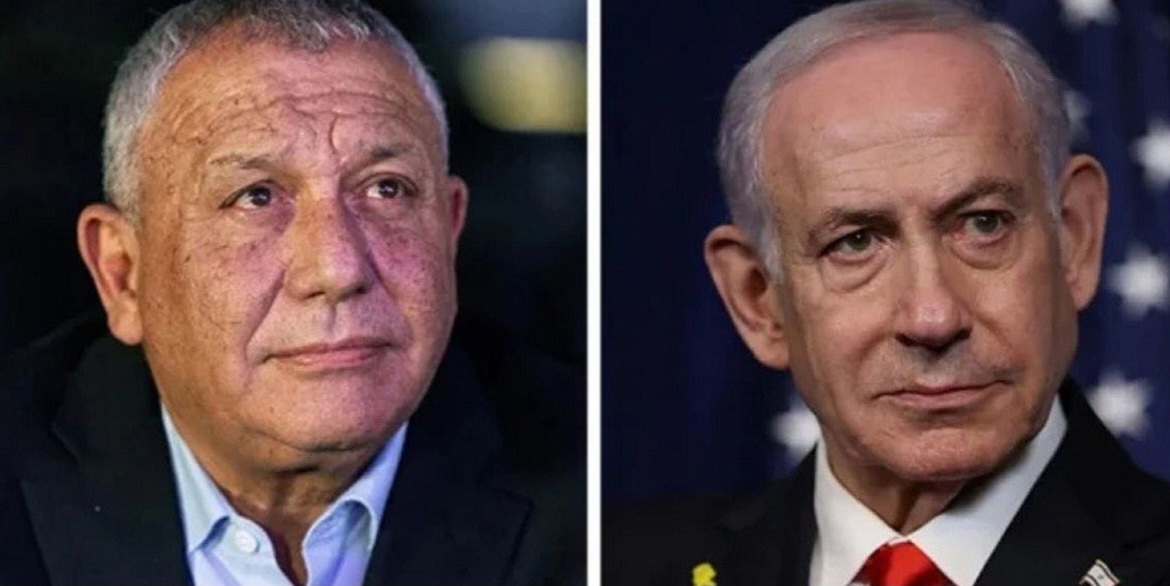
Israeli caretaker Prime Minister Benjamin Netanyahu has announced a major concession to break the country's prolonged political deadlock. He has agreed to allow his rival and opposition leader, Gadi Eisenkot, to serve as prime minister first under a proposed rotating national unity government.
In a social media post on Saturday, Netanyahu outlined the proposal. He said his responsibility as a leader compelled him to set aside everything, including the interests of the largest party. He also said he would serve as an “alternate prime minister” during the government's first term.
Earlier this month, Israeli President Isaac Herzog tasked Eisenkot with forming a new government within 28 days. Following Netanyahu's proposal, Eisenkot quickly responded by inviting the caretaker prime minister to hold “sincere and rapid negotiations”.
Earlier on Friday, Eisenkot accused the Likud Party of deliberately delaying negotiations, claiming that it had failed to present any concrete proposal over the previous two weeks. He also questioned whether the party was genuinely committed to the negotiations. Netanyahu's proposal came just hours after those allegations.
The dramatic political development came shortly after Eisenkot accused Netanyahu's right-wing Likud Party on Friday of deliberately delaying coalition negotiations ahead of the December 6 deadline for forming a government.
In the election held last October, no alliance secured a majority in Israel's 120-seat parliament, the Knesset. Eisenkot's centrist Yashar Party, along with three other Jewish opposition parties, won a combined 48 seats. Netanyahu's coalition secured 53 seats. A week after the election, President Herzog gave former army chief Eisenkot the first opportunity to form a government following consultations with all political parties.
No political party in Israel's history has secured an outright parliamentary majority, making coalition governments a regular feature of its political system. Between 2019 and 2022, during one of the most turbulent periods in Israeli politics, a lack of cooperation between Netanyahu and his rivals led to five separate elections.
Source: BBC
MT

Loading...
Loading...
Also read







Editor : Iqbal Sobhan Chowdhury
Published by the Editor on behalf of the Observer Ltd. from Globe Printers, 24/A, New Eskaton Road, Ramna, Dhaka.
Editorial, News and Commercial Offices : Aziz Bhaban (2nd floor), 93, Motijheel C/A, Dhaka-1000.
Phone: PABX- 41053001-06; Advertisement: 41053012; 01793317829, 01550707291, 01550707296
E-mail: [email protected], [email protected]. [email protected], [email protected], [email protected], [email protected], Online-email: [email protected]


