



| HEADLINE |

|

BNP weighs 'punitive' strategy in Gopalganj, eyes 4 more districts
Published : Friday, 27 November, 2026 at 10:19 AM
Observer Online Report



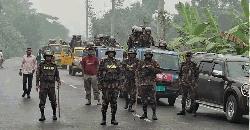
Symbolic Photo
Central leaders of the Bangladesh Nationalist Party (BNP) have discussed a strategy of leaving damaged government installations in Gopalganj unrepaired for now following recent violence and vandalism by the banned Awami League and its affiliated bodies.
Keeping the damaged structures in their current state, suspending train services, and temporarily halting development projects and government allocations also came up during party discussions, with participating leaders viewing these measures as a form of "punitive" political strategy.
Meanwhile, BNP leaders consider neighbouring Madaripur and Shariatpur districts potential political risk zones after the Gopalganj unrest. They favoured a policy of patience and democratic conduct rather than force in those districts alongside Faridpur and Rajbari, while discussing identifying those involved in the Gopalganj violence through technology to bring them to justice.
These issues were discussed at a meeting between central leaders and senior BNP and affiliate leaders as well as lawmakers from the Faridpur organisational division at the party's Nayapaltan central office on Thursday, according to multiple meeting sources.
Presided over by BNP Acting Secretary General and Prime Minister's Adviser Ruhul Kabir Rizvi, the meeting was attended by Standing Committee member and Home Minister Salahuddin Ahmed, Standing Committee member and Parliamentary Standing Committee on Information and Broadcasting Ministry Chairman Amanullah Aman, Water Resources Minister and Joint Secretary General Shahiduddin Chowdhury Anee, Publicity Secretary and State Minister for Livestock Sultan Salauddin Tuku, Whip Mia Nuruddin Ahmed Apu, Rakibul Islam Bakul, Assistant Organising Secretary Khondaker Mashukur Rahman Mashuk, Gopalganj-1 MP Selimuzzaman Molla, Gopalganj-2 MP KM Babar Ali, and Gopalganj District BNP Convener Sharif Rafiquzzaman, among others.
With the banned Awami League announcing several programmes for late November and December—alongside death-row convict and party president Sheikh Hasina's declaration to return on December 16 in connection with cases over crimes against humanity during the July uprising—BNP leaders fear fresh violence from party activists and supporters.
Apprehending that government establishments would be primary targets if unrest resurfaces, party discussions emphasised not starting repair work on damaged public properties in Gopalganj, including torched police station buildings, for the time being. Leaders also opined in favour of leaving the structures as they are, keeping rail services suspended, and putting development work and state allocations on hold.
BNP leaders noted at the meeting that torched police stations and other government installations are state property whose beneficiaries were ordinary residents of Gopalganj, making it natural for local citizens to be deprived of civic services after such incidents. However, leaders stressed that these steps are temporary and that civic services and development activities will resume once normalcy returns.
Alongside Gopalganj, the meeting reviewed the political situation in Madaripur and Shariatpur, as BNP leaders believe fallout from the Gopalganj unrest could spill into the two neighbouring districts. They are also keeping the situation in Faridpur and Rajbari under watch.
Leaders stated that law enforcement agencies must exercise patience in handling the situation in these areas, demonstrating democratic conduct and tolerance rather than using force—an approach also cited for the Gopalganj unrest. At the same time, they expressed a firm stance on bringing perpetrators of the violence to book, noting that efforts to identify them using technology have already begun.
A responsible BNP leader present at the meeting said Gopalganj, Madaripur, Shariatpur, and Faridpur have long been known as Awami League strongholds, though the BNP believes at least 20 per cent of voters in these areas backed the party in the last national election.
He added that repression must be avoided even if untoward incidents occur in the future, expressing confidence that Awami League activists and supporters will eventually realise their mistakes, step back from violence, and some may even gravitate toward the BNP over time.
The BNP central leadership instructed leaders and activists of the Faridpur organisational division to remain active on the ground with various programmes throughout December, the Month of Victory, while ensuring all events are held peacefully.
Central leaders also directed local representatives to step up organisational activities and play a cautious, responsible role in navigating the political situation.
-SA

Loading...
Loading...
Also read








Editor : Iqbal Sobhan Chowdhury
Published by the Editor on behalf of the Observer Ltd. from Globe Printers, 24/A, New Eskaton Road, Ramna, Dhaka.
Editorial, News and Commercial Offices : Aziz Bhaban (2nd floor), 93, Motijheel C/A, Dhaka-1000.
Phone: PABX- 41053001-06; Advertisement: 41053012; 01793317829, 01550707291, 01550707296
E-mail: [email protected], [email protected]. [email protected], [email protected], [email protected], [email protected], Online-email: [email protected]


