



| HEADLINE |

|

Burkina Faso launches state-funded academy
Published : Tuesday, 24 November, 2026 at 7:05 PM
Observer Online Report


Collected Photo
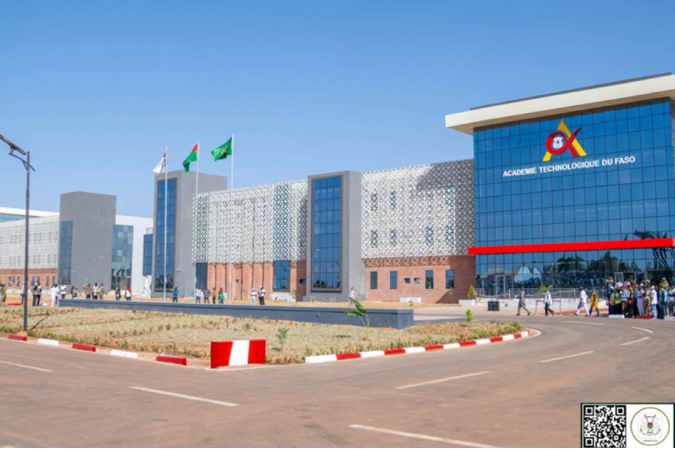
Burkinabe President Captain Ibrahim Traore on Monday (November 23) inaugurated the Académie Technologique du Faso (ATF), a sprawling 60-hectare state-funded university complex in Pabre on the outskirts of Ouagadougou designed to train engineers in strategic sectors including mining, metallurgy, nuclear science, and aeronautics.
Funded through the state budget at an investment exceeding 37.3 billion CFA francs (approximately €57 million), the new high-level hub for scientific and technical education completed its first phase of construction in less than a year following its launch in December 2025, authorities said during the ceremony. The facility aims to bolster national capacity for training engineers and technical professionals in fields deemed priorities for Burkina Faso's economic development and technological sovereignty.
An inaugural cohort of 250 high school graduates, drawn from scientific and technical academic tracks across various regions of the country, will begin a two-year preparatory programme at the academy. Following this core curriculum, students will be directed into specializations spanning nuclear engineering, telecommunications, computer science, digital engineering, chemistry, aeronautics, metallurgy, mining, electrical energy, civil engineering, and cybersecurity.
Addressing the ceremony, Traore urged students to cultivate their capacity for innovation and design technologies tailored to national needs. "The day you produce your first engines I will be proud. The day you present your first turboprop engines to me, I will be proud," he said, while also raising the prospect of future engineers designing aircraft specifically for the surveillance and defence of national territory.
According to the Burkinabe president, the academy is intended to reduce the country's technological dependence, noting that Burkina Faso still imports a large share of the equipment used across its health, transport, agriculture, and defence sectors. Emphasizing three core requirements for students, creative ingenuity, boldness, and discipline, he assured that the institution's laboratories will be equipped gradually, acknowledging that specialized scientific equipment requires substantial investment. He also noted that more than 1,000 Burkinabe and foreign educators have already applied to teach at the academy.
Speaking on behalf of the inaugural class, a student representative thanked the people of Burkina Faso, recognizing that the establishment of the academy was made possible through the sacrifices of taxpayers and the security forces defending the nation. "We will take our training seriously, and we will take good care of this campus," he pledged.
Through the launch of the ATF, Burkinabe authorities are signalling their ambition to build homegrown expertise in strategic technological disciplines—such as mining and metallurgy—with the goal of progressively strengthening the nation's scientific and industrial capabilities.
-EM

Loading...
Loading...
Also read



Editor : Iqbal Sobhan Chowdhury
Published by the Editor on behalf of the Observer Ltd. from Globe Printers, 24/A, New Eskaton Road, Ramna, Dhaka.
Editorial, News and Commercial Offices : Aziz Bhaban (2nd floor), 93, Motijheel C/A, Dhaka-1000.
Phone: PABX- 41053001-06; Advertisement: 41053012; 01793317829, 01550707291, 01550707296
E-mail: [email protected], [email protected]. [email protected], [email protected], [email protected], [email protected], Online-email: [email protected]


