In the earliest
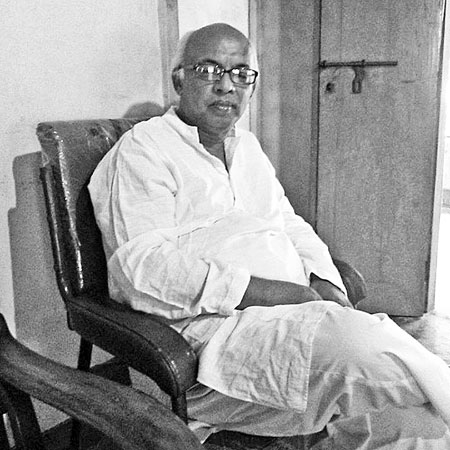
stages of a free Bangladesh, Tajuddin Ahmad made his views on the World
Bank publicly known. The new country, having emerged to freedom through a
tortuous War of Liberation, needed to find the way to the future on its
own. That was Tajuddin's conviction. On a visit to Delhi for a
conference in February 1972, as Bangladesh's finance minister and having
been the nation's wartime prime minister, Tajuddin Ahmad was unwilling
to meet Robert McNamara, the president of the World Bank who also
happened to be there. It was Tajuddin's view that since McNamara had
been a leading architect of American prosecution of the Vietnam War, it
was inconceivable that Bangladesh should have any dealings with him. On a
more fundamental assessment, he believed that since socialism was one
of the four principles, enunciated in the countries constitution at the
behest of the Father of the Nation Bangabandhu Sheikh Mujibur Rahman,
underpinning the People's Republic of Bangladesh, the new country
would need to chart its distinctive path to social and economic
progress.
But that was not to be. By October 1974, Tajuddin Ahmad
found himself in Washington seeking a meeting with Robert McNamara. In
dire economic straits, Bangladesh was in need of World Bank assistance.
It became part of the global lending agency's operational system. In the
past forty two years, the World Bank has been, to use the euphemism,
been an active development partner in Bangladesh's endeavours toward
social progress. There have been all the happy prospects of cooperation,
the prospects often being translated into reality. And then, of course,
there have been the hiccups too. The uproar caused by the Bank's
decision a few years ago to suspend promised aid to Bangladesh for the
construction of the Padma Bridge, on grounds of allegations relating to a
conspiracy involving bribery on the part of certain individuals in
highly placed positions in the Bangladesh administration.
No degree
of protest or denial by the Bangladesh government, from the prime
minister to the finance minister to indeed anyone who mattered, could
convince the WB authorities that the allegations were misplaced, were
false and that no corruption was involved in the Padma Bridge project.
The World Bank persisted in its stance, in the end leaving the
government with little choice other than showing Communications Minister
Syed Abul Hossain the door, sending Economic Affairs Advisor Mashiur
Rahman on leave and removing the secretary of the relevant ministry.
Meanwhile,
legal proceedings were initiated in Canada on the bribery allegations.
An entire Bangladesh government and indeed an entire nation, were left
coping with the embarrassment. Abroad, the allegations of corruption in
the Padma Bridge project made headlines. At home, loud voices were
raised from all corners, savaging the government over the alleged role
of its functionaries in the affair.
And then, a couple of weeks ago,
came the judgment of the Ontario Superior Court. Its findings were
simple. The whole case, noted Ian Nordheim, had been based on rumour and
gossip. With that pronouncement, the government and the people of
Bangladesh stood vindicated in their stand --- that there had been no
conspiracy, that all allegations of attempted bribery and perceived
corruption had been aimed at humiliating the country.
Responses to World Bank move on Padma Bridge
For
purposes of the record, of who said what when the allegations of the
World Bank surfaced, we present to our readers, to citizens concerned
about the state of the nation, a gist of the statements and sentiments
arising out of the corruption allegations raised by the World Bank over
the Padma Bridge project.
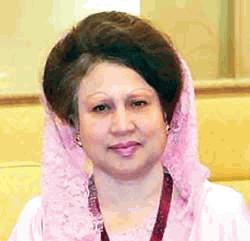
In the opinion of BNP chairperson and
former prime minister Khaleda Zia, the move by the World Bank was proof
of the 'corruption of Prime Minister Sheikh Hasina and her family
members.' Noting that it was for the first time since the emergence of
Bangladesh that the Bank had suspended funding for a development project
on corruption allegations, the BNP chief made it known that the fate of
the Padma Bridge project was uncertain for sure.
The BNP's secretary
general Mirza Fakhrul Islam Alamgir was not far behind his party chief
on the issue. In his comments on the resignation of Syed Abul Hossain
from the cabinet, he asserted that it 'proves corruption in the Padma
Bridge project. Mirza Alamgur was emphatic in his opinion that had the
minister resigned as soon as the WB came forward with its allegations,
funding for the Padma Bridge would not be cancelled. There were 'many
others', he said, involved in the affair and warned that 'if this
government does not investigate this, the BNP will do it once it comes
to power.'
Apart from the political opposition, the country's civil
society was pretty vocal in its view that corruption over the Padma
Bridge had indeed corroded the image of the country. Akbar Ali Khan, who
has served as an advisor in a caretaker government, made it clear that
in light of the corruption allegations, any lending agency in future
would be suspicious vis-?-vis corruption in Bangladesh in the matter of a
financing of new development projects. Khan noted that the resignation
of Minister Syed Abul Hossain had come too late, but he did believe that
if the resignation had been late in coming, the government was in a
position to exert some pressure on the World Bank (on the need for a
release of funds for the Padma Bridge).
In the opinion of Hafizuddin
Khan, another former advisor to a caretaker government, 'the incident
has tarnished the country's image and there might be a problem in
getting foreign aid in future if the government does not look into (the
allegations) seriously.' If the allegations were proved, said Hafizuddin
Khan, the government would need to conduct a thorough investigation and
hand out exemplary punishment to those involved.
Imtiaz Ahmed, a
leading commentator on strategic issues and a teacher in the Department
of International Relations of Dhaka University, stated that the WB's
allegations had created an image crisis for the country. If the
government did not take effective measures against corruption, he noted,
there would certainly be some impact on foreign aid coming into the
country.
Badiul Alam Majumdar, a leading light of the civil society
platform Shujon, was more emphatic in his assessment of the situation.
In his view, the WB's allegations were 'another example of corruption
pulling us behind and retarding the pace of national progress.' He
demanded that those involved in corruption in the Padma Bridge project
be properly punished.
In the opinion of ASM Shahjahan, another former
caretaker government advisor and former inspector general of police,
there was a need for the government and the World Bank to engage with
each other over the issue. 'The government,' said Shahjahan, 'should not
think of the World Bank as its rival. We should rather bear it in mind
that the relationship between the two parties does not get affected.'
Former
president AQM Badruddoza Chowdhury, chief of Bikalpadhara, was certain
that the resignation of Syed Abul Hossain was proof that the graft
allegations made by the World Bank had been correct. However, he did
express the hope that the 'World Bank will reconsider the cancellation
so that the bridge can be built without further delay.'
Jatiya
Samajtantrik Dal President Hasanul Haque Inu, now Minister for
Information, felt that Syed Abul Hossain's resignation was a belated one
and it would have been 'better for him and the nation if he had
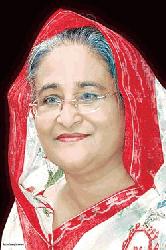
resigned earlier.' In his response to Prime Minister Sheikh Hasina's
praise of Abul Hossain as a patriot, Inu noted that only the people were
in a position to certify whether or not a political leader was a
patriot.
In his reaction to the minister's resignation, Manjurul
Ahsan Khan, President of the Communist Party of Bangladesh (CPB) thought
it would 'now be easier to probe the allegations of corruption.'
Iftekharuzzaman,
Executive Director of the anti-corruption watchdog Transparency
International Bangladesh (TIB), said the resignation of the minister
might end up as being too little and too late. 'It should have happened
several months ago when the World Bank brought the allegations of
corruption,' he stated. Urging the WB to consider reopening negotiations
with the Bangladesh government over the financing of the Padma Bridge
project, the TIB official added that the government needed to
demonstrate its commitment to handling corruption with a heavy hand.
Mahmudur
Rahman Manna, convenor of Nagorik Oikyo, was disturbed by the prime
minister's characterization of Syed Abul Hossain as a patriot and that
too while she was in London on a visit. If the former communications
minister possessed any courage, he would have submitted his resignation
when the corruption allegations were first laid at his door, said Manna.
The Nagorik Oikyo leader wondered why the prime minister did not
similarly describe Tanjim Ahmad Sohel Taj as a patriot when he quit the
government and followed it up by his resignation from parliament.
Abdul
Kader Siddiqui, chief of Bangladesh Krishak Sramik Janata League, in
his response to Prime Minister Sheikh Hasina's comments on Abul
Hossain's resignation, said that the people of Bangladesh had not
expected them from the head of government. 'Her comments', said
Siddiqui, 'show a lack of accountability in our democracy.'
In an
article in a newspaper, Ali Imam Majumdar, a former civil servant, was
critical of the Anti-Corruption Commission over its failure to
investigate the allegations made by the World Bank. Had the ACC played
its due role, wrote Majumdar, the WB would not have pulled out of the
funding.
Communications between Bangladesh government and World Bank
For
its part, the government if Bangladesh took a number of moves to engage
positively with the World Bank on the Padma Bridge issue. At the same
time, such leading figures in the government as Finance Minister AMA
Muhith did not fail to notice the impediments the WB had put up over
the issue. Muhith, in a session of parliament, publicly let it be known
that (then) World Bank President Robert Zoellick had not taken into
cognizance any of Bangladesh's proposals to put an end to the stalemate.
In
a move clearly aimed at keeping the nation in the loop over the entire
Padma Bridge-World Bank affair, the government released in the public
domain a series of letters exchanged between it and the Bank on the
issue. Iqbal Mahmood, senior secretary in the Economic Relations
Division, noted that the WB President for South Asia had informed
Finance Minister Muhith that the WB would resume funding the Padma
Bridge project if two officials and the communications minister were
moved out of their positions in the government. In response, the
government assured the global lender that action would be taken against
those allegedly involved in corruption.
The finance minister, whose
office released the letters of the Bangladesh government to the WB,
noted that Dhaka had 'refrained from disclosing the letters from the
World Bank' since it was waiting for the global lender 'to reconsider
its decision and also for the sake of the on-going ACC probe.'
In his
letter to Robert Zoellick, dated 18 October 2011, Finance Minister
Muhith assured him that Bangladesh would act promptly on the allegations
raised by the WB's Integrity Vice Presidency. Dhaka expected the WB's
cooperation in resolving the matter quickly.
In another letter to
Zoellick, on 12 June 2012, the finance minister informed him that the
government was ready to have external experts associated in providing
assistance and advice in the process of investigations. The suggestion
was made in line with the proposal of the World Bank itself.
On 26
June 2012, Secretary Iqbal Mahmood, writing to Isabel M. Guerrero, WB
Vice President for South Asia, said that existing laws relating to the
operations of the Anti-Corruption Commission precluded any involvement
by any agency in the inquiry process of the ACC. However, the ACC was
agreeable to extending its full support to the WB through giving it full
access to all materials, documents and other information collected by
the ACC in accordance with rules.
On 28 June 2012, in a last-ditch
attempt to arrive at a solution, Iqbal Mahmood informed Isabel Guerrero
of the prime minister's move to reshuffle the cabinet 'to adjust the
portfolios to meet the Bank's demand.' The three-page letter noted, 'As
there is no time to be lost and the matter is one of life and death to
our people, and since it seems to me that there has developed distrust
between the two parties, I shall be candid and perhaps more blunt than
is normal.'
The next day, 29 June 2012, Iqbal wrote again to
Guerrero to inform her that the government had agreed to take action
against all individuals believed or alleged to have been involved in
corruption in the Padma Bridge project on the basis of the inquiry and
recommendations of the ACC. The government, he told the World bank
official had agreed to accept the Bank's three-member expert panel as
also the terms of reference for the panel.
In a clear move aimed at
seeing the back of Minister Syed Abul Hossain, the World Bank suggested a
freeze of the bank accounts of Syed Abul Hossain. ACC Chairman Ghulam
Rahman made the disclosure at a news conference.
The World Bank
persisted in its allegations of graft in the Padma Bridge project and
vowed that no funding for the bridge was forthcoming from it if the
government did not act against those the Bank wanted removed from their
positions.
Finance Minister Muhith at that point dismissed the WB's
allegations of graft, describing them as frivolous. The project, he told
the media, was clean and transparent.