



| HEADLINE |

|

Dhaka-Delhi 3-day JRC Meeting Begins
How to secure due share of Ganges water?


 Bangladesh and India on Saturday began 3-day 91st meeting of the Joint Committee under the Joint Rivers Commission, the third and final such session this year. On paper, the agenda is narrow: review implementation of the 1996 Ganges Water Sharing Treaty. In reality, the meeting is a thermometer for a far larger challenge. The treaty expires on 12 December 2026. The real question is not whether the Joint Committee can review the 1996 treaty properly. It is whether Bangladesh can negotiate the next one smartly.
The five-member Indian delegation is led by Sharad Chandra, Commissioner (FM), Department of Water Resources, River Development and Ganga Rejuvenation, who heads India’s JRC team. It includes Sanjay Kumar Gangwar, Chief Engineer, Central Water Commission; Ramesh Raj Sambharia, Senior Joint Commissioner-I (FM); and Kanneluru Gautam, Under Secretary, IFD.
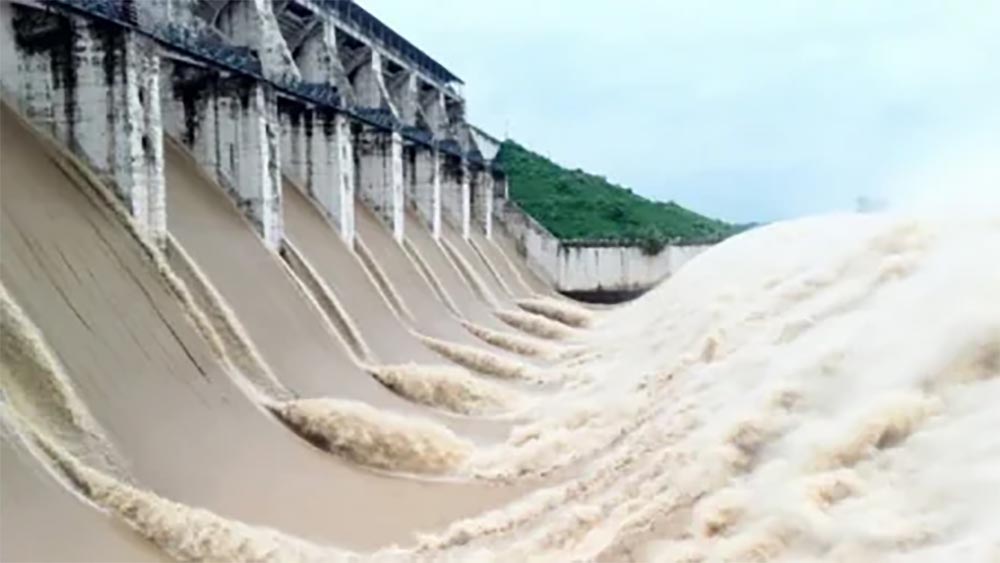
A treaty built for a different river: Signed in New Delhi on 12 December 1996 by then-Indian Prime Minister HD Deve Gowda and his Bangladeshi counterpart Sheikh Hasina, the 30-year treaty governs Ganga water sharing at Farakka, India’s last control structure on the river, from 1 January to 31 May in 10-day periods. Its formula is deceptively simple.
When flow is 70,000 cusecs or less, both countries receive equal shares. At 70,000-75,000 cusecs, Bangladesh gets 35,000 cusecs and India the remainder. Above 75,000 cusecs, India gets 40,000 cusecs and Bangladesh the remainder. In the leanest dry-season window, 11 March to 10 May, each country receives 35,000 cusecs during three alternate 10-day periods.

But the treaty does not guarantee Bangladesh a minimum flow when Farakka levels are exceptionally low. If flow falls below 50,000 cusecs in any 10-day period, the two countries must hold “immediate consultations to make adjustments on an emergency basis,” following “principles of equity, fair play and no harm to either party.”
The agreement was a pragmatic solution for its time. Its indicative schedule rested on flow patterns recorded at Farakka between 1949 and 1988. That baseline is now the problem. Upstream water use, irrigation, groundwater depletion and climate variability have made dry-season availability less predictable. The river has changed while the treaty has stayed still.
The negotiation is not the meeting: Bangladesh proposed talks on a new arrangement in June, but no date has been set for formal negotiations. India has indicated that discussions on the Ganges will take place within the existing JRC framework.
Meanwhile, routine technical cooperation has continued: a 10-member Bangladeshi technical committee formed in April has kept working through existing arrangements; a joint Bangladesh-India team carried out routine inspection and flow measurement at Farakka and Hardinge Bridge in May; and Dhaka has signalled a preference for a longer-term treaty with more predictable flows.
A reported 40,000-cusec target, against the treaty’s 35,000-cusec benchmark, has entered public debate. Its basis, however, remains unclear. Is it a scientifically derived requirement, a preferred outcome, or a negotiating opening? What is Bangladesh’s minimum acceptable flow? Which parts of its position are negotiable-and what can Dhaka offer in return?
Meanwhile, Bangladesh has proposed a new mechanism covering 14 transboundary rivers; New Delhi prefers strengthening the existing JRC. If the JRC remains the main framework, what must change inside it? How fast should the two sides respond during a drought? How should disagreements be handled when political relations deteriorate?
India’s domestic constraints matter: New Delhi must navigate the interests of West Bengal and Bihar alongside its bilateral position. India’s parliamentary review records consultations with both states, and recent pressure from Bihar has brought its concerns more directly into the renewal debate. Indian stakeholder states have opposed renewal. For Bangladesh, this means understanding not only India’s formal position but also the domestic constraints behind it.
The wider state of Bangladesh-India relations makes the resilience of the water-sharing arrangement even more important. The two countries have gone through a difficult period, although both sides have recently spoken of a “fresh start.”
Water cooperation has continued through the JRC and technical channels.
What a smarter strategy requires: The next agreement should do more than settle the next allocation. It should remain workable as hydrological conditions change. The 1996 treaty contains some foundations-periodic review, emergency consultations, joint monitoring and data exchange-but a changing river may require a more adaptable framework. The UNECE guide for transboundary water cooperation similarly emphasises adaptable agreements, shared data and effective institutions.
For Bangladesh, that means turning technical knowledge and institutional experience into a coherent position before formal talks begin. It requires anticipating India’s likely objections, identifying where compromise is possible, and establishing what Dhaka will do if its preferred outcome cannot be secured. Experts have also called for economists, urban planners, sociologists and environmental specialists to be part of the preparation.

Loading...
Loading...
Also read




Editor : Iqbal Sobhan Chowdhury
Published by the Editor on behalf of the Observer Ltd. from Globe Printers, 24/A, New Eskaton Road, Ramna, Dhaka.
Editorial, News and Commercial Offices : Aziz Bhaban (2nd floor), 93, Motijheel C/A, Dhaka-1000.
Phone: PABX- 41053001-06; Advertisement: 41053012; 01793317829, 01550707291, 01550707296
E-mail: [email protected], [email protected]. [email protected], [email protected], [email protected], [email protected], Online-email: [email protected]


