



| HEADLINE |

|

Drizzling rain threatens Aman harvest, deepens debt fears for farmers
Published : Saturday, 21 November, 2026 at 10:57 PM
Sudam Chandra, Naogaon


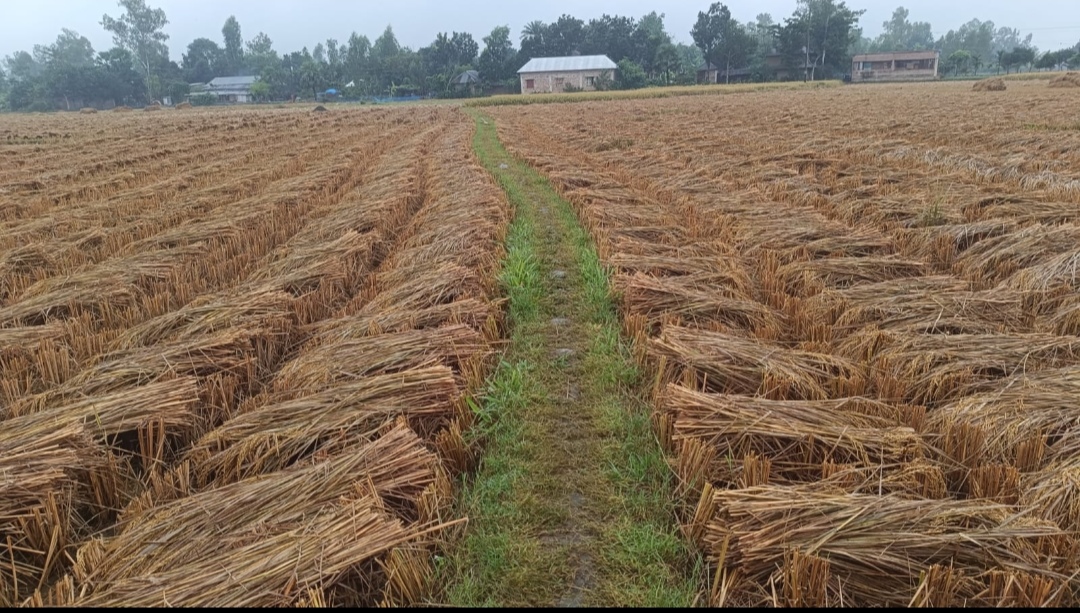
Farmers in Naogaon's Niamatpur are facing mounting financial worries as two days of drizzling rain threaten their ripe and harvested Aman paddy, raising fears of crop damage and increased debt instead of expected profits.
The rain, which began on Friday morning (November 20), has disrupted harvesting and drying activities across the upazila, leaving farmers struggling to bring their crops home safely.
The situation has added to farmers' concerns as they are already grappling with lower yields, declining paddy prices and rising production costs. Many fear that prolonged wet weather could damage the colour and quality of harvested paddy, trigger premature germination and reduce its market value.
According to the Upazila Agriculture Extension Department, Aman paddy has been cultivated on 30,440 hectares of land in Niamatpur this season, with a projected production target of 176,820 metric tonnes, averaging 5.72 tonnes per hectare.
Motaher Ali, a farmer from Ushtipara village in Paroil Union, said he had cultivated Aman on nearly one acre of land and harvested all his paddy, but left it in the field.
He expressed concern that the rain could prevent him from bringing the crop home in time. He also complained that traders were not purchasing paddy at the government-fixed price.
"Due to a lack of rain during the monsoon, we had to irrigate our fields several times. Paddy prices are low, while production costs are high. Under these circumstances, we will face more debt instead of making a profit," he said.
Entaz Ali, a farmer from Bhabicha village, said delays in harvesting could damage both the crops and their quality.
He added that farmers were already struggling with low paddy prices, labour shortages and nearly doubled production costs, making this year's Aman cultivation financially challenging.
Contacted, Niamatpur Upazila Agriculture Officer Rafiqul Islam said Aman cultivation covered 30,440 hectares this season and harvesting was underway.
He expressed hope that weather conditions would improve within the next couple of days, adding that the rainfall was unlikely to cause significant production losses.
For farmers in Niamatpur, however, the immediate challenge remains protecting their hard-earned harvest from the unpredictable weather while dealing with mounting production expenses and falling market prices.
-AH

Loading...
Loading...
Also read








Editor : Iqbal Sobhan Chowdhury
Published by the Editor on behalf of the Observer Ltd. from Globe Printers, 24/A, New Eskaton Road, Ramna, Dhaka.
Editorial, News and Commercial Offices : Aziz Bhaban (2nd floor), 93, Motijheel C/A, Dhaka-1000.
Phone: PABX- 41053001-06; Advertisement: 41053012; 01793317829, 01550707291, 01550707296
E-mail: [email protected], [email protected]. [email protected], [email protected], [email protected], [email protected], Online-email: [email protected]


