



| HEADLINE |

|

ICJ Historic Ruling
Unfinished Quest for Rohingya Justice
Published : Saturday, 21 November, 2026 at 12:00 AM
Simanta Bardhan


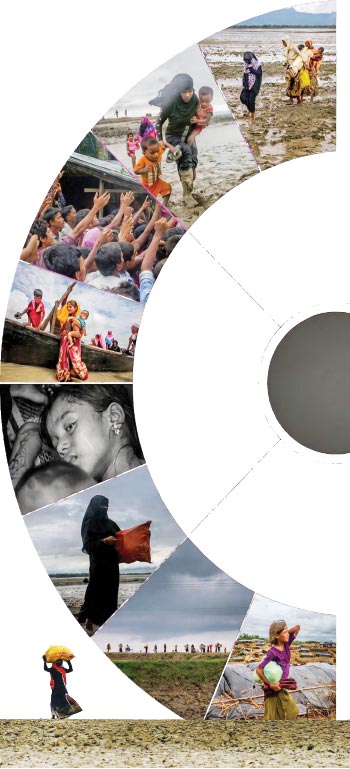
A historic ruling by the International Court of Justice (ICJ) has recognised the Rohingya's suffering and held Myanmar responsible for genocide. Yet justice will remain incomplete until their rights, dignity and homeland are restored.
Hundreds of thousands fled to Bangladesh. Thousands were killed, women and children subjected to sexual violence, and entire villages reduced to ashes. Today, more than a million Rohingya remain refugees, most in overcrowded camps in Cox's Bazar, separated from their homes, livelihoods and sense of belonging.
After years of waiting, justice has reached a historic milestone. On November 19, 2026, the ICJ, the United Nations' highest court, ruled that Myanmar violated the 1948 Genocide Convention by committing genocide against the Rohingya in northern Rakhine State in 2017. The judgment marks a significant step towards international accountability.
The case for justice
The Gambia filed the case in November 2019 with the support of the Organisation of Islamic Cooperation (OIC), arguing that Myanmar's military operations were part of a campaign to destroy the Rohingya as an ethnic and religious community.
Myanmar maintained that its military was responding to attacks by the Arakan Rohingya Salvation Army (ARSA) and conducting legitimate security operations.
In January 2020, the ICJ ordered Myanmar to take provisional measures to prevent genocide and protect the Rohingya. The final judgment has now established its responsibility under the Convention.
Mens rea: The intent behind genocide
Mens rea, a Latin legal term, refers to the mental element or guilty intention behind a crime. In genocide, it means the specific intent to destroy, wholly or partly, a national, ethnic, racial or religious group as such.
This intent distinguishes genocide from other grave international crimes. Killings, rape, torture and the destruction of homes constitute genocide when accompanied by the required intention to destroy a protected group.
The ICJ examined the pattern of violence against the Rohingya, including killings, sexual violence, attacks on children and the destruction of villages. It also considered discriminatory restrictions on marriage and family size.
Such acts and policies provided evidence of an attempt to undermine the community's survival and future. The findings recognise that genocide involves not only taking lives but also measures intended to prevent a people from continuing to exist.
The judgment establishes Myanmar's international responsibility for violating the Genocide Convention and obliges it to comply with the Court's ruling.
The Court also ordered compensation for the damage suffered by the Rohingya community and its members. Although the amount and method remain undetermined, Myanmar must submit a report within two years outlining its intended compliance measures.
The verdict also intensifies international pressure on Myanmar to end persecution, protect the Rohingya and cooperate with accountability efforts.
Justice must include rights and dignity
For the Rohingya, this judgment is more than a legal victory. It acknowledges decades of suffering, lost homes, broken families and denied identities. But recognition alone cannot heal these wounds.
They need citizenship, legal recognition, freedom of movement, education, healthcare, employment and equal protection under the law. Without these guarantees, repatriation could return them to the very persecution they escaped.
Any return must be safe, voluntary and dignified, with their rights firmly protected. No refugee should be forced back into insecurity.
The road ahead
The ICJ verdict marks an important moment in the fight against genocide and impunity, reaffirming that no state stands above international law.
Yet its real worth will be measured not by the judgment alone but by its implementation. Myanmar must fulfil its legal obligations, while the international community must pursue diplomatic and other lawful measures to secure compliance.
For the Rohingya, justice must reach beyond the courtroom. It must mean citizenship, equality, security, compensation and the right to return home without fear.

Loading...
Loading...
Also read





Editor : Iqbal Sobhan Chowdhury
Published by the Editor on behalf of the Observer Ltd. from Globe Printers, 24/A, New Eskaton Road, Ramna, Dhaka.
Editorial, News and Commercial Offices : Aziz Bhaban (2nd floor), 93, Motijheel C/A, Dhaka-1000.
Phone: PABX- 41053001-06; Advertisement: 41053012; 01793317829, 01550707291, 01550707296
E-mail: [email protected], [email protected]. [email protected], [email protected], [email protected], [email protected], Online-email: [email protected]


