



| HEADLINE |

|

Nation pays tribute to Bhasani on 50th death anniversary


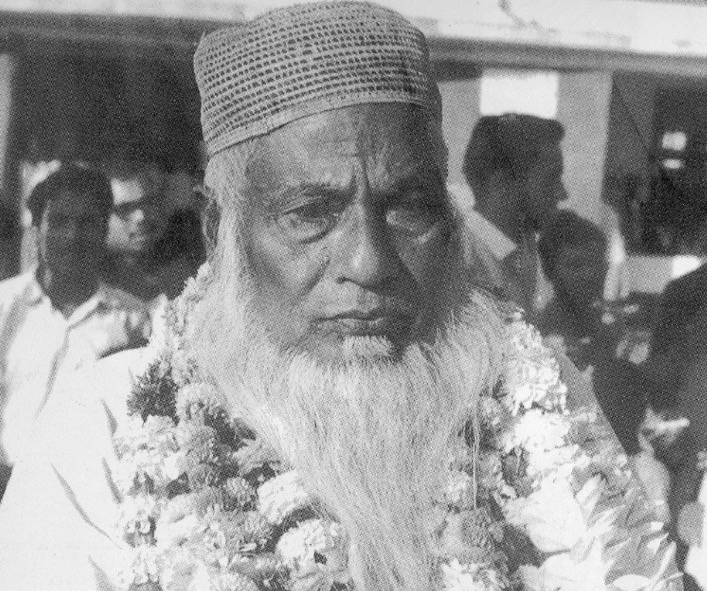
The 50th death anniversary of Maulana Abdul Hamid Khan Bhasani, popularly known as Mazlum Jananeta (Leader of the Oppressed), was observed across the country on Tuesday with tributes, discussions and various programmes highlighting his contributions to Bangladesh’s political history and struggles for social justice.
Bhasani, a prominent political leader of the Indian subcontinent, died on November 17, 1976, and was buried at Santosh in Tangail.
The district BNP organised a memorial meeting at Santosh, where BNP National Standing Committee member and Prime Minister’s Adviser Nazrul Islam Khan attended as the chief guest. He also unveiled a mural of Bhasani.
Among others, BNP Vice-Chairman and convener of the party’s central Bhasani Death Anniversary Celebration Committee Shamsuzzaman Dudu, State Minister for Fisheries and Livestock Sultan Salahuddin Tuku, former minister and BNP Vice-Chairman Abdul Salam Pintu, State Minister for Planning Zunaid Saki, BNP Chairperson’s Adviser Habibur Rahman Habib, BNP Executive Committee Child Affairs Secretary Abul Kalam Azad Siddiqui, BNP Cultural Affairs Secretary Saeed Sohrab and Tangail District Council Administrator Obaidul Haque Nasir addressed the meeting.
The programme was presided over by Tangail District BNP President Hasanuzzamil Shaheen and moderated by the party’s former member secretary and acting general secretary Mahmudul Haque Sanu.
Speaking at the meeting, Sultan Salahuddin Tuku said Bhasani never compromised with injustice and oppression and devoted his life to the struggle for democracy and people’s rights. He said the nation would continue to move forward by upholding Bhasani’s ideals.
Meanwhile, Maulana Bhasani Science and Technology University (MBSTU) in Tangail observed the anniversary through various programmes. Vice-Chancellor Professor Dr ABM Shahidul Islam and Pro-Vice-Chancellor Professor Md Anisur Rahman led a wreath-laying ceremony at Bhasani’s mausoleum at 7:30am. Representatives of the Bhasani family, Tangail Press Club, university teachers, students, officials and employees also paid tribute.
The university arranged food distribution, a milad and doa mahfil at its central mosque, a seminar titled ‘Maulana Bhasani’s Philosophy of World Peace’, a documentary screening on his life and work, and essay-writing, recitation and drawing competitions. A week-long Bhasani fair was also organised on the campus.
The Progressive Nationalist Party (PNP) Dhaka Metropolitan unit held a discussion at its central office in Paltan. PNP Chairman Firoz Mohammad Liton, addressing the meeting as chief guest, described Bhasani as an unforgettable figure whose lifelong struggle against exploitation, discrimination and injustice continued to inspire generations.
Presided over by Dhaka Metropolitan Convener Taizul Islam and moderated by Rashed Ahmed, the meeting was also addressed by PNP Secretary General Ahmedur Rahman and other senior leaders.
Liton recalled Bhasani’s role in the anti-colonial movement, peasant struggles, Language Movement, United Front election and movements for autonomy and independence. He also highlighted Bhasani’s support for Bangladesh’s Liberation War in 1971 and his role as an adviser to the Mujibnagar government.
Bangladesh Khilafat Majlis Amir Maulana Mamunul Haque also paid tribute to Bhasani in a Facebook post, urging renewed attention to his political legacy, particularly his struggle for national sovereignty and equitable sharing of transboundary river waters.
With the 1996 Ganges Water Sharing Treaty with India set to expire on December 12, 2026, Mamunul recalled Bhasani’s historic Farakka Long March on May 16, 1976, when, at the age of 96 and despite ill health, he led a mass mobilisation against India’s unilateral diversion of Ganges water through the Farakka Barrage.
Mamunul said Bhasani’s vision of independence went beyond territorial freedom and political power, encompassing people’s right to self-determination, economic justice and control over national resources.







Published by the Editor on behalf of the Observer Ltd. from Globe Printers, 24/A, New Eskaton Road, Ramna, Dhaka.
Editorial, News and Commercial Offices : Aziz Bhaban (2nd floor), 93, Motijheel C/A, Dhaka-1000.
Phone: PABX- 41053001-06; Advertisement: 41053012; 01793317829, 01550707291, 01550707296
E-mail: [email protected], [email protected]. [email protected], [email protected], [email protected], [email protected], Online-email: [email protected]


