



| HEADLINE |

|

Healthcare is Right, Not Luxury
Despite constitutional guarantees, healthcare in Bangladesh remains costly, unequal and inaccessible to millions. Bridging this gap requires affordable treatment, equitable access, stronger public services and state accountability.
Published : Saturday, 14 November, 2026 at 12:00 AM
Dr. Amit Kumar Das


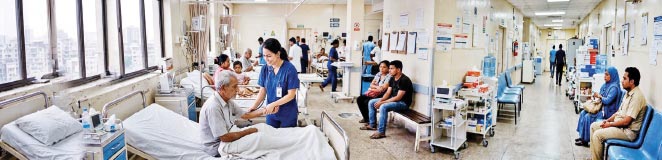
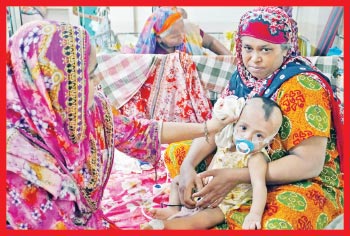 Healthcare is not a privilege determined by wealth, social status or geography; it is a basic human necessity and a cornerstone of human dignity. Everyone, regardless of age, gender, disability or economic background, deserves timely, affordable and quality care. Yet, as clinicians and public health researchers, we must confront a troubling gap between citizens’ constitutional healthcare rights and their lived realities.
Under the United Nations Sustainable Development Goal 3 (SDG 3), health encompasses physical, mental and social well-being. This vision demands equitable access to essential healthcare without financial hardship.
What Do the Laws and Policies Promise?
Bangladesh’s Constitution places healthcare among the State’s responsibilities. Article 15 recognises medical care as a basic necessity, Article 18 makes public health and nutrition a state priority, and Article 16 calls for reducing rural-urban disparities through better rural health infrastructure. Though these provisions under the Fundamental Principles of State Policy are not judicially enforceable, they remain constitutional and moral obligations.
The National Health Policy 2011, Mental Health Act 2018 and National Mental Health Policy 2022 reinforce this commitment. Yet, if the national framework recognises the right to health, why does access to care remain a daily struggle for most people?
The Gap Between Fiscal Progress and Reality
For decades, public health professionals have urged increased state funding to shield patients from catastrophic medical costs. A major shift came in the FY2026-27 budget, which nearly doubled the health allocation to Tk 69,409 crore, or 1.01 percent of GDP, crossing the 1 percent threshold for the first time. The government also pledged to recruit 5,000 doctors and 100,000 health workers and introduce digital health cards by 2028 to support a universal referral system.
However, increased funding alone cannot ensure better care. The Ministry of Health and Family Welfare has long struggled to utilise its development budget efficiently due to administrative bottlenecks, centralised planning and corruption.
Years of neglect have left families bearing the costs. Bangladesh has South Asia’s highest out-of-pocket (OOP) healthcare expenditure, accounting for nearly 73 to 79 percent of total health spending. One landmark study found that medicine, diagnostic and consultation costs pushed more than 1.08 crore people, or 6.4 percent of the population, below the poverty line in a year. Among the poorest households, 90.8 percent face catastrophic financial hardship when seeking basic treatment.
Geography further deepens inequality. Although rural communities comprise 70 percent of the population, they have fewer than 20 percent of healthcare workers. Doctor density in urban areas is 18 times higher, leaving upazila health complexes understaffed while specialised facilities remain concentrated in major cities.
Mental Health: A Long-Neglected Right
Mental health is an essential public health concern that can no longer be ignored. Ministry of Health and Family Welfare data show that approximately 16.8% of adults and up to 14% of children and adolescents in Bangladesh experience mental health conditions. Yet, over 92% of affected adults and 94.5% of children receive no professional care.
This failure reflects a severe shortage of human resources. Bangladesh has only 1.17 mental health professionals per 100,000 people, with psychiatrists five times more concentrated in Dhaka than elsewhere. Historically, mental health received just 0.44% of the health budget. Equitable healthcare requires integrating psychiatric and counselling services into upazila and district-level primary care, alongside public campaigns to dismantle social stigma.
Life-Course Healthcare and Accountability
An equitable health system must address the needs of people at every stage of life, ensuring safe maternal and reproductive care for women, childhood immunisation and inclusive facilities for persons with disabilities.
The Way Forward
The 2026-27 health budget shows that the State can mobilise resources when political will exists. Turning these commitments into human rights gains, however, requires transparency, decentralisation and accountability. Patients deserve clear treatment costs, confidentiality, informed consent and protection from discrimination.
The promised workforce must reach rural communities, while tax concessions must translate into lower treatment costs. Withdrawing the 10% VAT on cardiac stents should reduce each stent’s price by Tk 20,000. Removing the 15% VAT and 5% Advance Tax on dialysis filters, and the 7.5% Advance Tax on haemodialysis tubing, should cut costs by about Tk 800 per session. Without strict market oversight, private providers may retain these savings rather than pass them on to patients.
Healthcare is neither charity nor a luxury. It is fundamental to human dignity, social justice and constitutional equality. Access to care must never depend on income or geographical location.
-The Writer is a Physician and Public Health Researcher

Loading...
Loading...
Also read



Editor : Iqbal Sobhan Chowdhury
Published by the Editor on behalf of the Observer Ltd. from Globe Printers, 24/A, New Eskaton Road, Ramna, Dhaka.
Editorial, News and Commercial Offices : Aziz Bhaban (2nd floor), 93, Motijheel C/A, Dhaka-1000.
Phone: PABX- 41053001-06; Advertisement: 41053012; 01793317829, 01550707291, 01550707296
E-mail: [email protected], [email protected]. [email protected], [email protected], [email protected], [email protected], Online-email: [email protected]
Published by the Editor on behalf of the Observer Ltd. from Globe Printers, 24/A, New Eskaton Road, Ramna, Dhaka.
Editorial, News and Commercial Offices : Aziz Bhaban (2nd floor), 93, Motijheel C/A, Dhaka-1000.
Phone: PABX- 41053001-06; Advertisement: 41053012; 01793317829, 01550707291, 01550707296
E-mail: [email protected], [email protected]. [email protected], [email protected], [email protected], [email protected], Online-email: [email protected]


