



| HEADLINE |

|

Humayun Ahmed’s 78th birthday: A legacy that lives on in people’s hearts
Published : Friday, 13 November, 2026 at 1:05 AM
Aamir Al Hamza


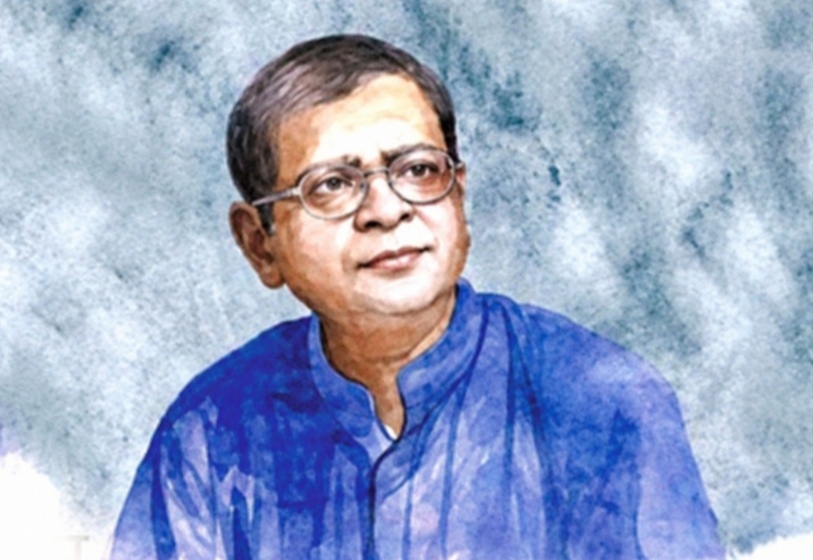
The 78th birth anniversary of legendary Bangladeshi novelist, playwright, filmmaker and academician Humayun Ahmed is being observed today (November 13), celebrating a literary icon whose stories, unforgettable characters and distinctive storytelling continue to captivate generations, even 14 years after his death.
Born on November 13, 1948, in Kutubpur village of Mohanganj in Netrokona, Humayun Ahmed transformed modern Bengali literature through his simple language, realistic storytelling, subtle humour and deep understanding of human emotions. He brought literature closer to ordinary people and inspired generations to develop a reading habit.
His contribution extended beyond novels. He created memorable fictional characters, produced television dramas watched by millions and directed films exploring Bangladeshi society, relationships and history.
He died on July 19, 2012, in New York at the age of 63 after battling colorectal cancer. However, his books, dramas, films and characters continue to hold a special place in Bangladesh's cultural life.
From a chemistry professor to a literary phenomenon
Humayun Ahmed studied chemistry at the University of Dhaka, completing his bachelor's and master's degrees before earning a PhD in polymer chemistry from North Dakota State University in the United States. He began his career as a university teacher at the Department of Chemistry at the University of Dhaka before becoming one of the country's most celebrated writers.
His literary breakthrough came with his debut novel 'Nondito Noroke', published in 1972. He subsequently wrote more than 200 fiction and non-fiction books, including novels, short stories, children's literature, science fiction, travel writing and autobiographical works. His notable books include 'Shonkhonil Karagar', 'Debi', 'Jochhona O Jononir Golpo', 'Deyal', 'Kothao Keu Nei' and 'Badshah Namdar'.
During the 1990s and 2000s, his books regularly dominated sales at the Ekushey Book Fair, bringing thousands of young readers closer to Bengali literature.
Himu, Misir Ali and Shuvro: Characters beyond the pages
One of Humayun Ahmed's greatest achievements was creating fictional characters who became part of readers' everyday imagination.
Himu, recognised by his yellow panjabi and barefoot walks, represented unconventional thinking, freedom and the courage to question social expectations. His mysterious lifestyle, unusual observations and relationship with Rupa made him particularly popular among young readers.
Misir Ali, a psychology professor, represented logic, rationality and critical thinking. Through his investigations into mysterious incidents, he encouraged readers to question assumptions and seek explanations rather than accept everything blindly.
Shuvro embodied innocence, honesty, sensitivity and compassion, offering readers a different perspective on human relationships and kindness.
Together, these characters represented different philosophies of life and encouraged curiosity, independent thinking and reflection. Their continuing popularity reflects how deeply Humayun Ahmed understood the imagination and emotional needs of his readers.
Baker Bhai and the television revolution
Humayun Ahmed also transformed Bangladeshi television drama through stories combining humour, family relationships, social realities and memorable characters.
His television debut came with 'Prothom Prohor' in 1983. His popular productions included 'Ei Shob Din Ratri', 'Bohubrihi', 'Ayomoy', 'Nokkhotrer Raat', 'Aaj Robibar' and 'Kothao Keu Nei'.
The character of Baker Bhai, played by Asaduzzaman Noor in 'Kothao Keu Nei', became a television phenomenon. When Baker Bhai was sentenced to death in the drama, emotionally attached viewers reacted strongly, with some even taking to the streets to protest against the fictional character's fate.
The unprecedented response demonstrated Humayun Ahmed's ability to make fictional characters part of real people's emotional lives. His dramas also portrayed middle-class family life, love, friendship, sibling relationships and everyday struggles with remarkable authenticity.
A filmmaker who brought stories to the big screen
Humayun Ahmed made a significant contribution to Bangladeshi cinema, directing eight films, most adapted from his own literary works.
His notable films include 'Aguner Poroshmoni', 'Shonkhonil Karagar', 'Srabon Megher Din', 'Dui Duari', 'Shyamol Chhaya', 'Daruchini Dwip' and 'Ghetuputra Komola'.
'Aguner Poroshmoni' portrayed an ordinary family's experiences during the 1971 Liberation War, while 'Shyamol Chhaya' also explored the war and its human consequences. 'Srabon Megher Din' presented rural life, folk culture, love and relationships, and his final film, 'Ghetuputra Komola', addressed the difficult social reality of the historical Ghetu tradition.
'Shyamol Chhaya' and 'Ghetuputra Komola' were selected as Bangladesh's official submissions for the Academy Award for Best Foreign Language Film in 2006 and 2012 respectively. He also received seven Bangladesh National Film Awards in different categories for his filmmaking contributions.
What his works teach new generations
Beyond entertainment, Humayun Ahmed's works offer lessons in curiosity, independent thinking, empathy and understanding human relationships.
Through Misir Ali, readers encounter the importance of logic, patience, observation and questioning assumptions. Himu encourages unconventional thinking and challenges social expectations, while Shuvro highlights innocence, kindness and compassion.
His writings demonstrate that powerful stories do not require complicated language or extraordinary events. Ordinary people, family relationships, personal struggles, love, loneliness and everyday conversations can also create meaningful literature.
His historical novel 'Jochhona O Jononir Golpo' presented the Liberation War through the experiences and emotions of ordinary people, connecting personal stories with national history.
For many young readers, his accessible language and engaging storytelling also made reading Bengali fiction an enjoyable habit, encouraging greater appreciation of language, culture and imagination.
Why Bangladesh still misses Humayun Ahmed
The affection for Humayun Ahmed goes beyond nostalgia. His natural dialogue, subtle humour and emotionally engaging stories created a personal connection with readers across generations, educational backgrounds and social classes.
For many, his books bring back childhood memories, school and college days, visits to book fairs and hours spent with favourite novels. Older readers continue to revisit Himu and Misir Ali, while younger generations are discovering these characters for the first time.
His ability to portray familiar people, neighbourhoods, family relationships and everyday emotions made readers feel that his stories reflected their own lives. This accessibility helped make reading a popular form of entertainment among ordinary Bangladeshis.
His literary contributions were recognised with the Bangla Academy Literary Award in 1981 and the Ekushey Padak in 1994.
A legacy that continues to inspire
More than 14 years after his death, Humayun Ahmed's literary world remains alive through new readers, television reruns, film screenings, book fairs and discussions about his characters.
His greatest achievement was not simply writing more than 200 books or producing popular dramas and films, but inspiring millions to fall in love with reading, storytelling and the Bengali language.
He showed that literature could be entertaining yet meaningful, ordinary lives could produce extraordinary stories, and fictional characters could become lifelong companions.
As Bangladesh observes his 78th birth anniversary, Humayun Ahmed remains more than a celebrated writer of the past. His stories, characters and creative legacy continue to live in the hearts of millions, making him a familiar storyteller whose works never seem to grow old.

Loading...
Loading...
Also read









Editor : Iqbal Sobhan Chowdhury
Published by the Editor on behalf of the Observer Ltd. from Globe Printers, 24/A, New Eskaton Road, Ramna, Dhaka.
Editorial, News and Commercial Offices : Aziz Bhaban (2nd floor), 93, Motijheel C/A, Dhaka-1000.
Phone: PABX- 41053001-06; Advertisement: 41053012; 01793317829, 01550707291, 01550707296
E-mail: [email protected], [email protected]. [email protected], [email protected], [email protected], [email protected], Online-email: [email protected]


