



| HEADLINE |

|

COP31 Begins Today In Antalya
Bangladesh to seek more grants, less loan
Published : Monday, 9 November, 2026 at 12:00 AM
Shahnaj Begum and Jahid Biplob from Antalya, Türkiye


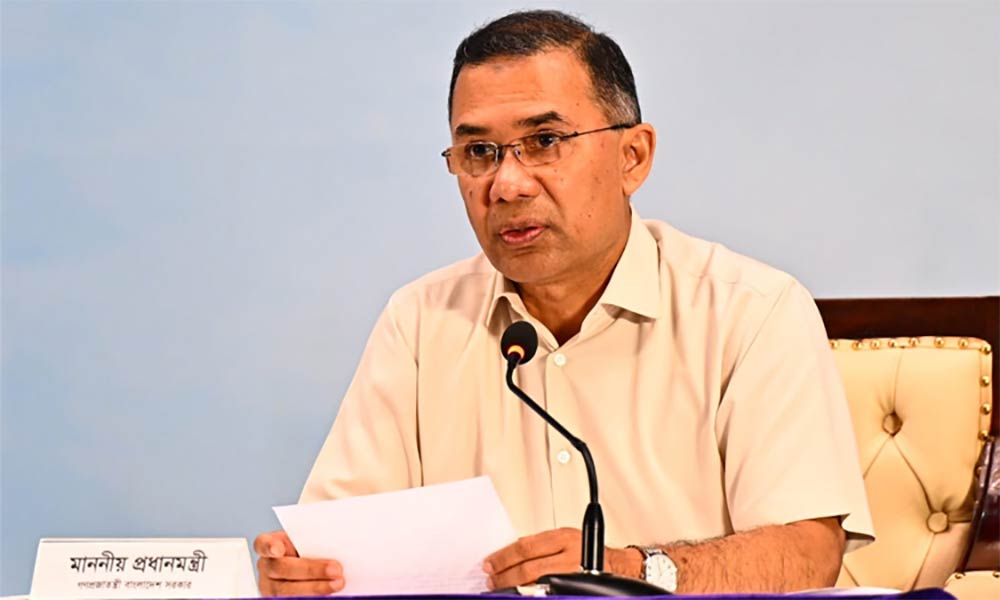 Bangladesh is set to press for climate justice, increased grant-based financing and stronger international commitments to protect climate-vulnerable communities at the 31st United Nations Climate Change Conference (COP31), which begins today, (Monday) in Antalya, Türkiye.
Prime Minister Tarique Rahman will attend the two-day World Leaders' Summit on November 11-12, where he is expected to outline Bangladesh's position on climate justice, international financial commitments and the implementation of climate action plans.
His participation highlights the challenges facing Bangladesh, a country that contributes minimally to global greenhouse gas emissions but remains highly vulnerable to cyclones, floods, coastal salinity, droughts and extreme heat.
Environment, Forest and Climate Change Minister Abdul Awal Mintoo said Bangladesh would seek increased grant-based climate finance, stronger global commitments to adaptation and greater protection for vulnerable communities without adding to the country's debt burden.
Climate Finance Without Debt Burden: Securing adequate, predictable and accessible climate finance will be Bangladesh's foremost priority at the summit. Dhaka will call for international financial support to strengthen adaptation, build climate resilience and implement national climate action plans.
Bangladesh will also demand simplified application and approval procedures for international climate funds, arguing that complicated administrative requirements and lengthy processes often delay urgent adaptation projects. Such delays can have devastating consequences for coastal and riverine communities already facing erosion, salinity intrusion and extreme weather.
The country will seek greater accessibility and effectiveness of the Fund for Responding to Loss and Damage, particularly in addressing non-economic losses such as displacement, disruption of traditional livelihoods, damage to cultural heritage and the erosion of community identity.
Science-Based Climate Action: Bangladesh will urge developed and developing countries to accelerate science-based greenhouse gas emission reductions in line with the Paris Agreement's goal of limiting global warming to 1.5 degrees Celsius above pre-industrial levels.
The government will emphasise the importance of international financial assistance, technology transfer and capacity-building to help developing countries implement their nationally determined contributions (NDCs).
Implementation of Bangladesh's National Adaptation Plan (NAP) will also feature prominently in its negotiations. Dhaka will seek financial and technological assistance to strengthen resilience in coastal areas, wetlands, river islands and drought-prone regions.
Just Transition and Renewable Energy: Bangladesh will advocate international cooperation for a just and equitable transition towards low-carbon development across the energy, agriculture, industry and transport sectors.
The government will stress that the costs and benefits of the transition must be distributed fairly, with particular attention to workers, women, young people and low-income communities. Skills development, social protection, labour rights and decent employment opportunities will be central to this approach.
Dhaka will also seek affordable access to renewable energy technologies, energy-efficient systems, cleaner industrial production and sustainable transport solutions.
Bangladesh Pavilion to Showcase Climate Initiatives: Bangladesh will set up a 100-square-metre pavilion at the conference venue to showcase its climate vulnerabilities, adaptation experiences and national priorities.
The pavilion will highlight the country's updated nationally determined contribution, NDC 3.0, the National Adaptation Plan and initiatives addressing climate-induced loss and damage. Climate finance, renewable energy, carbon markets, nature-based solutions and technological innovations for climate resilience will also be featured.
It will serve as a platform for policy discussions, knowledge exchange and engagement with international development partners, research institutions and potential investors.
Building International Alliances: Bangladesh will coordinate its negotiating positions with the Least Developed Countries (LDC) Group, the Group of 77 and China, and other climate-vulnerable developing nations to advance common interests.
Bangladesh will also seek stronger coordination between international climate commitments and domestic development priorities.
COP31 President-Designate and Turkish Minister of Environment, Urbanisation and Climate Change Murat Kurum has called for the conference to become an "Implementation COP", emphasising the need to restore trust, mobilise resources and bridge the gap between international commitments and people's lives.
For Bangladesh, the success of COP31 will ultimately depend on whether international promises translate into tangible support for communities on the frontlines of climate change.

Loading...
Loading...
Also read



Editor : Iqbal Sobhan Chowdhury
Published by the Editor on behalf of the Observer Ltd. from Globe Printers, 24/A, New Eskaton Road, Ramna, Dhaka.
Editorial, News and Commercial Offices : Aziz Bhaban (2nd floor), 93, Motijheel C/A, Dhaka-1000.
Phone: PABX- 41053001-06; Advertisement: 41053012; 01793317829, 01550707291, 01550707296
E-mail: [email protected], [email protected]. [email protected], [email protected], [email protected], [email protected], Online-email: [email protected]


