



| HEADLINE |

|

E-rickshaw drivers want lower release fee
Published : Saturday, 7 November, 2026 at 12:00 AM
Tanvir Raihan


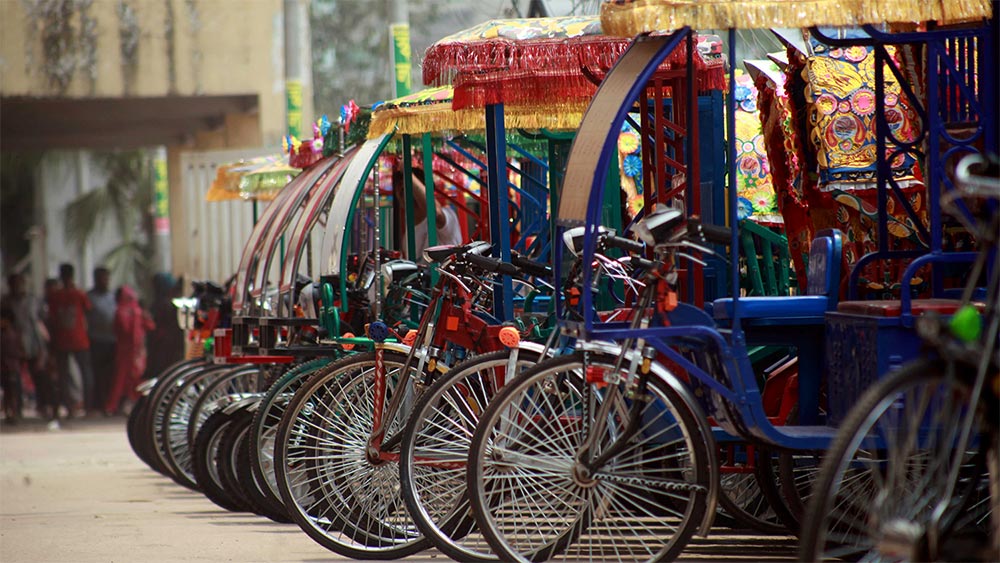 Battery-run rickshaw (e-rickshaw) drivers in Dhaka are demanding a 50 per cent cut in the charge for retrieving vehicles seized during traffic police drives, alleging that the existing Tk 1,200 payment, coupled with prolonged detention, is putting their livelihoods under growing financial strain.
For the past eight months, traffic police have been conducting enforcement drives across the capital to ease congestion and maintain road discipline. During the operations, many battery-run rickshaws have reportedly been seized using tow trucks, triggering dissatisfaction among owners, workers and drivers.
Transport representatives allege that drivers are charged up to Tk 1,200 when their e-rickshaws are detained. In some cases, vehicles remain in custody for four to five days, depriving drivers of their daily earnings and forcing owners to bear additional costs.
For many drivers, income from battery-run rickshaws is their primary means of supporting their families. Prolonged detention therefore means not only lost earnings but also mounting financial pressure.
At a recent gathering on a city road, transport owners and workers called for the charge to be reduced from Tk 1,200 to Tk 600, describing the current practice as excessive and burdensome.
"How can drivers survive if police keep our vehicles detained for four or five days? They are charging up to Tk 1,200 when they seize our vehicles. This is severe harassment and an act of oppression against drivers," a representative said at the gathering. Participants also questioned the length of time vehicles remain in custody, arguing that prolonged detention causes financial hardship without necessarily resolving traffic-related problems.
However, no official figures were available on the number of battery-run rickshaws seized during the eight-month drives, the areas covered or the total amount collected from drivers.
The legal basis of the Tk 1,200 charge also remains unclear. It has not been established whether the amount is a statutory fine, a vehicle-release fee or another form of payment. Transport representatives have demanded transparency about the applicable rules and collection procedures. The gathering also raised demands for wider access for e-rickshaws and other vehicles to roads across the capital.
A representative of the Malik-Sramik Oikya Parishad said vehicles affiliated with the organisation should be allowed to operate on any road, while assuring participants that they would not travel against traffic.
"Our rickshaws and vehicles will operate on any road. However, on behalf of the Malik-Sramik Oikya Parishad, we give our assurance that none of our vehicles will ever travel against the direction of traffic," he said.
However, compliance with traffic rules involves more than avoiding wrong-way driving. Vehicles must also follow designated routes, road restrictions and registration requirements, while drivers must hold the necessary licences.
Traffic police have said enforcement drives are conducted in accordance with the law to maintain road discipline and ensure smooth traffic movement.
No detailed response was available to the transport representatives' specific allegations, including the legal basis of the Tk1,200 charge, the reasons for keeping vehicles in custody for four to five days or the demand to halve the amount.
Transport owners and workers are seeking a solution that balances traffic management with drivers' livelihoods, calling for clear rules on vehicle movement, detention, fines and release procedures.

Loading...
Loading...
Also read



Editor : Iqbal Sobhan Chowdhury
Published by the Editor on behalf of the Observer Ltd. from Globe Printers, 24/A, New Eskaton Road, Ramna, Dhaka.
Editorial, News and Commercial Offices : Aziz Bhaban (2nd floor), 93, Motijheel C/A, Dhaka-1000.
Phone: PABX- 41053001-06; Advertisement: 41053012; 01793317829, 01550707291, 01550707296
E-mail: [email protected], [email protected]. [email protected], [email protected], [email protected], [email protected], Online-email: [email protected]


