



| HEADLINE |

|

BNP, other parties seek to deepen BD-China ties
Published : Wednesday, 4 November, 2026 at 9:02 PM
Observer Online Report


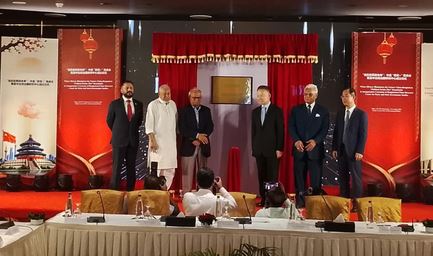
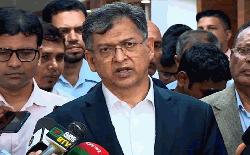
BNP and other political parties of the country want to take China Bangladesh relations to a new height. The BNP government has expressed its resolve to take the long standing friendship between Bangladesh and China to a new height. Senior BNP leader and Political Adviser to the Prime Minister Ruhul Kabir Rizvi Ahmed has placed importance on increasing communication among the political parties of the two countries expanding economic cooperation attracting Chinese investment and reducing the trade deficit.
He made these remarks while speaking at the roundtable meeting titled China Bangladesh Political Parties Plus and the inaugural ceremony of the Bangladesh China Party and State Governance Studies Centre held in the capital on Wednesday 4 November. Liu Haixing Minister of the International Department of the Central Committee of the Communist Party of China was present as the chief guest at the event. Representatives of various political parties of Bangladesh government officials academics businesspeople and relevant persons participated in it.
Ruhul Kabir Rizvi said that the delegation led by the Minister of the International Department of the Central Committee of the Communist Party of China is being welcomed in Bangladesh. This visit reflects the long standing friendship mutual trust and enduring partnership between the two countries and the two political parties. Bangladesh is viewing with great importance the opportunity for discussions on mutually relevant issues and for strengthening bilateral cooperation.
He said that the relations between Bangladesh and China have been built on the foundation of friendship mutual respect equality and a shared commitment to peace and development. The foundation of strategic partnership with China that was laid by Shaheed President Ziaur Rahman gained further momentum later under the leadership of former Prime Minister Begum Khaleda Zia. Mentioning that Bangladesh is one of the first countries in South Asia to join the Belt and Road Initiative Rizvi said that the BNP government is committed to taking the relations between the two countries to an even higher level.
He further said that 14 agreements were signed during the mutual bilateral visits of Chinese Premier Li Qiang and Begum Khaleda Zia. These agreements have enriched the partnership between the two countries. The goal of the government is to advance this relationship on the basis of long term friendship equality and mutual benefit.
On foreign policy Rizvi said that the BNP government pursues an independent balanced and far sighted foreign policy giving the highest importance to national interest.
Present at the event were Secretary General of Jamaat e Islami Mia Golam Parwar Political Adviser to the Prime Minister Nazrul Islam Khan Vice Chairman of BNP and former Home Minister Air Vice Marshal retired Altaf Hossain Chowdhury State Minister for Foreign Affairs Shama Obaid Islam former Professor of the Department of International Relations of Dhaka University Imtiaz Ahmed and leaders of various political parties as well as distinguished persons.
Liu said that through the visit of Chinese President Xi Jinping to Bangladesh in 2016 the relations between the two countries were elevated to the level of strategic cooperative partnership. In continuation of this in June 2026 during the meeting with Prime Minister Tarique Rahman in China the leaders of the two countries announced the building of a partnership for a shared future in the new era. He informed that over the past five decades bilateral trade between Bangladesh and China has grown from 15 million US dollars to more than 23 billion dollars. Various projects including infrastructure development roads bridges and tunnels are contributing to the economic and social development of Bangladesh.
He also highlighted initiatives such as the Mongla Port Industrial Area and the Teesta River Comprehensive Recovery and Management Project. The Chinese leader said that ideological differences among the political parties of the two countries should not be seen as barriers to relations. According to his statement whether any political party is in power or not should not be made the yardstick for determining the basis of friendship and cooperation. Rather it is necessary to maintain communication with all important political parties exchange experiences and undertake joint initiatives for the welfare of the people.
On the international situation Liu called for increasing coordination between Bangladesh and China in various multilateral frameworks including the United Nations. In his view it is necessary for the two countries to work together to protect the interests of developing countries increase international cooperation and establish fairness in the global economic system.
He made these remarks while speaking at the roundtable meeting titled China Bangladesh Political Parties Plus and the inaugural ceremony of the Bangladesh China Party and State Governance Studies Centre held in the capital on Wednesday 4 November. Liu Haixing Minister of the International Department of the Central Committee of the Communist Party of China was present as the chief guest at the event. Representatives of various political parties of Bangladesh government officials academics businesspeople and relevant persons participated in it.
Ruhul Kabir Rizvi said that the delegation led by the Minister of the International Department of the Central Committee of the Communist Party of China is being welcomed in Bangladesh. This visit reflects the long standing friendship mutual trust and enduring partnership between the two countries and the two political parties. Bangladesh is viewing with great importance the opportunity for discussions on mutually relevant issues and for strengthening bilateral cooperation.
He said that the relations between Bangladesh and China have been built on the foundation of friendship mutual respect equality and a shared commitment to peace and development. The foundation of strategic partnership with China that was laid by Shaheed President Ziaur Rahman gained further momentum later under the leadership of former Prime Minister Begum Khaleda Zia. Mentioning that Bangladesh is one of the first countries in South Asia to join the Belt and Road Initiative Rizvi said that the BNP government is committed to taking the relations between the two countries to an even higher level.
He further said that 14 agreements were signed during the mutual bilateral visits of Chinese Premier Li Qiang and Begum Khaleda Zia. These agreements have enriched the partnership between the two countries. The goal of the government is to advance this relationship on the basis of long term friendship equality and mutual benefit.
On foreign policy Rizvi said that the BNP government pursues an independent balanced and far sighted foreign policy giving the highest importance to national interest.
Calling for increased investment and trade with China Rizvi highlighted the potential of Chinese investment in Bangladesh and said that extensive opportunities exist for Chinese investors in the manufacturing infrastructure energy information technology agriculture and textile sectors. By utilising these potentials it is possible to further expand economic cooperation between the two countries. At the same time he called for increasing the access of Bangladeshi products to the Chinese market. In his view increasing the export of Bangladeshi products to the Chinese market will help reduce the existing trade deficit between the two countries.
Rizvi expressed hope that in the days ahead communication and cooperation between the political parties and the general people of the two countries will be further strengthened. In the concluding part of his speech he expressed the expectation that Bangladesh China friendship will be long lasting.
Calling for increased communication among the youth Nahid Islam Convenor of the National Citizen Party and Chief Whip of the Opposition placed importance on increasing communication among the young generation of the two countries. He said that it is necessary to increase opportunities for exchange of information experience and opinions among the youth of Bangladesh and China. Through mutual communication the youth of the two countries will be able to learn about each other’s society culture thinking and development experience. In his view regular communication and cooperation among the young generation will play a role in further strengthening the relations between the two countries in the future.
A new chapter of friendship in the continuity of history. The keynote speech at the roundtable meeting was delivered by Liu Haixing Minister of the International Department of the Central Committee of the Communist Party of China. He said that the foundation of relations between Bangladesh and China is mutual trust understanding friendship and a shared aspiration for development. Liu also highlighted his personal relationship with Bangladesh.
He informed that 46 years ago his father served as the Ambassador of China to Bangladesh. From childhood he grew up hearing about the sincerity hard work and hospitality of the people of Bangladesh. He mentioned that this special emotion of his towards Bangladesh is a reflection of the continuity of the long standing friendship between the two countries.
Liu said that through the visit of Chinese President Xi Jinping to Bangladesh in 2016 the relations between the two countries were elevated to the level of strategic cooperative partnership. In continuation of this in June 2026 during the meeting with Prime Minister Tarique Rahman in China the leaders of the two countries announced the building of a partnership for a shared future in the new era. He informed that over the past five decades bilateral trade between Bangladesh and China has grown from 15 million US dollars to more than 23 billion dollars. Various projects including infrastructure development roads bridges and tunnels are contributing to the economic and social development of Bangladesh.
He also highlighted initiatives such as the Mongla Port Industrial Area and the Teesta River Comprehensive Recovery and Management Project. The Chinese leader said that ideological differences among the political parties of the two countries should not be seen as barriers to relations. According to his statement whether any political party is in power or not should not be made the yardstick for determining the basis of friendship and cooperation. Rather it is necessary to maintain communication with all important political parties exchange experiences and undertake joint initiatives for the welfare of the people.
Highlighting the importance of the new research centre Liu Haixing described the inauguration of the Bangladesh China Party and State Governance Studies Centre as an important step in implementing the understanding reached between the leaders of the two countries. He expressed hope that this centre will become an effective platform for research and exchange of views on the governance systems development philosophies and policy making experiences of the two countries.
Alongside this the centre will also play a role in increasing communication among political parties youth society businesspeople mass media and research institutions. Raising the context of the 105th founding anniversary of the Communist Party of China he expressed interest in exchanging China’s experience in party management self purification and establishing good governance with the political parties of Bangladesh.
On the international situation Liu called for increasing coordination between Bangladesh and China in various multilateral frameworks including the United Nations. In his view it is necessary for the two countries to work together to protect the interests of developing countries increase international cooperation and establish fairness in the global economic system.
In the view of analysts the inauguration of this new research centre will not only create a field for communication among the political parties of the two countries but may also create a new opportunity for expanding relations in the economy education culture investment and among the people.
-AH

Loading...
Loading...
Also read



Editor : Iqbal Sobhan Chowdhury
Published by the Editor on behalf of the Observer Ltd. from Globe Printers, 24/A, New Eskaton Road, Ramna, Dhaka.
Editorial, News and Commercial Offices : Aziz Bhaban (2nd floor), 93, Motijheel C/A, Dhaka-1000.
Phone: PABX- 41053001-06; Advertisement: 41053012; 01793317829, 01550707291, 01550707296
E-mail: [email protected], [email protected]. [email protected], [email protected], [email protected], [email protected], Online-email: [email protected]


