



| HEADLINE |

|

E-rickshaw registration begins Monday
Published : Sunday, 1 November, 2026 at 1:58 PM
Observer Online Desk


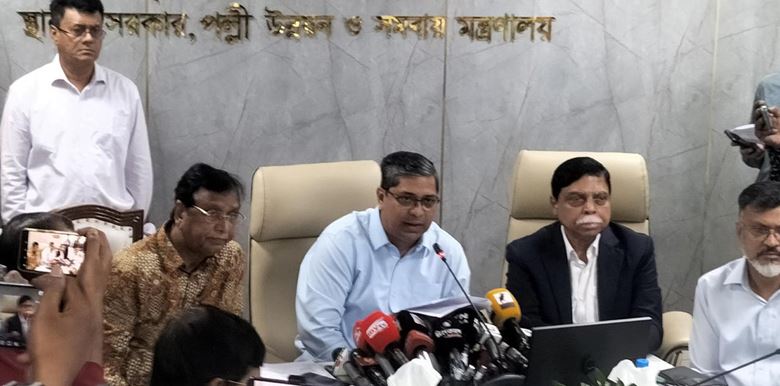
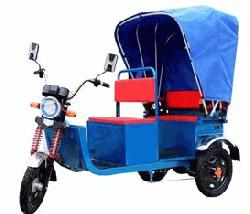
Registration of battery-powered three-wheeled e-rickshaws will begin in 13 city corporations across the country on Monday (November 2), with drivers to be brought under a licensing system in phases, Local Government, Rural Development and Cooperatives State Minister Mir Shahe Alam said on Sunday.
Speaking at a press conference at the Secretariat, the state minister said vehicle registration would begin first, while driving licences for operators would be introduced later through a separate notification.
He said the government had formulated the regulations under Section 120 of the amended City Corporation Act, 2009, adopted in 2026. Following parliamentary approval and vetting by the Law Ministry, the regulations had been published in the official gazette, removing legal barriers to e-rickshaw registration.
The 13 city corporations will initially launch the registration process, and all e-rickshaws will gradually be brought under the regulatory framework. He said these vehicles had remained largely unmanaged for 15 to 30 years, and establishing an effective management system would take some time.
Under the new rules, the registration fee for a two-passenger e-rickshaw has been set at Tk8,000, with a renewal fee of Tk4,000 after one year following a fitness inspection. For a four-passenger vehicle, the registration fee is Tk10,000 and the renewal fee is Tk5,000. Each vehicle will be allowed to operate for a maximum of 12 years.
City corporations will issue QR code-based fitness certificates for e-rickshaws at a fee of Tk1,000.
The state minister said a seven-member committee had been formed to regulate e-rickshaw production and recommend approval of manufacturing companies. Representatives from the Local Government Division, Bangladesh University of Engineering and Technology (BUET), city corporations, police traffic departments and district administrations are included in the committee.
E-rickshaw manufacturers will have to follow designs approved by BUET, while existing vehicles will also have to be modified to comply with the approved designs. Manufacturers will carry out the modifications with permission from the respective city corporations.
The regulations identify several offences, including operating unregistered e-rickshaws, exceeding permitted speed limits, carrying additional passengers, using unauthorised batteries, modifying motors or vehicle structures, entering restricted areas and reckless driving.
Transporting goods without passengers, violating traffic signals and fleeing after accidents will also be treated as offences and may invite legal action.
Drivers to receive ID cards initially
Although the regulations provide for driving licences for e-rickshaw operators, the system will not be introduced immediately. Initially, authorities will focus on vehicle registration, while drivers will receive identity cards from vehicle owners.
Mir Shahe Alam said a separate notification would be issued to introduce driving licences after the registration process had progressed.
He said city corporations would face difficulties handling a large number of licence applications simultaneously, making a phased rollout necessary.
Dhaka to have eight zones with different-coloured e-rickshaws
The state minister said Dhaka would be divided into eight zones, with four under Dhaka North City Corporation and four under Dhaka South City Corporation.
E-rickshaws in each zone would have a distinct colour, resulting in eight different colours to prevent vehicles from operating outside their designated zones.
The number of e-rickshaws allowed in each zone would be determined through discussions between traffic authorities and city corporations to prevent traffic congestion. However, no limit has yet been imposed on the total number of vehicles.
After registration, each e-rickshaw's designated zone will be recorded in its QR code, along with its registration number, owner's details and the relevant city corporation and zone.
Minister urges Dhaka drivers not to panic
The state minister urged existing e-rickshaw drivers in Dhaka not to panic, saying unauthorised vehicles would be discouraged and gradually removed after the registration process begins.
He said vehicles could continue operating under the existing arrangements for the time being, while authorities would gradually register eligible vehicles and take steps to remove illegal battery-powered e-rickshaws.
He also cautioned against attempts to create panic over the new regulations for political gains.
The minister said he would meet journalists again after one month to share an update on the registration process, including the number of registered vehicles, measures taken and plans for removing unauthorised e-rickshaws.
Solar panels planned for charging points
The government also plans to bring e-rickshaw charging points under regulation. Permission will be granted for charging stations at designated locations, while establishments capable of providing solar-powered charging facilities will be eligible for approval or trade licences from city corporations.
He warned that legal action would be taken against those using electricity illegally to charge e-rickshaws. City corporation magistrates will regularly monitor the charging stations.
Fares to be fixed per kilometre
E-rickshaw fares will be determined on a per-kilometre basis through joint decisions involving vehicle owners, traffic authorities and city corporations.
The minister said the fare structure would be reasonable and within the affordability of ordinary passengers.
He added that the new regulations would initially apply to the country's 13 city corporations. Separate amendments to municipal laws would be required to regulate e-rickshaws in pourashava areas, after which relevant regulations would be formulated for those areas.
-MT

Loading...
Loading...
Also read




Editor : Iqbal Sobhan Chowdhury
Published by the Editor on behalf of the Observer Ltd. from Globe Printers, 24/A, New Eskaton Road, Ramna, Dhaka.
Editorial, News and Commercial Offices : Aziz Bhaban (2nd floor), 93, Motijheel C/A, Dhaka-1000.
Phone: PABX- 41053001-06; Advertisement: 41053012; 01793317829, 01550707291, 01550707296
E-mail: [email protected], [email protected]. [email protected], [email protected], [email protected], [email protected], Online-email: [email protected]


