



| HEADLINE |

|

Netanyahu regime under threat?
The General who could become Israel’s first Mizrahi PM
Published : Monday, 26 October, 2026 at 12:09 PM
Observer Special Report


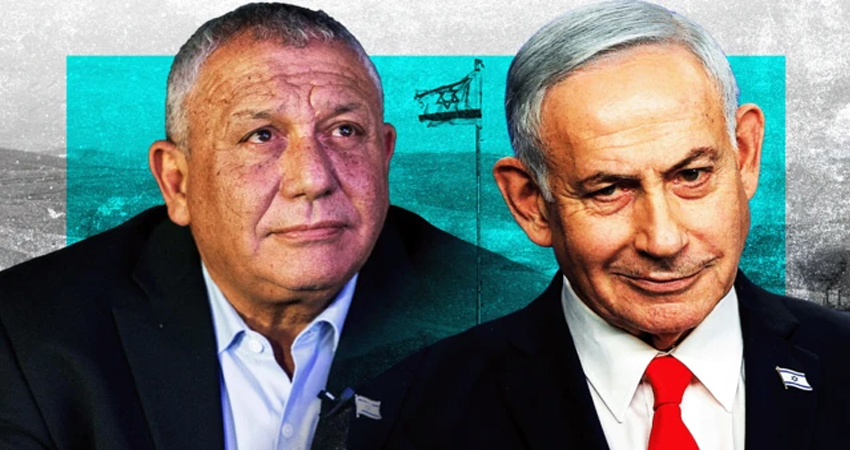
Collected Photo
Former Israel Defense Forces (IDF) Chief of Staff Gadi Eisenkot has surged to the forefront of Israeli politics as the principal challenger to Prime Minister Benjamin Netanyahu ahead of the national election on Tuesday (October 27), with final pre-election polling indicating his newly formed Yashar party is positioned to outperform the ruling Likud (political party).
Polling in single digits a year ago, the 66-year-old retired general has successfully consolidated opposition support by positioning himself as a moral, disciplined alternative to Netanyahu following the catastrophic security failures of October 7, 2023.
According to final television surveys published by Kan, Channel 12, and Channel 13 before the pre-election blackout, Eisenkot’s Yashar party is projected to win between 22 and 23 seats in the 120-member Knesset, compared to 19 to 21 seats for Netanyahu’s Likud.
Additionally, direct suitability polls place Eisenkot ahead of the incumbent prime minister, with 49 per cent of respondents favoring Eisenkot for the premiership compared to 41 per cent for Netanyahu.
Mizrahi Heritage and Ethnic Controversy
Eisenkot’s rise has brought his background into sharp focus. Born to Moroccan Jewish immigrants and raised in the working-class towns of Tiberias and Eilat, he represents a potential historic shift in a country that has never had a prime minister of Mizrahi (Middle Eastern or North African Jewish) heritage.
His modest upbringing stands in contrast to Netanyahu’s background in Jerusalem's elite political circles. Historically, Mizrahi voters have formed a reliable voting base for Likud, making Eisenkot’s growing crossover appeal a major strategic vulnerability for the ruling party.
The ethnic dimension erupted into controversy when pro-Netanyahu television presenter Yinon Magal directed inflammatory remarks at Eisenkot, describing him as a "monkey" of "Mizrahi-Moroccan" descent controlled by "Ashkenazi elites."
The comments re-ignited long-standing societal tensions between European-descended Ashkenazi Jews and Middle Eastern-descended Mizrahi Jews. Magal later claimed his phrasing was underworld slang for a frontman, while Netanyahu publicly condemned the statement.
Military Career and Personal Losses
Eisenkot enlisted in the Golani Brigade in 1978 and spent four decades in uniform, culminating in his service as IDF Chief of Staff from 2015 to 2019 under Netanyahu. His tenure was defined by a commitment to military protocol, notably in 2016 when he insisted on prosecuting Sgt. Elor Azaria for shooting a wounded Palestinian attacker in Hebron—defying pressure from right-wing figures, including Netanyahu, to defend military ethics.

He entered politics in 2022 alongside former military chief Benny Gantz and joined Netanyahu’s emergency war cabinet following the October 7 attack. Both leaders resigned in June 2024, citing the lack of a clear post-war strategy.
The conflict has taken a heavy personal toll on Eisenkot’s family. His youngest son, Gal, 25, was killed fighting in Gaza in December 2023, and two of his nephews died in combat as well. Eisenkot has stated that his campaign is driven by a promise over his son's grave to ensure such sacrifices are not in vain through government accountability.
Coalition Deadlock and Policy Positions
Despite leading in the polls, Eisenkot faces a complex path to forming a government. Final polling averages give the anti-Netanyahu opposition bloc between 54 and 56 seats, while Netanyahu’s right-wing and ultra-Orthodox coalition holds 49.5 to 50 seats.
With neither major bloc reaching the 61-seat threshold needed for a majority, parliamentary deadlock appears likely. Eisenkot’s ability to secure the premiership may hinge on coalition negotiations involving centrist, right-wing, and potentially Arab-Israeli parties like Ra'am and the Joint List.
On domestic policy, Eisenkot pledges to establish an independent state commission of inquiry into October 7 and implement mandatory conscription or national service for all citizens, directly challenging the blanket draft exemptions granted to ultra-Orthodox Jews.
On security, Eisenkot maintains a hawkish stance, supporting the removal of Hamas from Gaza within 18 months and rejecting a two-state solution under current security conditions. However, he opposes formal annexation of the West Bank and has vowed to crack down on extremist settler violence.
Protests and Foreign Relations
The election takes place amid continued public pressure. On Saturday (October 24), thousands of demonstrators marched through Tel Aviv to Hostages Square, demanding an independent inquiry into the October 7 security failures. Opposition figures, including Eisenkot, attended the rally, where police arrested a suspect accused of assaulting former Prime Minister Naftali Bennett’s security detail.
The race has also drawn international interest. US President Donald Trump issued a full endorsement of Netanyahu, warning against electing alternative leadership.

However, political analysts note that an Eisenkot-led coalition, free from far-right ministers like Itamar Ben-Gvir and Bezalel Smotrich, could offer Washington a more flexible partner to pursue regional diplomacy and Saudi-Israeli normalization.
Electoral Process and Logistics
Voting across Israel will officially open on Tuesday, October 27, 2026, to elect the 120 members of the 26th Knesset. Under the rules set by the Central Elections Committee, standard polling stations nationwide will operate from 7:00 AM to 10:00 PM, while smaller communities, hospitals, and correctional facilities will maintain shortened hours from 8:00 AM to 8:00 PM.
Election day is designated as a mandatory national holiday (shabbaton) to facilitate public participation, with free intercity public transportation provided across the country. Israel operates under a nationwide closed-list proportional representation system with a strict 3.25 per cent electoral threshold required for any political party to enter parliament.
Because no single party has ever won an absolute 61-seat majority in the country's history, the conclusion of voting will immediately trigger up to 28 days of formal coalition negotiations to assemble a governing majority.
Special early voting has already taken place for diplomatic personnel stationed abroad, while deployed military units and security forces will utilize fixed and mobile stations on polling day. Exit polls are expected shortly after voting closes at 10:00 PM, with the final official results scheduled for publication by November 4.
-SA

Loading...
Loading...
Also read






Editor : Iqbal Sobhan Chowdhury
Published by the Editor on behalf of the Observer Ltd. from Globe Printers, 24/A, New Eskaton Road, Ramna, Dhaka.
Editorial, News and Commercial Offices : Aziz Bhaban (2nd floor), 93, Motijheel C/A, Dhaka-1000.
Phone: PABX- 41053001-06; Advertisement: 41053012; 01793317829, 01550707291, E-mail: [email protected], [email protected] Online: email: [email protected] 41053014; 01550707297 Advertisement: 01550707296


