



| HEADLINE |

|

Jamuna Fertiliser Factory shut after 2-day resumption
Published : Sunday, 25 October, 2026 at 2:34 PM
Observer Online Report


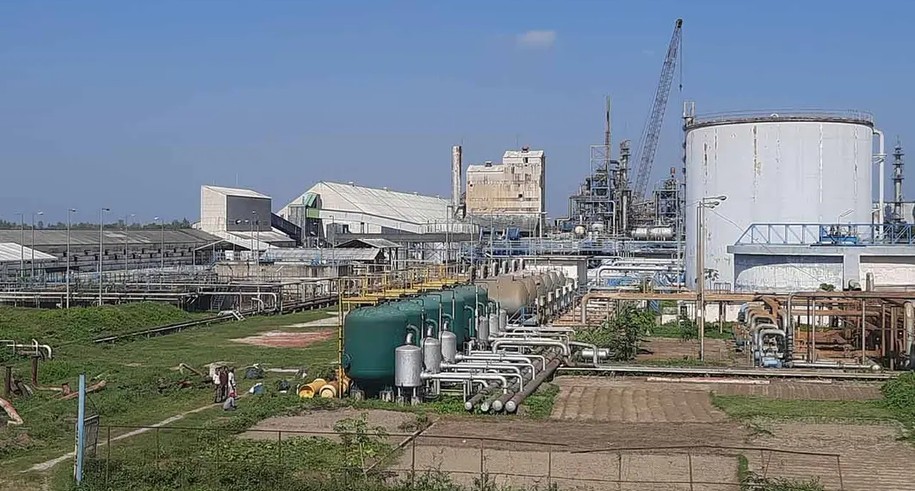
Production has been suspended again at Jamuna Fertiliser Company Limited in Jamalpur's Sarishabari due to a shortage of natural gas, just two days after the factory resumed operations following a prolonged shutdown.
The state-owned urea fertiliser plant halted production at 5am on Sunday, October 25, according to Fazlul Haque, head of its production department, who confirmed the development on Sunday afternoon.
The factory has an installed capacity to produce 1,700 tonnes of urea fertiliser a day and plays a significant role in supplying agricultural inputs across northern and central Bangladesh.
Haque said the plant requires a continuous gas pressure of 42–43 pounds per square inch (PSI) to maintain uninterrupted production. However, inadequate gas supply forced the authorities to suspend operations again.
Production will resume once gas supplies return to normal, he added.
Titas Gas Transmission and Distribution Company supplies natural gas to the factory.
The latest shutdown follows a series of disruptions that have repeatedly affected the plant’s operations. After remaining closed for around seven months due to gas shortages, the factory received a gas connection on September 20 and resumed production.
Operations were suspended again on October 7 after a mechanical fault developed in the boiler plant. Following repairs, the factory restarted production on October 23, only to shut down again two days later because of inadequate gas supplies.
According to factory sources, gas shortages and mechanical problems kept the plant closed for an extended period between January 2024 and November 2025. Production resumed after gas pressure improved but was suspended again from February 12 this year due to another shortage.
After seven months without production, the factory received gas supplies on September 20.
The prolonged shutdowns also contributed to mechanical and technical problems, affecting the plant’s ability to meet its production targets, sources said.
Jamuna Fertiliser distributes urea through 1,900 dealers listed under the Bangladesh Chemical Industries Corporation (BCIC). Its supply network covers 21 districts, including Jamalpur, Sherpur, Mymensingh and Tangail, as well as districts in northern Bangladesh.
Extended interruptions at the plant could put additional pressure on fertiliser availability at the local level, particularly for small-scale farmers who depend on timely supplies during cultivation seasons.
A prolonged shutdown could disrupt agricultural production if alternative supplies fail to meet demand.
Factory sources said that when gas supplies remain stable and production runs normally, the plant produces fertiliser worth around Tk 200 crore a month, generating an estimated profit of Tk 60 crore.
Even when production is suspended, the factory must continue to bear operating expenses. Gas bills alone amount to approximately Tk 6 crore to keep the plant operationally ready, according to the sources.
The latest stoppage therefore raises concerns over both the factory’s financial performance and the reliability of fertiliser supplies to farmers.
Unless gas pressure improves and production resumes soon, the repeated disruptions could further undermine output at one of the country’s key urea fertiliser plants.

Loading...
Loading...
Also read









Editor : Iqbal Sobhan Chowdhury
Published by the Editor on behalf of the Observer Ltd. from Globe Printers, 24/A, New Eskaton Road, Ramna, Dhaka.
Editorial, News and Commercial Offices : Aziz Bhaban (2nd floor), 93, Motijheel C/A, Dhaka-1000.
Phone: PABX- 41053001-06; Advertisement: 41053012; 01793317829, 01550707291, E-mail: [email protected], [email protected] Online: email: [email protected] 41053014; 01550707297 Advertisement: 01550707296


