



| HEADLINE |

|

NBR seeks review of tax cuts as prices remain high
Published : Sunday, 25 October, 2026 at 12:00 AM
Simanta Bardhan


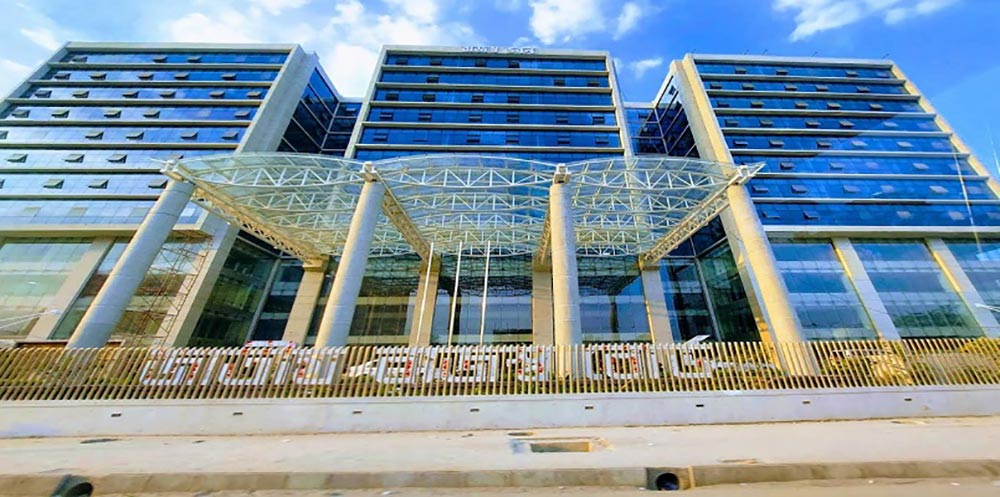 The National Board of Revenue (NBR) has asked the Bangladesh Trade and Tariff Commission to examine whether tax cuts on 18 categories of goods have reduced prices for consumers. The cuts were introduced in the 2026-27 national budget to lower import costs and make essential goods more affordable. However, prices of several products have continued to rise.
The NBR reduced customs duties, value-added tax (VAT) and supplementary duties on food, medicines, medical equipment, IT products and environmentally friendly vehicles. Four months into the fiscal year, it wants to assess whether consumers have benefited from the measures.
The review will examine import costs, wholesale and retail prices, and the final prices paid by consumers. It will cover food items, agricultural inputs, medical equipment, pharmaceutical raw materials, computers, electric vehicles (EVs), plug-in hybrid cars, textiles and electric three-wheelers.
The budget fully withdrew regulatory duties on dates and 45 types of spices. However, prices have not fallen in Dhaka's retail markets. Traders at Karwan Bazar said wholesale prices of dates had increased by Tk 100 to Tk 150 per kilogram, depending on quality.
According to the latest annual data from the Trading Corporation of Bangladesh (TCB), prices of ordinary dates rose by around 17 per cent over the past year. Imported garlic prices increased by 21 per cent, ginger by 5 per cent, cloves by 4 per cent and bay leaves by 25 per cent. Cumin prices fell by 11 per cent, while cardamom prices declined slightly.
The government also withdrew 15 per cent VAT and 5 per cent advance income tax on imported dialysis filters. Tax relief was provided for raw materials used to produce cancer medicines and other pharmaceutical products. Customs duty on biological safety cabinets was reduced from 25 per cent to 1 per cent.
Despite these measures, medicines are still being sold at previously increased prices. Pharmacy owners alleged that some pharmaceutical companies had withheld supplies before releasing products at higher prices, citing rising production and transportation costs.
Customs duty and VAT on laptops, desktop computers, printers, monitors and servers were reduced to zero. However, a 7.5 per cent advance tax and 2 per cent advance income tax remained in place. Customs duty on point-of-sale (POS) machines was reduced from 10 per cent to 5 per cent, while the 7.5 per cent advance tax was abolished. For electric vehicle chargers and charging stations, both the 10 per cent customs duty and the 7.5 per cent advance tax were reduced to zero.
Traders have generally attributed the continued price increases to factors such as conflict in the Middle East, rising global energy costs, domestic energy shortages and natural disasters, including floods and excessive rainfall.
S M Nazer Hossain, vice-president of the Consumers Association of Bangladesh (CAB), said businesses rarely reduced prices without strict market monitoring. He warned that the government could lose revenue while importers and middlemen continued to benefit from tax cuts. He also called for stronger market monitoring to ensure consumers receive the benefits of tax relief.

Loading...
Loading...
Also read



Editor : Iqbal Sobhan Chowdhury
Published by the Editor on behalf of the Observer Ltd. from Globe Printers, 24/A, New Eskaton Road, Ramna, Dhaka.
Editorial, News and Commercial Offices : Aziz Bhaban (2nd floor), 93, Motijheel C/A, Dhaka-1000.
Phone: PABX- 41053001-06; Advertisement: 41053012; 01793317829, 01550707291, E-mail: [email protected], [email protected] Online: email: [email protected] 41053014; 01550707297 Advertisement: 01550707296


