



| HEADLINE |

|

15,712 killed in motorcycle crashes in 6.5 years
Published : Thursday, 22 October, 2026 at 10:08 AM
Observer Online Report


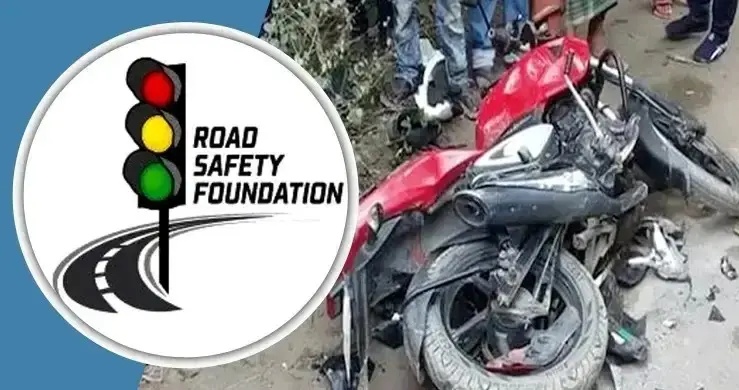
Collected Photo
A total of 15,712 people were killed and 14,143 injured in 16,065 motorcycle accidents across Bangladesh from 2020 to July this year, according to a report by the Road Safety Foundation. Teenagers and young adults account for a significant share of the victims, with 58% aged between 13 and 35.
The report was released on Saturday, August 8.
According to the report, 39.30% of motorcycle accidents occurred after collisions with heavy vehicles, while 34.21% resulted from losing control. Head-on collisions accounted for 22% of the accidents.
Cargo vehicles were responsible for around 40% of the accidents, while motorcycle riders were solely responsible for more than 36%. Reckless driving by bus drivers accounted for around 13.5% of the incidents.
Nearly 30% of motorcycle accidents occurred on national highways, 42% on regional roads, 12% on rural roads and 16.5% on urban roads.
The foundation said motorcycles account for 71% of all registered motor vehicles in Bangladesh, with a large proportion ridden by teenagers and young adults.
It identified reckless driving, traffic rule violations, weak law enforcement, inadequate road infrastructure, lack of awareness campaigns, insufficient safety monitoring and the absence of affordable public transport as major causes of motorcycle accidents.
The foundation also blamed motorcycle manufacturers' advertising strategies for encouraging young people to seek high speeds and ride recklessly.
According to the report, motorcycles are 30 times riskier than other four-wheeled vehicles. Poor public transport and severe traffic congestion are also encouraging people to use motorcycles, contributing to the rising number of accidents.
The report stressed that using quality helmets could reduce the risk of death in crashes by 48%.
To reduce accidents, the foundation recommended mandatory use of quality helmets, stricter enforcement of traffic laws, safety and monitoring technologies, awareness campaigns in educational institutions and on social media, changes to motorcycle advertising practices, safer road infrastructure and affordable, passenger-friendly public transport.
-AJM

Loading...
Loading...
Also read






Editor : Iqbal Sobhan Chowdhury
Published by the Editor on behalf of the Observer Ltd. from Globe Printers, 24/A, New Eskaton Road, Ramna, Dhaka.
Editorial, News and Commercial Offices : Aziz Bhaban (2nd floor), 93, Motijheel C/A, Dhaka-1000.
Phone: PABX- 41053001-06; Advertisement: 41053012; 01793317829, 01550707291, E-mail: [email protected], [email protected] Online: email: [email protected] 41053014; 01550707297 Advertisement: 01550707296


