



| HEADLINE |

|

Nearly half of women aged 20 to 24 married before 18
Published : Wednesday, 21 October, 2026 at 12:00 AM
Staff Correspondent


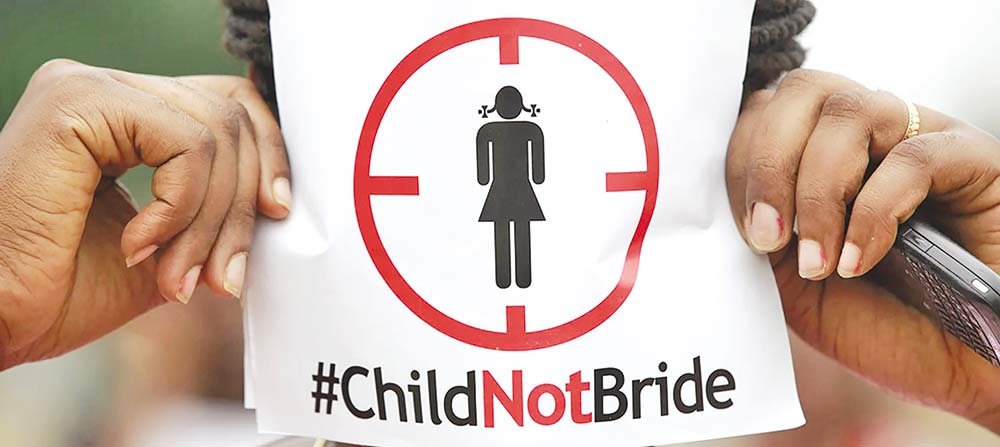 Nearly half of Bangladeshi women aged 20 to 24, or 47.2 per cent, were married before turning 18, highlighting the persistent challenge of child marriage and its consequences for girls’ education, health and future opportunities.
The finding comes from the Bangladesh Multiple Indicator Cluster Survey 2025, cited in a UNICEF report released on Tuesday, which calls for keeping girls in school and addressing loopholes in national laws that permit child marriage.
UNICEF Executive Director Catherine Russell urged Bangladesh to increase investment in children’s education, healthcare and protection after a three-day visit to the country, during which she met families in Korail, Dhaka’s largest informal settlement, and visited Rohingya refugee communities in Cox’s Bazar.
Russell called for action on three fronts: ending child marriage and ensuring girls complete secondary education; fulfilling the government’s commitment to allocate five per cent of Gross Domestic Product (GDP) to education and health; and safeguarding quality education for Rohingya and host-community children.
In Korail, Russell heard from children and parents about poverty, disrupted education and limited access to basic services. Adolescent girls spoke of their ambitions and the social and economic pressures that can force them out of school and into early marriage.
“I met a 14-year-old girl named Bushra, who told me how community leaders at a UNICEF-supported child protection hub had worked with Bushra’s father to save her from early marriage,” Russell said.
“Keeping girls in school and providing them with the health, education and protection services they need will deliver a brighter future for them, for their communities, and for Bangladesh.”
During the visit, Russell met senior government officials, including State Minister for Foreign Affairs Shama Obaed Islam, and welcomed the government’s commitment to increase budgetary allocations for education and health services. She stressed the importance of translating policy commitments into tangible results.
“Budgets reflect priorities,” Russell remarked. “Investing in children’s quality education, health, nutrition and protection is investing in Bangladesh’s future.”

Loading...
Loading...
Also read



Editor : Iqbal Sobhan Chowdhury
Published by the Editor on behalf of the Observer Ltd. from Globe Printers, 24/A, New Eskaton Road, Ramna, Dhaka.
Editorial, News and Commercial Offices : Aziz Bhaban (2nd floor), 93, Motijheel C/A, Dhaka-1000.
Phone: PABX- 41053001-06; Advertisement: 41053012; 01793317829, 01550707291, E-mail: [email protected], [email protected] Online: email: [email protected] 41053014; 01550707297 Advertisement: 01550707296


