



| HEADLINE |

|

Commentary
Two resignations, PM’s clear signal to his Ministers, MPs, party men
Published : Wednesday, 21 October, 2026 at 12:00 AM
Observer Special


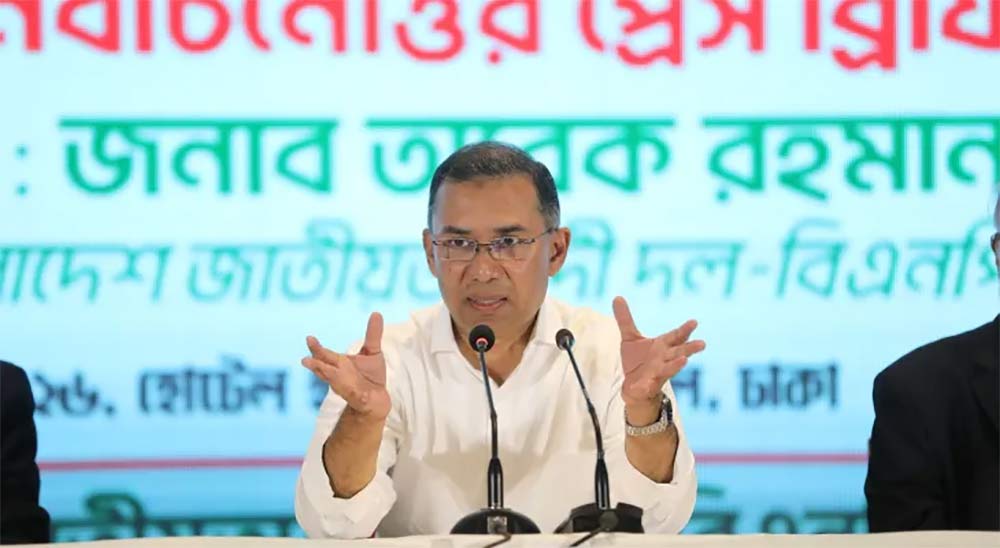 Recent resignations of two BNP lawmakers holding public office within a matter of weeks has placed the BNP government under intense public scrutiny.
The first case involved Ferdousy Ahmed Mishti, a BNP reserved-seat member of parliament who resigned on October 01, 2026 following allegations linking her to the attack, looting and vandalism at the Radda MCH-FP Centre in Mirpur, Dhaka. The health centre was attacked on September 24 and parts of the facility were subsequently demolished. Prime Minister Tarique Rahman reportedly directed her to step down and the resignation followed. However, Mishti denied responsibility for the incident, while investigations into the allegations remained a separate matter.
Less than three weeks later, on October 19, Ishraq Hossain resigned as state minister for Liberation War Affairs Ministry following his participation in an anti-narcotics operation in Dhaka's Gandaria area. Videos circulated on social media showed him carrying a firearm and directing associates during an attempt to apprehend drug peddlers. Once more several media reports indicated that the Prime Minister had instructed him to resign. Mr Ishraq subsequently announced his resignation from the cabinet saying that he does not want to embarrass the PM and his party. But at the press conference on Monday at the National Press Club where he announced his resignation he vowed to continue his anti-drug campaign in his constituency as the elected MP.
Earlier, controversies involving Mir Shahe Alam, the BNP MP for Bogura-2 and state minister for Local Government, Rural Development and Co-operatives, had raised questions about the government's commitment to impartial oversight. In June, three newly formed unions in Bogura became the subject of controversy after their names-Mirbari, Simanta and Diganta-were alleged to correspond to the state minister's family title and the names of his two sons. The state minister denied that the names had been deliberately chosen after his family members, describing ‘the similarities as coincidental’. The controversy nevertheless attracted sharp criticism from opposition lawmakers and others, while raising questions about the public consultation process.
Prime Minister Tarique Rahman subsequently instructed the authorities to change the names of all three unions. Public hearings were organised to gather alternative proposals. The intervention was a welcome indication that the government recognised the importance of public confidence and was prepared to reverse an administrative decision that had generated controversy.
We welcome Prime Minister Tarique Rahman's firm commitment to hold members of his government and party accountable. His intervention over the Bogura union names, followed by the resignations of Mishti and Ishraq, provides an opportunity to establish a clear principle: Holding public office confers obligations that must take precedence over personal, familial and partisan interests. PM’s prompt decision and action on the above three issues are a clear signal which BNP ministers, MPs and activists should take into cognigence. Public trust, party discipline and image of government are now greater to PM as not only head of government but also as Chairman of the ruling party BNP.
We must judge these resignations not merely by the speed with which individuals have been asked to relinquish their positions, but by whether the present government is prepared to apply the same standards consistently throughout its tenure. That said - for a government that has pledged to restore democratic institutions, strengthen accountability and establish a different political culture, these unanticipated developments represent both a challenge and an opportunity.
It is time to be absolutely clear about what these resignations and punitive measures demonstrate. Resignation is not proof of criminal guilt, nor does it replace a proper investigation. Nevertheless, the willingness of a government to require political officeholders to step aside when serious questions arise can be an important part of responsible administration. By separating political accountability from the determination of legal guilt, we expect the BNP government to uphold both public confidence and the principle that everyone is entitled to due process.
The question automatically arise: Will the standards apparently applied to Mishti and Ishraq also apply when allegations concern influential ministers, major government contracts or decisions affecting a minister's own constituency? The almost month-long deadlock at CUET on appointment of Vice-Chancellor raises question whether government’s action sometimes becomes partisan or bias.
First, allegations of serious misconduct should trigger transparent, impartial and timely investigations. Where evidence establishes wrongdoing, proportionate disciplinary or legal action should follow, regardless of an individual's rank or political connections. Where allegations cannot be substantiated, the findings should be made clear so that reputations are not condemned by accusation alone.
Second, we need stronger safeguards against conflicts of interest in public procurement. Contracts involving businesses connected to ministers, MPs or their immediate families should be subject to appropriate disclosure, independent scrutiny and transparent tendering procedures. The public must be able to see that public money is allocated according to legitimate needs and lawful criteria, rather than private or family relationships.
Third, we expect the government to act before controversies become national scandals. Clear codes of conduct, enforceable rules on the use of firearms by public officials, transparent local-government naming procedures and effective mechanisms for reporting misconduct would help prevent problems rather than merely respond to them.
Finally, accountability must extend beyond ministers and MPs to party committees, affiliated organisations, local leaders and officials exercising public authority. Resignations at the top will have limited value if misconduct, extortion and abuse of power at lower levels are ignored or quietly accommodated.
We must also recognise the fact that resignation alone cannot deliver justice to those affected by alleged wrongdoing. In the Radda case, for example, the rights of the centre, its staff and the people who depend on its services require attention independently of the political fate of any individual. Similarly, scrutiny of public contracts must establish whether procurement rules were followed and whether the public received value for money.
PM Tarique Rahman’s BNP government has an opportunity to demonstrate that it understands the difference between political loyalty and public duty. We welcome the prompt action taken in the recent cases. But we should neither declare victory over corruption prematurely nor assume that allegations are equivalent to proven offences.
Ultimately, the political credibility of PM Tarique Rahman and his BNP government will depend on whether accountability becomes a permanent feature of governance rather than an occasional response to public outrage on certain event and activities. We expect the same vigilance to continue throughout the remainder of its tenure, including when investigations become politically inconvenient and embarassing.
In conclusion, the benchmark of a good government is not how quickly it sacrifices a few law makers under pressure - but whether it builds a system in which everyone is answerable to the law, public institutions and the citizens they serve.

Loading...
Loading...
Also read

Editor : Iqbal Sobhan Chowdhury
Published by the Editor on behalf of the Observer Ltd. from Globe Printers, 24/A, New Eskaton Road, Ramna, Dhaka.
Editorial, News and Commercial Offices : Aziz Bhaban (2nd floor), 93, Motijheel C/A, Dhaka-1000.
Phone: PABX- 41053001-06; Advertisement: 41053012; 01793317829, 01550707291, E-mail: [email protected], [email protected] Online: email: [email protected] 41053014; 01550707297 Advertisement: 01550707296


