



| HEADLINE |

|

Scientists find two hidden magma sources


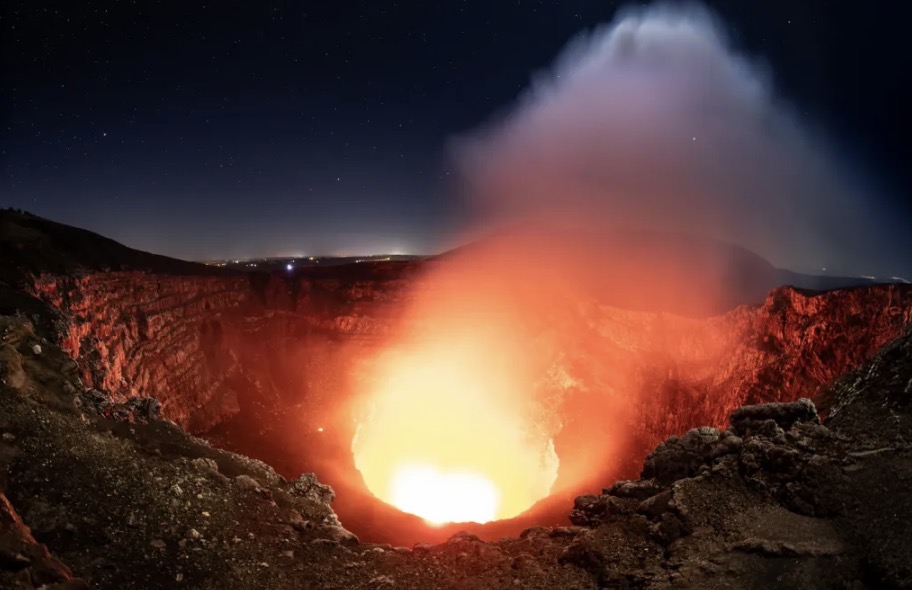
Scientists have found evidence of two magma sources beneath Nicaragua’s active Masaya volcano, suggesting its underground system is more complex than previously understood.
Researchers at Pennsylvania State University analysed six years of satellite observations from 2018 to 2024 and detected changes in ground movement around the volcano. While the broader caldera shifted from sinking to rising, the area around its active Santiago crater continued to sink, suggesting that separate magma reservoirs may be behaving differently.
The findings, published in Geophysical Research Letters, could help improve volcano monitoring and eruption forecasting.
Around two million people live within 13 miles of Masaya, which is also a popular tourist destination. Although the study did not indicate an immediate eruption threat, the volcano’s persistent release of sulfur dioxide can pose health risks to nearby communities and visitors.
Researchers said continued satellite monitoring and further studies could help identify changes in volcanic activity and improve future hazard assessments.
sks
Source: Penn State University









Published by the Editor on behalf of the Observer Ltd. from Globe Printers, 24/A, New Eskaton Road, Ramna, Dhaka.
Editorial, News and Commercial Offices : Aziz Bhaban (2nd floor), 93, Motijheel C/A, Dhaka-1000.
Phone: PABX- 41053001-06; Advertisement: 41053012; 01793317829, 01550707291, E-mail: [email protected], [email protected] Online: email: [email protected] 41053014; 01550707297 Advertisement: 01550707296


