



| HEADLINE |

|

Paris will soon be a Muslim city: Trump
Published : Tuesday, 20 October, 2026 at 11:13 AM
Observer Online Desk


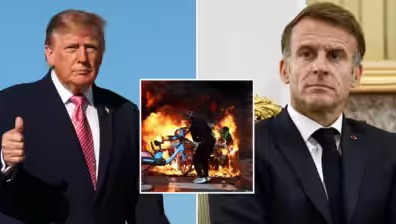
US President Donald Trump has launched a fresh attack on French President Emmanuel Macron, blaming France's immigration policies for the country's troubles and claiming that Paris could soon become a “Muslim city”.
Trump accused Macron of allowing too many people into France, arguing that the French president had ignored his warnings about keeping the country's borders under control.
“Paris is going to be a Muslim city very soon, and that wasn't the deal,” Trump told reporters.
“You're letting everybody from the world come in. The whole world was coming in,” he added, criticising Macron's approach to immigration.
Trump said he had warned the French president about the consequences of the policy when they first met.
“I've known him for maybe eight or nine years and I told him as soon as I met him, I said 'you're making a big mistake',” Trump said.
“We closed our borders. He didn't,” he added, contrasting France's approach with his own administration's immigration policies in the United States.
Trump's remarks come as France faces unrest, with immigration and national identity emerging as key points of debate.
France on edge
French authorities have been grappling with widespread unrest, with demonstrations reportedly escalating into violent clashes in several cities.
The disturbances have seen public buildings set on fire, shops looted and historic landmarks targeted. French law enforcement agencies have detained more than 2,400 people, while nearly 1,000 police officers and gendarmes have reportedly been injured while responding to the violence.
Macron has condemned what he described as “unbridled violence” and vowed that those responsible for destruction would face legal consequences.
The French government has been working to restore order, although Macron has stopped short of declaring a national state of emergency.
The unrest has put pressure on the French administration to address public anger and restore stability, even as political debate intensifies over the factors behind the violence.
Immigration debate deepens amid questions over unrest
Trump has sought to link France's troubles directly to immigration, presenting the unrest as evidence of the consequences of a more open-border approach.
However, that explanation does not capture the range of concerns associated with the demonstrations. Economic hardship, the rising cost of living, pressure on public services and dissatisfaction among young people have also featured in discussions about the unrest.
While right-wing politicians and commentators have called for tighter immigration controls, the extent to which immigration is responsible for the violence remains a separate question from the broader socioeconomic grievances facing France.

Loading...
Loading...
Also read





Editor : Iqbal Sobhan Chowdhury
Published by the Editor on behalf of the Observer Ltd. from Globe Printers, 24/A, New Eskaton Road, Ramna, Dhaka.
Editorial, News and Commercial Offices : Aziz Bhaban (2nd floor), 93, Motijheel C/A, Dhaka-1000.
Phone: PABX- 41053001-06; Advertisement: 41053012; 01793317829, 01550707291, E-mail: [email protected], [email protected] Online: email: [email protected] 41053014; 01550707297 Advertisement: 01550707296


