



| HEADLINE |

|

Data prices slashed, bid deadline extended
Offshore Exploration



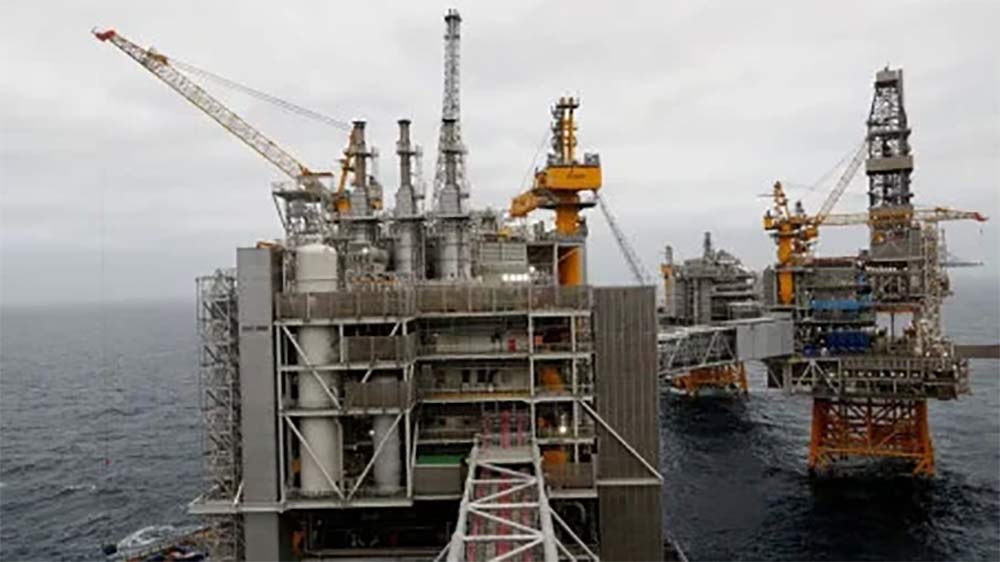 Petrobangla has drastically reduced prices for offshore oil and gas exploration data, cutting the cost of some packages from more than $500,000 to just $5,000 and making four packages completely free in a renewed bid to attract international companies to Bangladesh’s largely unexplored offshore waters.
The move comes as the country faces declining domestic gas production, rising demand and repeated failures to attract bidders for offshore exploration. Officials and sector insiders hope the revised prices will encourage more companies to participate in the Offshore Bidding Round-2026, although the extent to which the cuts will improve investor interest remains to be seen.
Under the bidding round, Petrobangla has offered 10 Data Sales Packages (DSPs) covering seismic surveys, exploration wells and geological studies. The revised prices represent substantial reductions across the packages, some of which were previously priced at hundreds of thousands of dollars.
The biggest cut is for 2D seismic survey data from blocks SS-4 and SS-9, whose price has been reduced from $508,000 to $5,000. Meanwhile, 1974 seismic survey data, previously priced at $10 per line-kilometre, has been made completely free.
Two other packages covering data from 11 exploration wells drilled between 1969 and 2017 and a hydrocarbon habitat study conducted by WellDrill (UK) Ltd have also been made free.
The price of DSP-4, containing 3,150 line-kilometres of 2D seismic survey data collected from Block SS-11 in 2016-17, has been slashed from $314,600 to $5,000. Similarly, the price of 305 square kilometres of 3D seismic data from the same block, collected in 2018, has fallen from $152,500 to $5,000.
The price of 2D seismic survey data from blocks DS-10 and DS-11, collected in 2011-12, has also been reduced from $268,000 to $5,000. Another package containing 3,077 line-kilometres of 2D data from DS-11 and SS-7 has seen its price fall from $307,700 to $5,000.
Data from Block DS-12, comprising 3,580 line-kilometres of 2D seismic surveys, was previously priced at $358,000. The price of 2D data under Data Package-8 for Block-12 has also been reduced from $358,000 to $5,000. Kanchan-1X well data, offered under Package 10, has been made completely free.
Former Bangladesh Petroleum Exploration and Production Company Ltd (Bapex) managing director Amjad Hossain said the lack of interest from companies reflected shortcomings in the previous approach.
“Companies have not shown much interest because that work was not done. The initiative to reduce data prices deserves praise. The country first needed to identify whether it wanted to do the data business or needed gas,” he said.
Sector insiders said the price reductions could broaden competition in the offshore bidding process. They also alleged that a syndicate had kept data package prices excessively high for a long time, discouraging potential investors.
Bangladesh has invited international tenders for 15 deep-sea and 11 shallow-sea blocks under the 2026 bidding round. The deadline for submitting bids, initially set for November, has already been extended by four months to March 31, 2027.
The country’s previous attempt to attract offshore investors ended in failure. When an international tender was invited in March 2024, seven multinational companies purchased tender documents but ultimately did not submit bids, leading to the abandonment of the Offshore Bidding Round-2024.
To improve the terms for investors, the government finalised the Model Production Sharing Contract (PSC) 2026 with several concessions, including an increase in gas prices. Petrobangla has said three companies, including the Turkish Petroleum Corporation (TPAO) and China National Offshore Oil Corporation (CNOOC), have purchased tender documents for the current round.
Petrobangla Chairman Abdul Mannan said the reduction in data prices was intended to attract more competitors.
“We believe that reducing the prices of data packages will increase competition. Bangladesh will benefit. That is why prices have been reduced. Several packages have been made completely free and open,” he said.
Bangladesh secured its maritime boundaries with Myanmar in 2012 and India in 2014 through international legal proceedings, establishing its rights over more than 118,813 square kilometres of maritime area.
Despite the settlement of the disputes, successive governments have failed to make significant progress in exploring the country’s offshore oil and gas resources. The interim government has also struggled to attract investment, leaving much of the potential largely untapped.
Myanmar has been extracting gas from offshore fields in the adjoining part of the Bay of Bengal, strengthening expectations that Bangladesh’s offshore waters could also hold significant hydrocarbon resources. However, the country’s actual reserves can only be established through exploration.
The need to accelerate exploration has become more pressing as domestic gas production declines while demand continues to rise. Production, which once stood at around 2,800 million cubic feet per day, has fallen to approximately 1,620 million cubic feet per day, according to the figures provided.
The prolonged stagnation in oil and gas exploration is considered one of the major reasons behind the country’s worsening supply situation.
The latest price cuts are therefore being viewed as an attempt to remove one of the barriers to offshore investment. Whether they will translate into firm bids and actual exploration, however, will depend on companies’ assessment of the revised contract terms, geological prospects and commercial viability.

Loading...
Loading...
Also read



Editor : Iqbal Sobhan Chowdhury
Published by the Editor on behalf of the Observer Ltd. from Globe Printers, 24/A, New Eskaton Road, Ramna, Dhaka.
Editorial, News and Commercial Offices : Aziz Bhaban (2nd floor), 93, Motijheel C/A, Dhaka-1000.
Phone: PABX- 41053001-06; Advertisement: 41053012; 01793317829, 01550707291, E-mail: [email protected], [email protected] Online: email: [email protected] 41053014; 01550707297 Advertisement: 01550707296


