



| HEADLINE |

|

Resilience starts with Her: Empowering coastal women, girls for a safer tomorrow
Published : Wednesday, 14 October, 2026 at 5:09 PM
Mst. Anjuman Ara Sumi


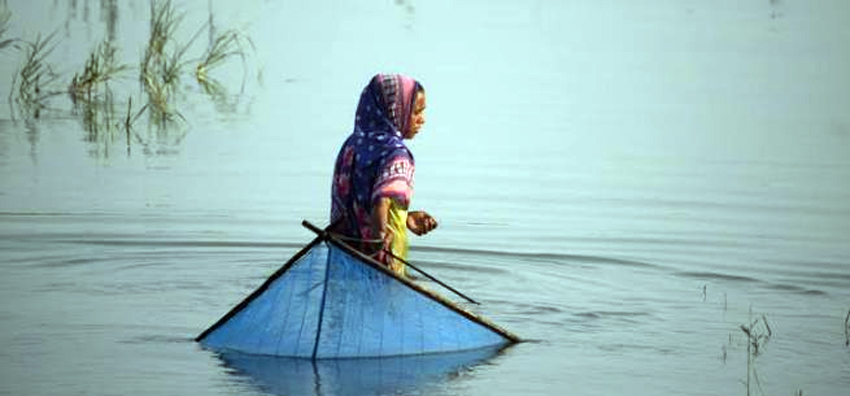
Symbolic Photo
Women and girls residing in the remote coastal regions of Bangladesh, including Barguna, Satkhira, Patuakhali, Bhola, and other climate-vulnerable areas, face disproportionate risks before, during, and after any disasters event strikes. The women and girls have limited access to early warning information, delayed evacuation due to caregiving responsibilities, unsafe and overcrowded shelters, water scarcity caused by salinity intrusion, inadequate menstrual hygiene facilities, loss of livelihoods, increased gender-based violence, psychosocial distress, lack of women friendly shelter center all threaten their resilience. These challenges are further compounded by poverty, social norms, restricted mobility, and limited participation in decision-making processes, especially in the community-lead disaster management committees.
To address these vulnerabilities, policy makers must reinforce the need of keeping women at the forefront of the resilience-building efforts prioritizing women and girls need by undertaking gender-responsive early warning systems, safe and inclusive cyclone shelters, climate-resilient housing, access to safe water and sanitation, menstrual health support, and strengthened protection services.
To ensure readiness before the disaster event, it is utmost important to know the current scenario that they women and girls have toface when they evacuate at the cyclone shelters.
A coastal woman named Fatema(Pseudonym), 45years old, stated that during the latest cyclone she had a delivery just before 2 hours of the cyclone and she folded her newly born baby with cloth and when she was taken to the shelter center with her child. After reaching the cyclone shelter, she lost her child. Later while shivering with fear, she requested the passersby to find her baby and then they discovered her in a wrapped cloth that was put on the ground thinking of other household materials.
This small story exhibits how uncertain and difficult a woman’s life at the shelter center is, who just had a delivery or is pregnant during the stay at the center. While necessary services such as drinking water, food and lifesavingmedicine are far cry, the priority of the menstrual hygiene, separate toilet for girls and women, water and sanitation services are not expected even from the vulnerable girls and women side, even lack of those necessary services would jeopardize their lives. Whereas if we think about dignity, those unheard and underrated needs become the question of dignity, question of survival for the adolescent girl, pregnant and lactating mother who needs to reside at the cyclone shelter during and after the disaster period. Even in the humanitarian context, the humanitarian protection principles also focused on safety, dignity and access with discrimination.
Awareness on disaster preparedness messaging, community led anticipatory action, diversified and climate-adaptive livelihoods, forecast based financing,and trigger based anticipatory action approaches can significantly reduce disaster impacts. Equally important is ensuring women's leadership and representation in disaster preparedness, response, and recovery planning. By recognizing women and girls as agents of change rather than passive recipients of aid, communities can build inclusive resilience that not only protects lives during disasters but also addresses the underlying inequalities that perpetuate vulnerability. Sustainable resilience in coastal Bangladesh will be achieved when every woman and girl has the knowledge, resources, voice, and opportunity to participate in the decision-making process to prepare for, withstand, and recover from disasters with dignity and confidence.
Mst. Anjuman Ara Sumi is a humanitarian and development professional with 14 years of experience in Bangladesh, specializing in resilience, disaster risk reduction, gender equality, and community-led development.
Email: [email protected]

Loading...
Loading...
Also read








Editor : Iqbal Sobhan Chowdhury
Published by the Editor on behalf of the Observer Ltd. from Globe Printers, 24/A, New Eskaton Road, Ramna, Dhaka.
Editorial, News and Commercial Offices : Aziz Bhaban (2nd floor), 93, Motijheel C/A, Dhaka-1000.
Phone: PABX- 41053001-06; Advertisement: 41053012; 01793317829, 01550707291, E-mail: [email protected], [email protected] Online: email: [email protected] 41053014; 01550707297 Advertisement: 01550707296
Published by the Editor on behalf of the Observer Ltd. from Globe Printers, 24/A, New Eskaton Road, Ramna, Dhaka.
Editorial, News and Commercial Offices : Aziz Bhaban (2nd floor), 93, Motijheel C/A, Dhaka-1000.
Phone: PABX- 41053001-06; Advertisement: 41053012; 01793317829, 01550707291, E-mail: [email protected], [email protected] Online: email: [email protected] 41053014; 01550707297 Advertisement: 01550707296


