



| HEADLINE |

|

‘Fostering the joy of learning’
In an exclusive interview, Professor Emeritus Arun Kumar Basak of the University of Rajshahi uttered this sentence, describing it as a teacher’s greatest achievement
Published : Wednesday, 14 October, 2026 at 12:00 AM
Tanvir Raihan


 Professor Emeritus Arun Kumar Basak of the University of Rajshahi has devoted decades to teaching, scientific research and higher education. Despite political obstacles that delayed his pursuit of higher studies abroad, he eventually completed his PhD at the University of Birmingham in the United Kingdom. He also contributed to the development of research and academic institutions in Bangladesh.
For Professor Basak, teaching is not simply about completing a syllabus or preparing students for examinations. Its greatest reward lies in helping students discover the joy of learning, develop independent thinking and become honest, responsible individuals.
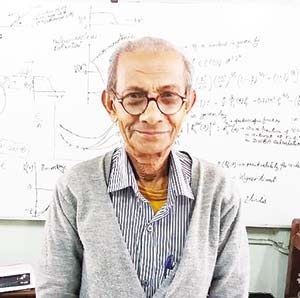 In this interview, he reflects on his academic journey, the teachers who inspired him, the challenges of scientific research and the role of education in national development.
Q: After a long career in teaching and research, what do you consider your greatest achievement?
Professor Arun Kumar Basak: My greatest satisfaction has always come from seeing students understand something they did not know before. Teachers have a responsibility to help students experience the joy of learning. I used to feel that I lived through my students. Teaching is not merely a profession; it is an opportunity to help young people grow through knowledge.
Q: Which teacher had the greatest influence on your life?
Professor Basak: I was deeply influenced by Makhanlal Chakraborty, my physics teacher at Edward College in Pabna. He advised me to sit beside a river or in a quiet place at the end of the day and reflect on what I had studied. He wanted me to consider whether I had truly understood the lessons. That advice has stayed with me throughout my life. Reading something is not the same as understanding it. We must think deeply about what we learn.
Q: Was your academic journey smooth from the beginning?
Professor Basak: No. My academic standing was not particularly strong when I entered Edward College. However, I continued working hard. In 1959, I secured second position in the combined merit list of the Rajshahi Education Board in the Higher Secondary Certificate examination. I later completed my honours degree in physics at Rajshahi College and earned my master's degree from the University of Rajshahi, securing first-class first.
My experience taught me that early academic performance does not necessarily determine a student's future. Perseverance, curiosity and a willingness to learn are equally important.
Q: You faced difficulties during your honours examination. What happened?
Professor Basak: During my final honours examination, an invigilator took away my answer script following a misunderstanding involving the scripts of two students sitting beside me. I was worried that the incident had affected my performance. However, when the results were published, I found that I had secured second position. My maternal aunt's husband was delighted and bought sweets worth Tk 250 to celebrate. The experience taught me not to let difficult circumstances destroy my confidence.
Q: What obstacles did you face in pursuing higher education abroad?
Professor Basak: After my master's degree, I received an opportunity to pursue higher studies at Imperial College London. However, the Pakistani government confiscated my passport over allegations of involvement in progressive political movements. I could not take up the opportunity. Following Bangladesh's independence, I received a new passport in 1972 and went to the University of Birmingham on a Commonwealth postgraduate scholarship to pursue my PhD.
It was a frustrating delay, but I never abandoned my academic ambitions.
Q: How did your research experience in Birmingham teach you?
Professor Basak: I had to work extremely hard. Sometimes, a concept another student understood in ten minutes would take me two hours to grasp. During my first nine months, I spent most of my time at my accommodation and the university department, concentrating on study and research. Eventually, my research progress earned appreciation, and my work was published in international journals related to nuclear physics. This experience reinforced my belief that disciplined work and perseverance are essential to academic success.
Q: How did you contribute to higher education in Bangladesh?
Professor Basak: I wanted to contribute to the education of future generations and strengthen research at our universities. I was involved in initiating the Computer Centre at the University of Rajshahi and contributed to the establishment of the Department of Physics at Shahjalal University of Science and Technology. Personal achievement matters, but I believe our work should also benefit educational institutions and future students.
Q: What is needed to develop a stronger research culture at universities?
Professor Basak: Universities must go beyond classroom teaching and encourage the creation of new knowledge. Teachers need opportunities and motivation to conduct research. When they investigate questions and challenge assumptions, students also learn to think independently rather than rely solely on memorisation. Teaching and research should complement each other.
Q: What advice would you give young people worried about employment and their future?
Professor Basak: Young people should not lose confidence. They need to develop practical skills, work hard and become competent in their chosen fields. Education should not be pursued only to obtain a job; it should equip people to solve real-world problems. With dedication and the right skills, they can explore opportunities at home and abroad.
Q: How can science and technology contribute to Bangladesh's development?
Professor Basak: We must connect philosophy, science, technology, engineering and innovation. Simply using technology is not enough; we must understand the science behind it and develop our own research capabilities. Stronger scientific foundations will help Bangladesh innovate, manufacture quality products and compete internationally.
Q: What role do knowledge and integrity play in building a better society?
Professor Basak: Genuine knowledge broadens the mind and helps us understand the world beyond our immediate experience. Reflection can reduce hostility and conflict. At the same time, children must learn to work honestly. Families and educational institutions should discourage cheating and lying and teach students to earn success through their own efforts. Good examination results mean little if they are achieved dishonestly.
Q: What message would you like to give the younger generation?
Professor Basak: I still consider myself a student because learning never ends. Young people should study attentively, reflect on what they learn, work honestly and keep developing their abilities. They should look beyond personal success and consider how their knowledge can benefit others. Hard work and good deeds make life meaningful.

Loading...
Loading...
Also read



Editor : Iqbal Sobhan Chowdhury
Published by the Editor on behalf of the Observer Ltd. from Globe Printers, 24/A, New Eskaton Road, Ramna, Dhaka.
Editorial, News and Commercial Offices : Aziz Bhaban (2nd floor), 93, Motijheel C/A, Dhaka-1000.
Phone: PABX- 41053001-06; Advertisement: 41053012; 01793317829, 01550707291, E-mail: [email protected], [email protected] Online: email: [email protected] 41053014; 01550707297 Advertisement: 01550707296
Published by the Editor on behalf of the Observer Ltd. from Globe Printers, 24/A, New Eskaton Road, Ramna, Dhaka.
Editorial, News and Commercial Offices : Aziz Bhaban (2nd floor), 93, Motijheel C/A, Dhaka-1000.
Phone: PABX- 41053001-06; Advertisement: 41053012; 01793317829, 01550707291, E-mail: [email protected], [email protected] Online: email: [email protected] 41053014; 01550707297 Advertisement: 01550707296


