



| HEADLINE |

|

Dhaka kitchen market
Fuel price surge, middlemen drive up vegetable, egg prices
Published : Friday, 9 October, 2026 at 12:19 PM
Observer Online Report


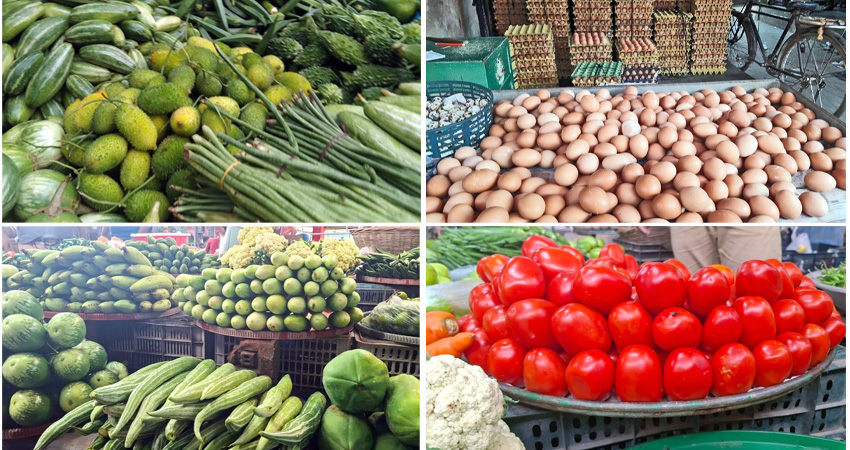
Soaring fuel prices, increased transport costs, and pervasive middleman exploitation have pushed retail prices of vegetables and eggs to record highs across kitchen markets in the capital.
Despite the approaching winter season—which typically brings down agricultural commodity prices due to increased harvests—consumers continue to face severe price pressures, with most winter and staple vegetables retailing between Tk 80 and Tk 100 per kilogram.
Soaring Vegetable Prices
Market visits across various retail hubs in Dhaka on Friday (October 9) revealed that aubergines were selling at Tk 100 per kg, while beans reached Tk 160 to Tk 180 per kg. Bitter gourd, pointed gourd, and snake gourd were priced between Tk 60 and Tk 80 per kg, with carrots retailing at Tk 140 per kg and green chillies at Tk 160 per kg. Radishes and papayas remained the cheapest options at Tk 30 per kg.
Traders at Malibagh and Rampura markets attributed the price spike to elevated freight rates following recent fuel price hikes, compounded by temporary supply shortages as summer crops end before new winter produce arrives in bulk.
Concurrently, the retail egg market has hit record highs, with single eggs retailing above Tk 13. While marginal farmers incur a production cost of Tk 10.25 per egg, wholesale middlemen purchased eggs from farms at Tk 11.11 on Thursday (October 8), creating a spread of nearly Tk 2 per egg before reaching urban retail counters.
Middlemen Exploits Egg Market
Data from the Department of Livestock Services indicates that national egg production reached 25.09 billion pieces in the 2025–26 financial year, equating to over 60 million eggs daily—80 per cent of which originates from marginal layer farms. Industry leaders calculate that the middleman margin drains nearly Tk 120 million daily from farmers and consumers combined.
Bangladesh Poultry Association (BPA) President Md Suman Howlader alleged that trader syndicates dictate daily procurement prices via text messages regardless of actual farm supply, forcing smallholders to sell below cost during gluts while absorbing the full impact of market slumps.
Bangladesh Poultry Industries Association (BPIA) President Mosharef Hossain Chowdhury urged the government to establish direct supply chains connecting farmers to retail markets and reduce poultry feed tariffs, noting that feed accounts for more than half of total farm expenditure.
While annual per capita egg availability in Bangladesh has reached 140—surpassing the UN Food and Agriculture Organization (FAO) minimum recommendation of 104—sector stakeholders warned that persistent financial losses could force thousands of the country's 40,000 registered and unregistered layer farms to shut down permanently.
-SA

Loading...
Loading...
Also read









Editor : Iqbal Sobhan Chowdhury
Published by the Editor on behalf of the Observer Ltd. from Globe Printers, 24/A, New Eskaton Road, Ramna, Dhaka.
Editorial, News and Commercial Offices : Aziz Bhaban (2nd floor), 93, Motijheel C/A, Dhaka-1000.
Phone: PABX- 41053001-06; Advertisement: 41053012; 01793317829, 01550707291, E-mail: [email protected], [email protected] Online: email: [email protected] 41053014; 01550707297 Advertisement: 01550707296
Published by the Editor on behalf of the Observer Ltd. from Globe Printers, 24/A, New Eskaton Road, Ramna, Dhaka.
Editorial, News and Commercial Offices : Aziz Bhaban (2nd floor), 93, Motijheel C/A, Dhaka-1000.
Phone: PABX- 41053001-06; Advertisement: 41053012; 01793317829, 01550707291, E-mail: [email protected], [email protected] Online: email: [email protected] 41053014; 01550707297 Advertisement: 01550707296


