



| HEADLINE |

|

Govt orders probe into LPG manipulation


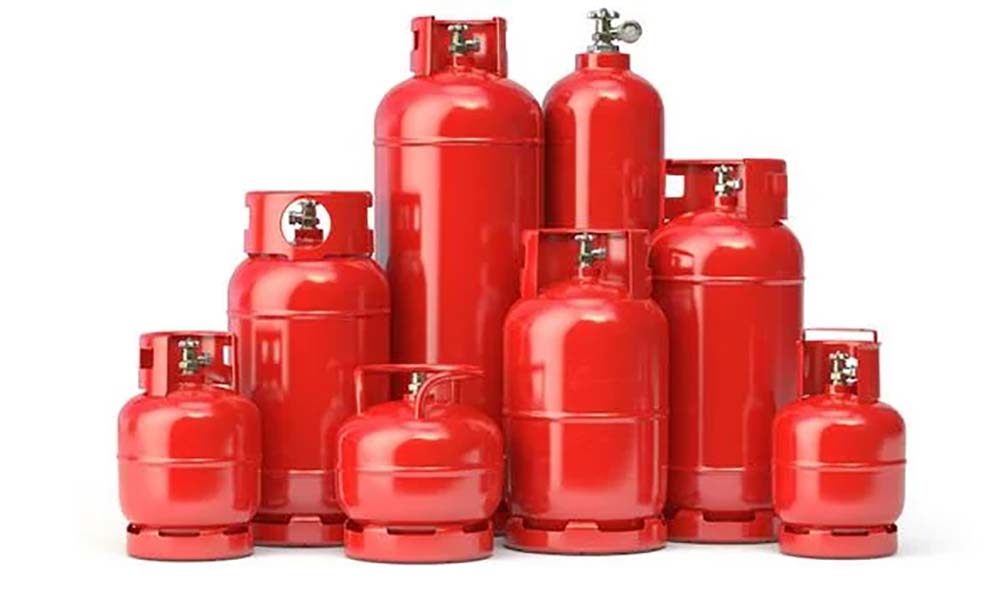 The government has become concerned following the reports of a state intelligence agency and Bangladesh Energy Regulatory Commission (BERC) about irregularities and manipulation of some LPG companies that led to recent market crisis and price hike of cylinders causing serious sufferings of the consumers across the country. Considering the seriousness of the issue and public outrage the Minister of Power, Energy and Mineral Resources has ordered an investigation into the issue and asked BERC to submit a report within a week.
Bangladesh Energy Regulatory Commission (BERC) found discrepancies in September sales data of LP gas after monitoring and scrutinising 11 liquefied petroleum gas (LPG) companies accounts submitted by importers themselves.
BERC sources said major discrepancies had been found in the figures submitted by companies including Jamuna LPG, TMSS, Omera LPG and BM LPG.

Meanwhile, a state intelligence agency also reported irregularities and manipulation by five companies that caused disruption in the LPG supply in the market leading to crisis and price hike adding sufferings to consumers.
A report by a state intelligence agency said that, seeing the international market trend upwards at $64 per tonne, five companies had almost stopped selling from 22 September. They held back thousands of tonnes of LPG to sell at new prices. The report said 158,000 tonnes were imported in August and 156,000 tonnes in September, so there was no scope for a market shortage.
After getting the intelligence agency report, Minister for the Power, Energy and Mineral Resources Iqbal Hasan Mahmood sat with the LP Gas importers at the Secretariat on Saturday and discussed the intelligence report with them. However, the operators denied about hoarding and manipulation. Later the Minister directed the BERC to investigate the issue and submit report to the Ministry within seven days.
Those familiar with the matter believe the data submitted by the companies to the BERC are not accurate either. They allege that the companies submitted fudged accounts. They say an on-site investigation, a review of sales ledgers and bank records would expose the fraud, irregularities and market manipulation to create artificial crisis and raise LPG price further.
The LPG crisis began in the third week of September. Importers have slipped into October unscathed. And, as usual, on 4 October BERC raised the price of a 12kg cylinder by Tk 252.
At Molla Enterprise in the Krishi Market area on Ring Road in Dhaka’s Mohammadpur, a seller, Md Yasin, quoted Tk 2,400 flat for a 12kg LPG cylinder. Home delivery would cost another Tk 50. Asked about the government-fixed price, he was blunt: “The shop was closed for two days because of the LPG crisis. Last Sunday I stayed awake until 3am and managed to get 30 cylinders. I bought them at a higher price, so I am selling at a higher price. If it does not suit you, look elsewhere,” he told the buyers.
In the same areas in Adabar, Rahmatullah, owner of Rahmatullah Enterprise, asked Tk 2,200 for the same weight. When the price was inquired over mobile phone, Md Yusuf, owner of BM Enterprise in Uttara Sector 13, said it would cost Tk 2,400 without bargaining.
Across the capital and in district towns, LPG is being sold at higher prices. In some places, consumers are being charged up to Tk 2,500. Yet only a day earlier, on Sunday, the BERC raised the price of the most widely used 12kg cylinder by Tk 252 to Tk 1,837. Prices of other cylinder sizes were also increased. For the past two weeks, however, 12kg cylinders had been selling in the market for Tk 2,200 to Tk 2,300.
Monowara Begum, a resident of Mirpur Section 1, told the Daily Observer: “Because prices in the market were so high, I was using an electric stove in the hope that they would fall. Today [yesterday], when I went to a shop, the shopkeeper asked for Tk 2,600. After much pleading, I had to buy one cylinder for Tk 2,500.”
Outside Dhaka, there have been complaints of Tk 2,400 to Tk 2,500 being charged in Munshiganj and Tk 2,200 to Tk 2,500 in Mymensingh. Similar complaints have come from Cumilla, Bogura, Rajshahi and several other areas. Cylinders of other weights are also being sold at proportionately higher prices.
The commercial users are under even greater pressure. There are allegations that 30kg and 45kg cylinders are being sold at Tk 1,200 to Tk 1,500 above the fixed price. A restaurant needs about 20 large cylinders a month. If Tk 1,200 extra is charged for each, its monthly cost rises by about Tk 24,000.
Although illegal stockpiling of LPG has been raised by distributors, retailers and even intelligence reports, no effective action has been seen. Even though mobile courts were announced through district administrations, the results are not visible.
Not only was supply reduced, the LPG Traders’ Cooperative Society also filed a written complaint that LPG was being sold above the BERC-declared rate in September.
Sirajul Mowla, president of the Auto-gas Filling Station Owners Association, told that only about 20 per cent of demand was being supplied. Many companies were also charging extra.
The BNP government has been generously meeting all the demands of the LP Gas traders but the governments have failed to bring the traders to heel despite offering various facilities.
Whenever prices rose in the past, they resorted to various manipulations. This time too, sensing a price rise in October, they cut supply, causing a severe crisis. LPG that was priced at Tk 1,585 was reportedly being sold for Tk 2,200 to Tk 2,500. Even after BERC raised the price to Tk 1,837 in October, LPG is not available at that price.
However, discrepancies have now been found in September sales data after 11 companies’ supply stay depressed. These findings emerge from LPG sales statistics filed with BERC. Several BERC officials say the sales data are far from satisfactory. One official, speaking on condition of anonymity, told that the data provided sufficient evidence that sales had been reduced to create an artificial crisis.
BERC Chairman Jalal Ahmed said, “We are verifying and scrutinising the information. If any discrepancy or anything suspicious is found, a decision will be taken accordingly.”
Asked whether any evidence of an artificial crisis had been found, he said: “It is not yet time to say. We are verifying. It would not be right to comment before that. If we suspect anyone’s information, we will take necessary measures, including on-site visits.”
According to sector insiders, about 10 million customers in the country use LPG. Of this, 80 per cent is used for cooking and the rest in industry and transport. The private sector controls 99 per cent of imports. LOAB, the organisation of liquefied petroleum gas (LPG) operators, has said 158,000 tonnes were imported in August and 156,000 tonnes in September. In other words, imports did not fall much, yet supply in the market has declined. Sector insiders believe ensuring supply is the government’s responsibility, which has not been fulfilled. They also believe the crisis would not have arisen had the market monitoring of the past few days been carried out earlier.
LOAB President Amirul Haque said LPG imports had not fallen. Operators were asked to sell at the government-fixed price. They were also being instructed not to sell at higher prices, he added. He, however, avoided a reply on the higher prices the consumers are to pay despite the recent BERC brokered price.

Loading...
Loading...
Also read



Editor : Iqbal Sobhan Chowdhury
Published by the Editor on behalf of the Observer Ltd. from Globe Printers, 24/A, New Eskaton Road, Ramna, Dhaka.
Editorial, News and Commercial Offices : Aziz Bhaban (2nd floor), 93, Motijheel C/A, Dhaka-1000.
Phone: PABX- 41053001-06; Advertisement: 41053012; 01793317829, 01550707291, E-mail: [email protected], [email protected] Online: email: [email protected] 41053014; 01550707297 Advertisement: 01550707296
Published by the Editor on behalf of the Observer Ltd. from Globe Printers, 24/A, New Eskaton Road, Ramna, Dhaka.
Editorial, News and Commercial Offices : Aziz Bhaban (2nd floor), 93, Motijheel C/A, Dhaka-1000.
Phone: PABX- 41053001-06; Advertisement: 41053012; 01793317829, 01550707291, E-mail: [email protected], [email protected] Online: email: [email protected] 41053014; 01550707297 Advertisement: 01550707296


