



| HEADLINE |

|

SSTU aims to emerge as a living laboratory in haor region
This is the vision expressed by Pro-VC in an interview
Published : Wednesday, 7 October, 2026 at 12:00 AM


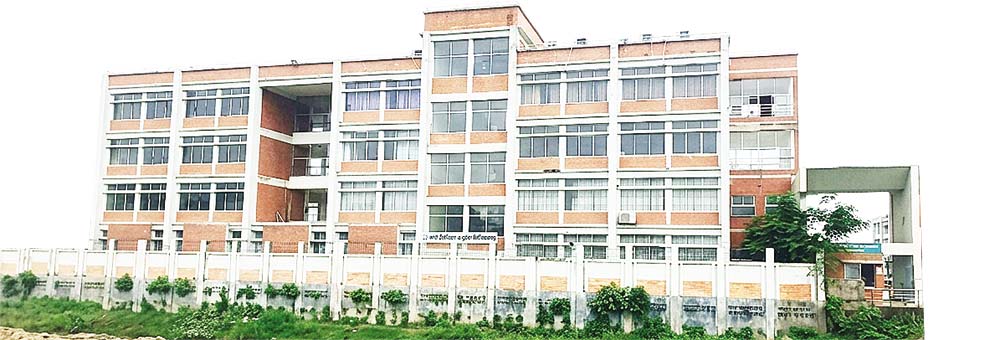
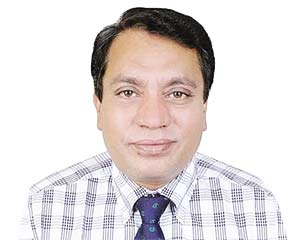
Establishing a university is one challenge; building an institution with a strong academic identity and a sustainable future is another. For Professor Dr. Md. Jahangir Sarker, Pro-Vice-Chancellor of Sunamganj Science and Technology University (SSTU), the university's location in the haor region of Sunamganj offers not only challenges but also a unique opportunity to develop a distinctive academic and research identity. With four departments, Physics, Chemistry, Mathematics, and Computer Science and Engineering, SSTU currently has around 480 students, 14 junior faculty members and 20 officers and staff. Appointed Pro-Vice-Chancellor by the President on July 27, 2026, Professor Sarker says the university's relatively small size provides an opportunity to establish the right academic, research and institutional foundations from the outset. In an exclusive interview with Tanvir Raihan of The daily Observer, he discusses his long-term vision for SSTU, the potential of the haor as a living laboratory, future-oriented education, industry-academia collaboration, interdisciplinary research and institutional transparency. Excerpts of the interview are as follows:
Q: What is your vision for SSTU at this early stage of its development?
Prof Dr Sarker: My vision is to build a university that is deeply rooted in the haor, people and natural environment of Sunamganj while maintaining a strong international outlook.
SSTU is still at the beginning of its journey. We currently have four departments and a relatively small number of students and faculty members. I do not see this as a limitation. Rather, it gives us an opportunity to establish the right foundation from the beginning.
A university needs more than buildings and academic departments. It needs a strong academic culture, research capacity, skilled human resources, transparency, international collaboration and a clear institutional identity.
I want SSTU to identify local challenges, connect them with global knowledge and technology, and use education, research and innovation to contribute to society.
Q: You have extensive international academic experience. How has it shaped your approach to building SSTU?
Prof Dr Sarker: My academic and research experiences have strongly influenced my thinking. I completed my PhD in Aquatic Resource Management at Hiroshima University in Japan in 2006 and subsequently worked as a Research Scientist at Japan's National Institute of Advanced Industrial Science and Technology, or AIST, until 2008. From 2008 to 2011, I served as an Assistant Professor at King Fahd University of Petroleum and Minerals in Saudi Arabia.
After returning to Bangladesh, I joined Noakhali Science and Technology University, where I served as an Associate Professor in Fisheries and Marine Science from 2012 and became a Professor in 2018. In 2021, I also worked with the Department of Biology and Marine Biology at the University of North Carolina Wilmington in the United States.
I have also had academic exposure in Japan, the United States, Malaysia, Thailand, Bahrain, Saudi Arabia and Turkey.
Q: What makes the haor an academic and research opportunity for SSTU?
Prof Dr. Sarker: I see the haor as one of SSTU's greatest academic advantages. It can serve as a vast living laboratory. Water, wetlands, flooding, climate change, agriculture, fisheries, biodiversity and human livelihoods are closely interconnected. These issues naturally create opportunities for interdisciplinary research. Our distinctive academic identity could be built around Water, Haor, Climate, Environment, Biodiversity and Technology.
For example, flooding in Sunamganj is a local reality, but climate change and water-related challenges affect communities in many parts of the world. Research conducted in the haor can therefore have relevance beyond Bangladesh.Our objective should be to transform local problems into research questions with global relevance.
Q: What kind of graduates do you want SSTU to produce?
Prof Dr. Sarker: The future workplace is changing rapidly because of artificial intelligence, automation, robotics, data science, renewable energy and the digital economy. University education therefore cannot remain limited to textbook knowledge.
Students need strong academic foundations as well as communication skills, digital literacy, data analysis, programming, basic AI applications, problem-solving, teamwork, presentation skills, entrepreneurship and professional ethics.
Language skills are also important. English communication should receive particular attention, and where appropriate, the university could explore foreign-language training, including Spanish, Chinese, Japanese and French.
Ultimately, I want our graduates to leave SSTU with more than a degree. They should possess technical competence, communication skills, practical experience, a research mindset and the ability to continue learning throughout their careers.
Q: How can SSTU strengthen links between academia and industry?
Prof Dr. Sarker: The gap between universities and industry needs to be reduced. Students should have opportunities for internships, field attachments, joint projects, professional training, industrial visits, guest lectures and applied research.
Our potential partners should not be limited to large corporations. ICT companies, software firms, engineering organisations, environmental consultancies, agri-tech and fisheries-technology companies, renewable-energy businesses, fintech firms and local entrepreneurs can all contribute.
The relationship should be mutually beneficial. Industry can bring real-world problems to the university, while teachers and students can develop scientific and technological solutions.
In this way, research can produce not only academic publications but also prototypes, technologies, services and solutions that have practical value.
Q: What is your vision for interdisciplinary research at SSTU?
Prof Dr. Sarker: Our four departments provide a strong foundation for interdisciplinary research.
A haor problem should not be viewed as four separate disciplinary problems. It should be approached as an integrated scientific challenge.
In the future, SSTU could establish a Haor, Water, Climate and Biodiversity Research Centre, bringing together researchers from Bangladesh and abroad.
However, research requires continuity. Researchers often face limitations in laboratory facilities, equipment, funding and institutional support. Initial findings should lead to follow-up research, field testing, technological development and practical application. We need to build a sustainable research ecosystem rather than support isolated projects.
Q: What institutional values should define SSTU?
Prof Dr. Sarker: Academic quality, transparency and fairness should be central to the university's institutional culture.
Faculty recruitment should consider academic qualifications, research potential, teaching ability, subject relevance and institutional contribution. Admission and recruitment processes should be transparent, fair and credible.
At the same time, we need a long-term campus master plan covering academic buildings, laboratories, libraries, innovation facilities, student services, accommodation, sports, healthcare, digital infrastructure and transportation.
Campus development must also respect the haor environment. Water management, drainage, biodiversity, green spaces, renewable energy, energy efficiency and climate resilience should be incorporated from the beginning.
I envision a modern university within a living haor environment-technologically advanced while remaining closely connected to nature.
Q: Lastly, what is your long-term vision for SSTU?
Prof Dr. Sarker: I do not think only about the next five or ten years. I think about the next 50 or 100 years.I want a graduate of SSTU to be able to say with confidence anywhere in the world, “I am a graduate of Sunamganj Science and Technology University.”
That graduate should have technical knowledge, communication skills, research ability, professional competence, integrity and a strong sense of responsibility.
My dream is not simply to build another university. It is to help build a generation.
Today, SSTU is small, but its future will depend not on its present size but on its vision, values and direction. We have a rare opportunity to create an institution that emerges from the haor of Sunamganj, transforms local challenges into globally relevant knowledge, equips young people with contemporary skills and uses education and research to improve lives.
That is the SSTU I want to help build-with roots in the haor, excellence in knowledge, global competence in skills and humanity in character.

Loading...
Loading...
Also read



Editor : Iqbal Sobhan Chowdhury
Published by the Editor on behalf of the Observer Ltd. from Globe Printers, 24/A, New Eskaton Road, Ramna, Dhaka.
Editorial, News and Commercial Offices : Aziz Bhaban (2nd floor), 93, Motijheel C/A, Dhaka-1000.
Phone: PABX- 41053001-06; Advertisement: 41053012; 01793317829, 01550707291, E-mail: [email protected], [email protected] Online: email: [email protected] 41053014; 01550707297 Advertisement: 01550707296
Published by the Editor on behalf of the Observer Ltd. from Globe Printers, 24/A, New Eskaton Road, Ramna, Dhaka.
Editorial, News and Commercial Offices : Aziz Bhaban (2nd floor), 93, Motijheel C/A, Dhaka-1000.
Phone: PABX- 41053001-06; Advertisement: 41053012; 01793317829, 01550707291, E-mail: [email protected], [email protected] Online: email: [email protected] 41053014; 01550707297 Advertisement: 01550707296


