



| HEADLINE |

|

Govt approves 15-year concession deal for Ctg Port’s NCT
Published : Monday, 5 October, 2026 at 1:35 PM
Observer Special Report


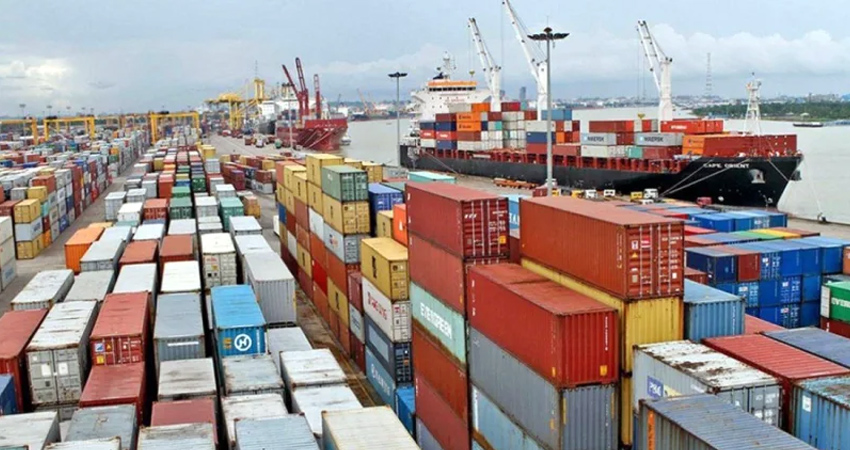
Collected Photo
The government has approved the draft concession agreement to hand over the operation and maintenance of the New Mooring Container Terminal (NCT) and its Overflow Container Yard (OCY) at Chittagong Port to an international terminal operator for 15 years.
The Cabinet Committee on Economic Affairs approved the draft on Thursday (October 1), on a proposal placed by the Shipping Ministry. The approval came at the committee’s 31st meeting of the year, according to a finance ministry statement.
The project will be implemented under the Public-Private Partnership (PPP) model. It is titled “Operation and Maintenance of the New Mooring Container Terminal (NCT) and Overflow Yard (OCY) of the Chittagong Port Authority (CPA).”
What CPA Says about the Project
In a document outlining the benefits of the NCT PPP project, the port authority lists the following.
Tenor and Investment: The concession will run for 15 years, during which DP World, as concessionaire, will be responsible for refurbishment, operations and maintenance of the terminal. a committed investment of approximately $150 million will be made by the terminal operator as upfront payments.
It will go toward modernisation of the terminal, machinery upgrades and technology development. A significant portion is expected to come in the form of foreign direct investment (FDI).
Revenue: CPA says higher throughput and efficiency gains will lift port dues and tax receipts for the government. The concession also provides for a revenue-share mechanism. CPA will receive a revenue share per TEU (container) handled, determined on the basis of the terminal’s average earnings. If average earnings rise, CPA’s revenue share will also rise.
Workers: The existing workers at the NCT will be systematically transitioned into the new system under PPP, following international best practices. Their existing wages will be protected, according to the document.
Standards and Efficiency: CPA says DP World will apply internationally benchmarked health, safety, security and environment protocols. It says this will lower accident rates and improve workforce wellbeing. It also says DP World will draw on its experience of operating more than 60 port terminals worldwide, one of the world’s top global port operators.
The document says advanced terminal operating systems, higher crane productivity and efficient practices can cut vessel turnaround times and improve container dwell times. This would reduce shipping lines’ schedule uncertainty and lower logistics costs for exporters and importers.
CPA says shorter waiting times would help Bangladeshi exporters, especially in time-sensitive sectors such as ready-made garments, agro-processing and light engineering. It says this would help them meet just-in-time delivery requirements, retain buyers and compete better in regional and global markets.
Skills, Ownership and Handback: Local port staff will be trained in modern terminal management and technology. At the end of the concession, CPA will receive the necessary technology and operational know-how.
CPA will retain ownership of port assets throughout the term, and the concessionaire must maintain all terminal assets and civil works in good working condition. The terminal will be handed back to CPA at the end of the concession.
Wider Impact: CPA says reliable terminal capacity encourages private investment in inland container depots, cold chains and industrial parks along the Dhaka-Chittagong and other corridors, and the NCT project is expected to contribute to this.
It also says a successful long-term concession with a global operator would signal that Bangladesh can structure, tender and oversee complex PPPs in line with international best practice. This, it says, is expected to lower perceived risk, broaden the pool of prospective investors and catalyse additional PPPs in energy, transport and social infrastructure, helping close the country’s infrastructure financing gap.
How the Process Unfolded
The proposal to hire a foreign operator for the NCT, the largest container-handling facility at the country’s main seaport, has been under consideration for several years. The process began in 2019.
The Cabinet Committee on Economic Affairs gave in-principle approval to appoint an international private operator under the PPP model on March 23, 2023.
The interim government was close to finalising a deal with DP World. It suspended the move just before the parliamentary election in February this year, in the wake of a wildcat strike by port employees and workers.
The new government has continued the talks, according to the fourth joint PPP platform meeting of Bangladesh and Dubai, held in Dubai in April this year. In June, CPA formed a 12-member support team to assist the negotiation committee on the NCT.
The NCT is currently operated by Chittagong Dry Dock Limited, a Bangladesh Navy-controlled company. It was built in 2007 at a cost of about Tk 2,000 crore. It has five jetties and 14 of Chittagong Port’s 18 quayside gantry cranes.
CCT Next in Line
The Ministry of Shipping has also directed CPA to start the process of appointing Saudi Arabia-based Red Sea Gateway Terminal International (RSGTI) to operate the CCT, in a directive issued on September 28.
The CCT is currently operated by the local private firm Saif Powertec Limited, while the GCB is managed by CPA.
A letter signed by Farzana Hossain, senior assistant secretary of the Ministry of Shipping, asked the Infrastructure Development Company Limited (IDCOL), the advisory body, to process the appointment letter for RSGTI.
The letter said RSGTI had expressed interest in implementing CPA’s CCT, GCB and Bay Port Multipurpose Terminal projects under the PPP model. It also referred to a PPP Authority letter issued on August 19, 2016.
DP World and RSGTI separately submitted proposals to operate the CCT on April 8 and April 22. The local conglomerate MGH Group also submitted a proposal. RSGTI has also expressed interest in operating the GCB alongside the CCT. It says it plans to invest around $1 billion if selected.
-SA

Loading...
Loading...
Also read







Editor : Iqbal Sobhan Chowdhury
Published by the Editor on behalf of the Observer Ltd. from Globe Printers, 24/A, New Eskaton Road, Ramna, Dhaka.
Editorial, News and Commercial Offices : Aziz Bhaban (2nd floor), 93, Motijheel C/A, Dhaka-1000.
Phone: PABX- 41053001-06; Advertisement: 41053012; 01793317829, 01550707291, E-mail: [email protected], [email protected] Online: email: [email protected] 41053014; 01550707297 Advertisement: 01550707296
Published by the Editor on behalf of the Observer Ltd. from Globe Printers, 24/A, New Eskaton Road, Ramna, Dhaka.
Editorial, News and Commercial Offices : Aziz Bhaban (2nd floor), 93, Motijheel C/A, Dhaka-1000.
Phone: PABX- 41053001-06; Advertisement: 41053012; 01793317829, 01550707291, E-mail: [email protected], [email protected] Online: email: [email protected] 41053014; 01550707297 Advertisement: 01550707296


