



| HEADLINE |

|
Jute prices surge in Narail, farmers hope for better returns
Published : Wednesday, 30 September, 2026 at 11:33 AM
Observer Correspondent


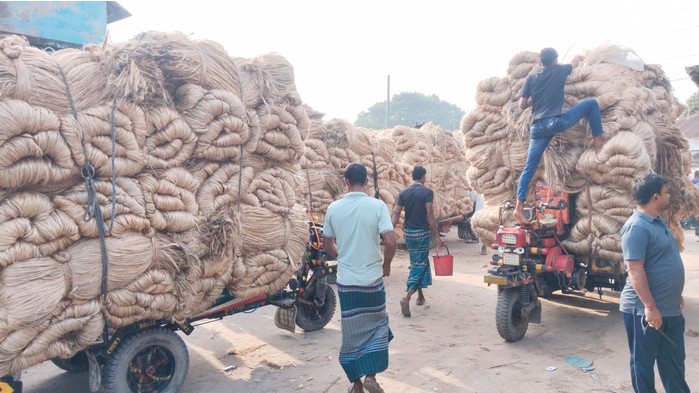
Jute prices have risen sharply in Narail, bringing relief to farmers as wholesale markets across the district see brisk trading.
High-quality jute is currently selling for Tk 4,300 to Tk 4,700 per maund (40 kg) at major markets, including Mithapur Hat in Lohagara upazila. Farmers say the higher prices are helping them recover production costs and raising hopes of making a profit this season.
Mithapur Hat, one of Narail’s largest wholesale jute markets, operates twice a week, on Sundays and Wednesdays. At Wednesday’s market, jute prices ranged from Tk 4,300 to Tk 4,700 per maund depending on quality.
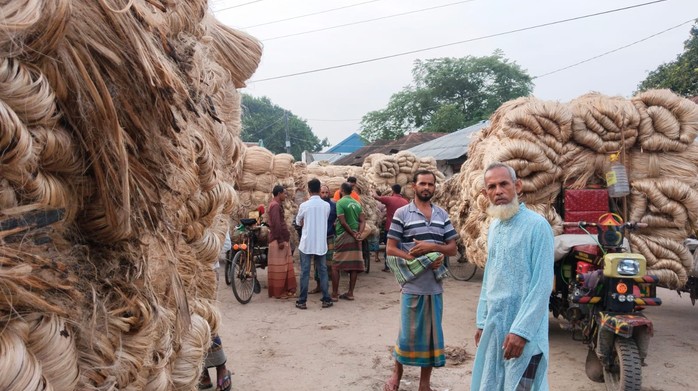
Farmers said the price was significantly lower just a few weeks ago, when a maund of jute sold for Tk 3,400 to Tk 3,700. The recent increase has brought considerable relief to growers.
According to the district agriculture office, jute has been cultivated on 23,517 hectares in Narail this year, with aijpara and Rupganj in Narail Sadar; Lahuria, Lohagara, Mithapur and Dighalia in Lohagara; and production target of 58,198 tonnes.
Other major jute trading centres in the district include Tularampur, Maijpara and Rupganj in Narail Sadar; Lahuria, Lohagara, Mithapur and Dighalia in Lohagara; and Kalia, Baradia and Naragati in Kalia upazila.
A visit to Mithapur Hat on Wednesday found the wholesale market crowded with newly harvested jute. Farmers began arriving early in the morning, bringing their produce to the market to meet household expenses and repay debts.
As soon as the jute reached the market, middlemen and traders gathered around the farmers, inspecting year’s jute. In previous years, a lack of rain often left canals, ponds and wetlands without enough water for retting—the process of soaking the fibre and negotiating prices. Deals were completed quickly, with large quantities changing hands and moving into traders’ warehouses.
Farmers said favourable weather conditions had helped improve the quality of this year’s jute. In previous years, a lack of rain often left canals, ponds and wetlands without enough water for retting—the process of soaking jute stalks to separate the fibre. Farmers were sometimes forced to use polluted water, which could darken the fibre and reduce its quality.
This year, however, abundant rainfall has kept rivers, canals and wetlands supplied with relatively clear water, allowing farmers to rett the jute more easily and produce better-coloured fibre. The improved quality has increased demand and, consequently, prices, they said.
Some farmers said excessive rainfall had affected yields in certain areas, but the higher market prices were helping offset those losses.
However, farmers have raised concerns over weighing practices at the markets. While a maund is generally considered to be 40 kg, they to give an additional two kilograms of jute for every maund sold. They said that although market prices have improved, alleged that some traders are calculating a maund of jute as 42 kg.
According to the farmers, this effectively requires them to give an additional two kilograms of jute for every maund sold. They said that although market prices have improved, such practices reduce their actual returns and prevent them from fully benefiting from the higher prices.
High-quality jute is currently selling for Tk 4,300 to Tk 4,700 per maund (40 kg) at major markets, including Mithapur Hat in Lohagara upazila. Farmers say the higher prices are helping them recover production costs and raising hopes of making a profit this season.
Mithapur Hat, one of Narail’s largest wholesale jute markets, operates twice a week, on Sundays and Wednesdays. At Wednesday’s market, jute prices ranged from Tk 4,300 to Tk 4,700 per maund depending on quality.
Farmers said the price was significantly lower just a few weeks ago, when a maund of jute sold for Tk 3,400 to Tk 3,700. The recent increase has brought considerable relief to growers.
According to the district agriculture office, jute has been cultivated on 23,517 hectares in Narail this year, with aijpara and Rupganj in Narail Sadar; Lahuria, Lohagara, Mithapur and Dighalia in Lohagara; and production target of 58,198 tonnes.
Other major jute trading centres in the district include Tularampur, Maijpara and Rupganj in Narail Sadar; Lahuria, Lohagara, Mithapur and Dighalia in Lohagara; and Kalia, Baradia and Naragati in Kalia upazila.
A visit to Mithapur Hat on Wednesday found the wholesale market crowded with newly harvested jute. Farmers began arriving early in the morning, bringing their produce to the market to meet household expenses and repay debts.
As soon as the jute reached the market, middlemen and traders gathered around the farmers, inspecting year’s jute. In previous years, a lack of rain often left canals, ponds and wetlands without enough water for retting—the process of soaking the fibre and negotiating prices. Deals were completed quickly, with large quantities changing hands and moving into traders’ warehouses.
Farmers said favourable weather conditions had helped improve the quality of this year’s jute. In previous years, a lack of rain often left canals, ponds and wetlands without enough water for retting—the process of soaking jute stalks to separate the fibre. Farmers were sometimes forced to use polluted water, which could darken the fibre and reduce its quality.
This year, however, abundant rainfall has kept rivers, canals and wetlands supplied with relatively clear water, allowing farmers to rett the jute more easily and produce better-coloured fibre. The improved quality has increased demand and, consequently, prices, they said.
Some farmers said excessive rainfall had affected yields in certain areas, but the higher market prices were helping offset those losses.
However, farmers have raised concerns over weighing practices at the markets. While a maund is generally considered to be 40 kg, they to give an additional two kilograms of jute for every maund sold. They said that although market prices have improved, alleged that some traders are calculating a maund of jute as 42 kg.
According to the farmers, this effectively requires them to give an additional two kilograms of jute for every maund sold. They said that although market prices have improved, such practices reduce their actual returns and prevent them from fully benefiting from the higher prices.
Loading...
Loading...
Also read









Editor : Iqbal Sobhan Chowdhury
Published by the Editor on behalf of the Observer Ltd. from Globe Printers, 24/A, New Eskaton Road, Ramna, Dhaka.
Editorial, News and Commercial Offices : Aziz Bhaban (2nd floor), 93, Motijheel C/A, Dhaka-1000.
Phone: PABX- 41053001-06; Advertisement: 41053012; 01793317829, 01550707291, E-mail: [email protected], [email protected] Online: email: [email protected] 41053014; 01550707297 Advertisement: 01550707296
Published by the Editor on behalf of the Observer Ltd. from Globe Printers, 24/A, New Eskaton Road, Ramna, Dhaka.
Editorial, News and Commercial Offices : Aziz Bhaban (2nd floor), 93, Motijheel C/A, Dhaka-1000.
Phone: PABX- 41053001-06; Advertisement: 41053012; 01793317829, 01550707291, E-mail: [email protected], [email protected] Online: email: [email protected] 41053014; 01550707297 Advertisement: 01550707296


