



| HEADLINE |

|
Goods Out, Drugs In [Part-II]
Drugs become currency in cross-border smuggling



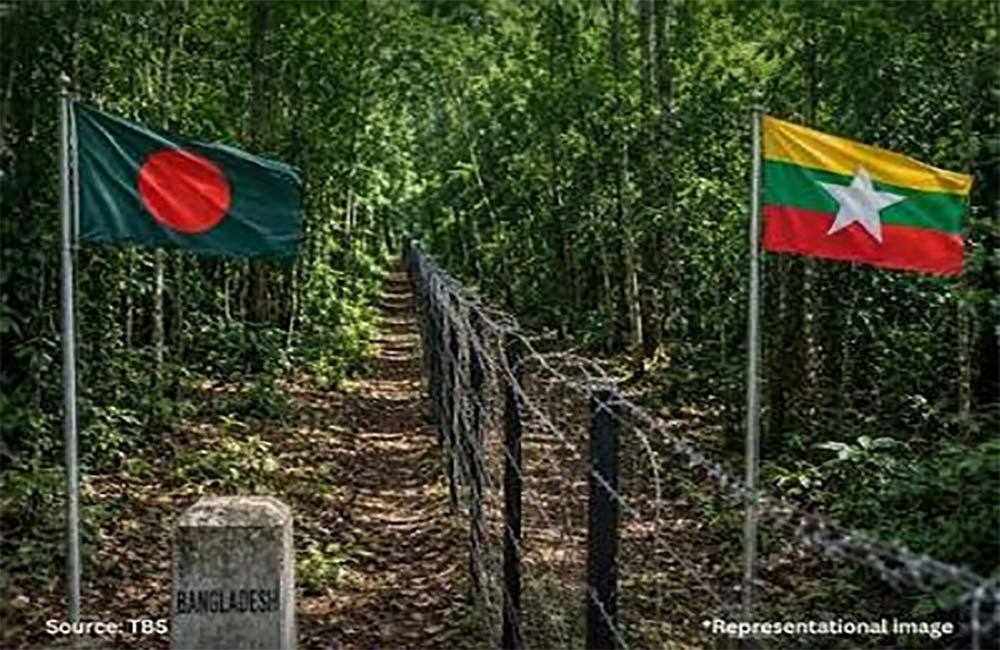 The smuggling economy along the Bangladesh-Myanmar border is becoming increasingly lucrative as narcotics are allegedly being used to settle the value of goods transported from Bangladesh to conflict-hit Rakhine, according to law enforcement officials and people familiar with the trade.
The arrangement allows smugglers to make potentially double profits from a single trip - selling Bangladeshi goods at much higher prices in Rakhine and bringing back narcotics that can later be sold for cash in Bangladesh.
People familiar with the transactions said the value of narcotics used as payment varies depending on the price of goods, shortages in Rakhine, the type and quality of drugs and their prevailing wholesale prices in Bangladesh.
One source claimed that in some consignments, around half of the value is paid in advance through hundi. Another portion is allegedly settled after the goods are dispatched from jetties in areas such as Maungdaw, Buthidaung and Rathedaung, with the remainder adjusted through narcotics.
Unlike conventional currency, drugs have no fixed exchange rate in the illicit trade. Their value is determined through negotiations between those involved in the transactions.
A fisherman told The Daily Observer that a fishing boat operating between Chattogram and Myanmar could make several trips a month carrying essential goods and allegedly return with yaba.
He claimed fish and fishing equipment are kept on the upper deck to make the vessels appear to be engaged in normal fishing operations.
Somen Mondal, deputy director of the Department of Narcotics Control in Cox's Bazar, said fishing boats were being used in some cases to transport goods across the border and bring yaba back on return journeys.
He said cash settlements through informal hundi channels had previously been more common, but authorities were now seeing cases in which narcotics were allegedly used in exchange for goods.
A fishing boat owner, identified as Khalil Majhi, said he had rented out his vessel for six months but later took it back after learning that the renter was allegedly involved in drug trafficking.
He declined to disclose the rental amount, saying it varies depending on the vessel's size, cargo capacity, route, duration and risk involved.
Another fisherman, Abdur Rahman, told this correspondent that a Bangladesh-Myanmar round trip could take about five days.
He claimed a head boatman could receive around Tk3 lakh per trip, while other crew members could be paid Tk30,000-Tk40,000 each.
YABA SEIZURES SURGE
The emerging use of narcotics in cross-border transactions comes amid a sharp rise in yaba seizures.
According to the Department of Narcotics Control's 2025 annual report, law enforcement agencies seized 43,562,811 amphetamine-type tablets during the year, compared with 22,857,751 in 2024 - an increase of about 90.6 per cent.
A high official of the Department of Narcotics Control told The Daily Observer that the nature of border smuggling was constantly changing.
BGB and the Coast Guard had seized cement, potatoes, pulses, medicines and other goods while intercepting attempts to move commodities from Bangladesh, he said.
He also said armed groups in Myanmar were using yaba as a form of "narco-currency", contributing to its circulation.
TIGHTER SURVEILLANCE
BGB has deployed radar, drones and night-vision cameras along the Teknaf border and increased monitoring of river and coastal routes.
Lt Col Hanifur Rahman Bhuiyan, commander of BGB's Teknaf-2 Battalion, said the force was closely monitoring and verifying suspected illicit exchanges, including the use of narcotics as "narco-currency".
The changing nature of the trade is making it more difficult for law enforcement agencies to track transactions, particularly when narcotics are allegedly being used not only as contraband but also as a means of settling payments.
For smugglers, the attraction is clear: a single voyage can generate income from both sides of the border. But for law enforcement agencies, tracing the value of goods, cash and narcotics within the same transaction creates a more complex challenge.
Loading...
Loading...
Also read



Editor : Iqbal Sobhan Chowdhury
Published by the Editor on behalf of the Observer Ltd. from Globe Printers, 24/A, New Eskaton Road, Ramna, Dhaka.
Editorial, News and Commercial Offices : Aziz Bhaban (2nd floor), 93, Motijheel C/A, Dhaka-1000.
Phone: PABX- 41053001-06; Advertisement: 41053012; 01793317829, 01550707291, E-mail: [email protected], [email protected] Online: email: [email protected] 41053014; 01550707297 Advertisement: 01550707296
Published by the Editor on behalf of the Observer Ltd. from Globe Printers, 24/A, New Eskaton Road, Ramna, Dhaka.
Editorial, News and Commercial Offices : Aziz Bhaban (2nd floor), 93, Motijheel C/A, Dhaka-1000.
Phone: PABX- 41053001-06; Advertisement: 41053012; 01793317829, 01550707291, E-mail: [email protected], [email protected] Online: email: [email protected] 41053014; 01550707297 Advertisement: 01550707296


