



| HEADLINE |

|
Power crisis worsens in Tangail as 30mw goes to e-bike charging
Frequent load-shedding leaves factories struggling to operate
Published : Saturday, 26 September, 2026 at 12:00 AM
Md Sajjad Hossain Lincon


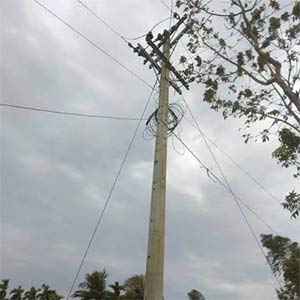 TANGAIL, Sept 25: Frequent load-shedding and a severe power shortage have disrupted daily life in Tangail, with residents reportedly getting electricity for only four to five hours a day.
Power outages often last three to four hours at a stretch, while electricity supply, when restored, remains available for only 30 minutes to an hour.
The prolonged outages are causing immense suffering for residents amid the ongoing heat and are also threatening industrial production in the district. Consumers have additionally complained of unusually high electricity bills despite frequent outages.
An investigation found that battery-run easy-bikes and auto-rickshaws are among the major contributors to the pressure on the district's electricity supply.
According to electricity officials and garage owners, a battery-run auto-rickshaw generally uses four to five 15-amp batteries. Charging the batteries requires around 1 to 1.5 units of electricity per hour. A vehicle therefore consumes around 8 to 12 kilowatt-hours of electricity for a full daily charge.
There are an estimated 50,000 to 60,000 easy-bikes and battery-run auto-rickshaws operating across Tangail's 12 upazilas.
Charging their batteries consumes around 720,000 units of electricity a day, equivalent to roughly 25 to 30 megawatts (mw).
The amount is close to the daily electricity demand of about two upazilas.
The problem becomes particularly acute after 8pm, when national electricity demand reaches its peak. Hundreds of easy-bikes and auto-rickshaws are plugged in simultaneously at garages across the district, putting additional pressure on the power distribution system and contributing to outages for other consumers.
Under the Bangladesh Power Development Board (BPDB), three feeders in Tangail Sadar - Bailla, Kachuadangha and Mymensingh Road - have a combined 367,464 consumers.
Their daily electricity demand is around 160 to 170mw, while supply ranges between 100mw and 110mw. This leaves a daily shortfall of around 60 to 70mw, or 41 per cent of demand.
Despite the shortage, more than 33,000 battery-run vehicles are charged every day in areas under BPDB's jurisdiction alone. Around 15,000 of them operate in the Tangail town and surrounding areas.
Tangail Palli Bidyut Samity covers an even larger area, including parts of Tangail Sadar, Kalihati, Basail, Sakhipur, Mirzapur, Nagarpur and Delduar, as well as parts of Chauhali in Sirajganj.
The samity has around 651,000 consumers, with daily demand standing at about 210mw. But it receives only around 47 to 50 per cent of the required electricity from the national grid on average.
As a result, the samity has to enforce load-shedding of around 85 to 90mw every day.
The electricity demand rises several times after evening compared with other times of the day as households increase their use of fans, lights and other appliances. Shops and business establishments also consume more electricity during this period.
At the same time, rows of easy-bikes and auto-rickshaws are plugged in at garages across the district.
Officials and local residents say the power deficit could be reduced by around 30mw if the charging load during peak hours were removed.
Although most vehicles are charged at garages, many are also charged at people's homes, further increasing pressure on the already strained power system.
Local residents and consumers have expressed frustration over the situation. They said immediate legal measures were needed to stop vehicle charging during peak hours and increase power supplies from the national grid to prevent further disruption to industrial production, businesses and daily life.
Ruma Akter, a teacher at a school under Tangail Municipality, said, “I cannot sleep at night because of the heat. Sometimes we get electricity for an hour, followed by two hours without it. We are suffering badly with our children.”
Sarowar Hossain of Paharpur Village in Delduar said electricity outages continued throughout the day and night.
“Hundreds of autos are charged at garages in the village during the evening peak hours. Unless this is controlled, it will be difficult to reduce load-shedding,” he said.
Sanowar, an auto-rickshaw driver from Nayapara Village in Nagarpur, said a significant portion of his daily earnings goes towards charging his vehicle.
“I have to pay Tk 100 to Tk 120 at a garage to charge each vehicle. We have no alternative, so we are forced to do this because this vehicle is our livelihood,” he said.
However, battery-run easy-bikes and auto-rickshaws have become an important mode of transport for people in both urban and rural areas. They also provide livelihoods for thousands of people.
Officials and stakeholders said the uncontrolled charging system was nevertheless putting additional pressure on electricity supplies. They suggested bringing these vehicles under a registration system, establishing authorised charging stations and restricting charging during peak hours to help ease the pressure.
Md Abu Bakar Talukdar, Executive Engineer of Tangail BPDB's sales and distribution division, said the authority was unable to meet consumers' demand for electricity while thousands of easy-bikes and auto-rickshaws were consuming large amounts of power for charging.
“We cannot stop them either. Unless the municipal authorities and BRTA take action, these vehicles will not stop operating, as thousands of easy-bikes and auto-rickshaws are running without their permission,” he said.
He said the BPDB was conducting drives against garages that had installed illegal electricity connections for charging vehicles.
Loading...
Loading...
Also read



Editor : Iqbal Sobhan Chowdhury
Published by the Editor on behalf of the Observer Ltd. from Globe Printers, 24/A, New Eskaton Road, Ramna, Dhaka.
Editorial, News and Commercial Offices : Aziz Bhaban (2nd floor), 93, Motijheel C/A, Dhaka-1000.
Phone: PABX- 41053001-06; Advertisement: 41053012; 01793317829, 01550707291, E-mail: [email protected], [email protected] Online: email: [email protected] 41053014; 01550707297 Advertisement: 01550707296
Published by the Editor on behalf of the Observer Ltd. from Globe Printers, 24/A, New Eskaton Road, Ramna, Dhaka.
Editorial, News and Commercial Offices : Aziz Bhaban (2nd floor), 93, Motijheel C/A, Dhaka-1000.
Phone: PABX- 41053001-06; Advertisement: 41053012; 01793317829, 01550707291, E-mail: [email protected], [email protected] Online: email: [email protected] 41053014; 01550707297 Advertisement: 01550707296


