



| HEADLINE |

|
Apratim's death: Beyond an iPhone, our collective responsibility
Published : Sunday, 20 September, 2026 at 5:49 PM
Aamir Al Hamza


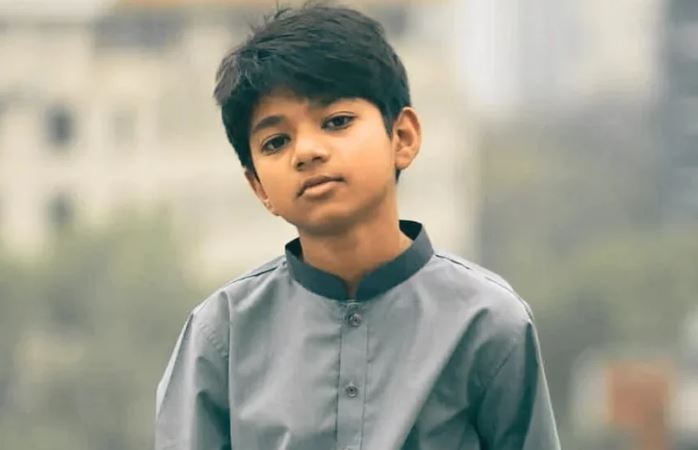
Collected Photo
The death of 13-year-old Ishayat Shahriar Apratim, whose body was recovered from the foothills of Lalmai Hill in Cumilla after he went missing while out with friends.
The brutal murder has raised troubling questions about child safety, parental responsibility, social media culture and the effectiveness of our response to missing children.
Apratim, a Class 7 student of Border Guard Public School and the only son of Dr Nahida Begum, an associate professor of Bangla at Comilla University, left home at around 3:30 PM on Friday (September 18) with his mother's iPhone to take photographs with friends. He did not return home that evening.
After a search by his family, a general diary was filed with police and his last mobile phone location was reportedly traced to an area near the university. Students and others later joined the search.
On Saturday (September 19) noon, his body was recovered from a jungle at the foot of Lalmai Hill, behind Magic Paradise Park in the Salmampur area.
Police have detained three youths—Tuhin, 18, Anas and Fahim—for questioning after reviewing CCTV footage that reportedly showed Apratim with Tuhin near the university gate.
Authorities are investigating whether the missing iPhone was connected to the killing. Home Minister Salahuddin Ahmed has said the phone was recovered from Tuhin.
The investigation will determine what exactly happened and who should be held responsible. But Apratim's death already raises a question that goes beyond the missing phone: what could we, as parents, communities and institutions, have done to keep a child safe?
The responsibility of parents
Giving children smartphones has become increasingly common. Phones can help with education, communication and emergencies. But access to technology must also come with guidance.
A 13-year-old carrying an expensive smartphone in an isolated or unfamiliar area can face risks that a child may not recognise. Parents therefore need to know not only what their children are doing online, but also who they are communicating with, where they are going and who they are meeting.
Parenting today cannot stop at food, education and academic success. It must also include digital awareness, location-sharing practices, clear time limits and conversations about personal safety.
Children should be taught that they do not have to follow a friend into an isolated place simply because they are asked to do so.
The responsibility of society and social media
Apratim reportedly went out to take photographs. For today's children, photographs, videos, reels and social-media interactions are an ordinary part of life.
But the digital world can also create risks when children interact with people whose identities and intentions are not properly known.
This is not an argument against smartphones or social media. It is a reminder that children need digital literacy just as much as they need traditional education.
There is another responsibility for society: we must not turn a child's death into online spectacle.
Photographs of Apratim's body should not be circulated. His family is already facing an unbearable loss; sharing graphic images only deepens that trauma.
Nor should responsibility be shifted onto his mother or father for allowing him to carry a phone. A phone can be a possession. The responsibility for a crime lies with those who commit it.
The responsibility of the state
Apratim's death also raises questions about the response to missing children and security around educational institutions, parks and isolated areas.
When a child goes missing, the first hours are crucial. Families should not have to depend primarily on their own networks to locate a missing child.
A coordinated response involving police, specialised investigation units, CCTV footage, mobile-location data and local community networks should begin as early as possible.
Areas surrounding schools, universities, parks and known isolated locations should also receive regular security assessments. Where necessary, lighting, CCTV surveillance and police patrols should be strengthened.
Justice in Apratim's case is important. But justice after a tragedy cannot replace prevention before it.
What we must do now
Parents can begin with three simple questions: Where are you going? Who are you going with? When will you return?
Children should be encouraged to share their live location when appropriate, avoid isolated places and immediately inform parents or trusted adults if someone makes them uncomfortable.
Schools and residential communities can establish emergency communication groups so that information about a missing child spreads quickly.
And authorities should examine whether existing procedures for missing children are fast enough, particularly when the missing person is a minor.
Apratim's death mean something
Apratim went out on a Friday afternoon to take photographs with his friends. He never returned home.
His death has left a family devastated and a community asking questions. Those questions should not disappear after the funeral, the Facebook posts and the hashtags fade.
The real test of our response will be whether we learn from what happened.
If Apratim's death leads parents to talk more openly with their children, communities to become more vigilant, authorities to improve missing-child responses and society to use social media more responsibly, then his memory can become part of a much-needed change.
Let his death not become another social-media trend that disappears in a few days. Let it become a reason to make our children safer.
Loading...
Loading...
Also read









Editor : Iqbal Sobhan Chowdhury
Published by the Editor on behalf of the Observer Ltd. from Globe Printers, 24/A, New Eskaton Road, Ramna, Dhaka.
Editorial, News and Commercial Offices : Aziz Bhaban (2nd floor), 93, Motijheel C/A, Dhaka-1000.
Phone: PABX- 41053001-06; Advertisement: 41053012; 01793317829, 01550707291, E-mail: [email protected], [email protected] Online: email: [email protected] 41053014; 01550707297 Advertisement: 01550707296
Published by the Editor on behalf of the Observer Ltd. from Globe Printers, 24/A, New Eskaton Road, Ramna, Dhaka.
Editorial, News and Commercial Offices : Aziz Bhaban (2nd floor), 93, Motijheel C/A, Dhaka-1000.
Phone: PABX- 41053001-06; Advertisement: 41053012; 01793317829, 01550707291, E-mail: [email protected], [email protected] Online: email: [email protected] 41053014; 01550707297 Advertisement: 01550707296


