



| HEADLINE |

|

Energy Crisis: The Hidden Tax on Our Economy
Published : Tuesday, 8 September, 2026 at 12:00 AM
Md Mohi Uddin


 Bangladesh’s energy crisis is no longer a problem confined to gas distribution, electricity generation or fuel imports. It has become a hidden tax on the entire economy-reducing factory output, raising production costs, threatening exports, discouraging investment, worsening inflation and increasing pressure on foreign exchange and public finances.
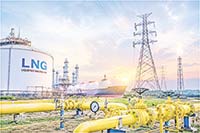
The latest figures are alarming. Average daily gas supply fell to 2,235 million cubic feet per day (mmcfd) in August 2026, the lowest August level in a decade, against official demand of around 3,860 mmcfd. Energy-sector officials estimate actual demand has already crossed 4,000 mmcfd. The immediate crisis was aggravated by the shutdown of an LNG floating storage and regasification unit (FSRU) at Moheshkhali in July. The disruption initially reduced national gas supply by around 450 mmcfd. Subsequent technical difficulties, delayed LNG cargoes and weather-related disruptions further tightened supply.
But the real problem goes much deeper. Bangladesh has been increasing its dependence on imported LNG while domestic gas production has declined. The country therefore has less room to absorb disruptions in imported supply. The vulnerability was clearly demonstrated in August. At one point, LNG supply fell to around 300 mmcfd, while total gas availability dropped sharply below demand. Even when supply improved to around 2,420 mmcfd, it remained far below national demand of approximately 3,800 mmcfd. This exposes a fundamental weakness in the energy architecture: Bangladesh has been increasing energy demand faster than it has secured reliable and diversified primary energy supplies.
When gas supply falters, economic output also suffers. A factory does not need to close permanently to face a major financial loss. Low gas pressure can reduce production from 80 per cent to 30 per cent of capacity, while salaries, rent, interest and other fixed costs continue. In Narsingdi, more than 100 textile factories were reportedly forced to halt or severely disrupt production because of inadequate gas supply. Across industrial areas, manufacturers have been forced to reduce shifts, suspend production or use expensive alternative fuels. The energy crisis could cost the industrial sector up to Tk2,387 crore in lost output every day. Even at 55 per cent factory capacity, the estimated loss would be around Tk1,074 crore a day.
The export threat is another concern. Bangladesh’s export industries operate under strict international delivery schedules. For apparel and textile manufacturers, an energy shortage can mean more than losing a day's production. It can result in delayed shipments, cancelled orders, discounts or costly airfreight. During August, some factories managed to increase production as gas pressure temporarily improved, but the recovery remained fragile. International buyers have alternatives. If Bangladesh cannot guarantee reliable production, buyers can shift orders to Vietnam, India, Türkiye or other competing destinations. That is why energy reliability should be treated as part of export infrastructure, alongside ports, roads, customs and telecommunications.
Bangladesh urgently needs private investment to generate employment and accelerate economic growth. Yet investors need something more fundamental than tax incentives or inexpensive industrial land: predictability. A factory cannot be planned around the assumption that gas may be available tomorrow. The problem is already affecting new investment. In July, the government suspended new industrial gas connections and load increases amid the supply shortage. At that time, around 1,857 applications for new gas connections were reportedly pending, while investors warned that billions of taka in industrial projects were effectively stuck awaiting gas. This creates a damaging paradox: Bangladesh needs investment to create jobs and raise production, but inadequate energy availability prevents productive capital from being deployed.
Energy shortages also create an inflationary chain reaction. When gas becomes unavailable, factories may turn to diesel or other expensive fuels. Electricity shortages increase operating costs. Transport and logistics become more expensive. Businesses ultimately pass at least part of these costs to consumers. The result is higher prices for manufactured goods, food processing, construction materials and transport services. Bangladesh is already dealing with elevated inflation. Recent inflation rate 8.32 per cent. Under such circumstances, another energy-driven cost shock could make the fight against inflation considerably more difficult. Energy policy and inflation policy therefore cannot be treated as separate issues.
Bangladesh's dependence on imported LNG and fuel creates another vulnerability. When international energy prices rise, the country must spend more dollars simply to maintain existing consumption. That increases demand for foreign currency and can put additional pressure on the exchange rate. The mechanism is potentially self-reinforcing.
The cost of LNG procurement illustrates the problem. In August, the government approved two LNG cargoes for September delivery at $24.625 and $24.25 per MMBtu, respectively. For an economy already concerned about foreign-exchange stability, expensive emergency energy imports represent a significant vulnerability.
The energy crisis can also become a public-finance and banking problem. If the government subsidises fuel and electricity to protect consumers and industries, the fiscal burden rises. If it allows prices to rise sharply, inflation and production costs increase. Meanwhile, factories operating at low capacity generate less profit and may struggle to service bank loans. Lower corporate activity can also reduce tax and VAT collection. In other words, the energy shock can eventually travel from gas pipelines to corporate balance sheets, bank balance sheets and government finances.
Bangladesh needs a structural response. The greatest policy mistake would be to treat the present crisis merely as an LNG procurement problem. Bangladesh needs a three-part strategy.
First, LNG procurement, FSRU reliability, pipeline management and fuel allocation to power plants and industries must be improved. Idle or underutilised alternative power plants should be brought into operation where economically feasible so that scarce gas can be redirected towards productive industries. Second, Bangladesh needs much more aggressive onshore and offshore gas exploration. BAPEX requires stronger technical and financial capacity, while competitive international participation should be considered where appropriate. Third, Rooftop and industrial solar, energy efficiency, battery storage and regional electricity trade should become central elements of national energy planning. The objective should not simply be to increase installed generation capacity. It should be to guarantee reliable, affordable and diversified energy availability.
Bangladesh's latest experience demonstrates a fundamental economic reality: an energy crisis never remains inside the energy sector. It reduces factory utilisation, raises production costs, threatens export orders, discourages investment, increases inflation, enlarges the import bill, puts pressure on foreign exchange and can ultimately weaken banks through corporate distress.
The August experience was a warning. Gas supply reached a decade-low monthly average, while factories across major industrial belts struggled to maintain production. Bangladesh therefore needs to redefine energy security. A power plant without fuel, a factory without gas or an LNG terminal vulnerable to disruption does not constitute genuine energy security. The present crisis should not be viewed merely as an emergency to be managed. It should be treated as a strategic opportunity to redesign Bangladesh’s energy architecture. Otherwise, today’s gas shortage could become tomorrow’s investment crisis, export crisis-and ultimately, growth crisis.
The writer is an economic analyst

Loading...
Loading...
Also read



Editor : Iqbal Sobhan Chowdhury
Published by the Editor on behalf of the Observer Ltd. from Globe Printers, 24/A, New Eskaton Road, Ramna, Dhaka.
Editorial, News and Commercial Offices : Aziz Bhaban (2nd floor), 93, Motijheel C/A, Dhaka-1000.
Phone: PABX- 41053001-06; Advertisement: 41053012; 01793317829, 01550707291, E-mail: [email protected], [email protected] Online: email: [email protected] 41053014; 01550707297 Advertisement: 01550707296
Published by the Editor on behalf of the Observer Ltd. from Globe Printers, 24/A, New Eskaton Road, Ramna, Dhaka.
Editorial, News and Commercial Offices : Aziz Bhaban (2nd floor), 93, Motijheel C/A, Dhaka-1000.
Phone: PABX- 41053001-06; Advertisement: 41053012; 01793317829, 01550707291, E-mail: [email protected], [email protected] Online: email: [email protected] 41053014; 01550707297 Advertisement: 01550707296


