



| HEADLINE |

|

Workers’ rights must be ensured alongside technological progress: Shimul Biswas
Published : Friday, 4 September, 2026 at 4:01 PM
Observer Staff Correspondent


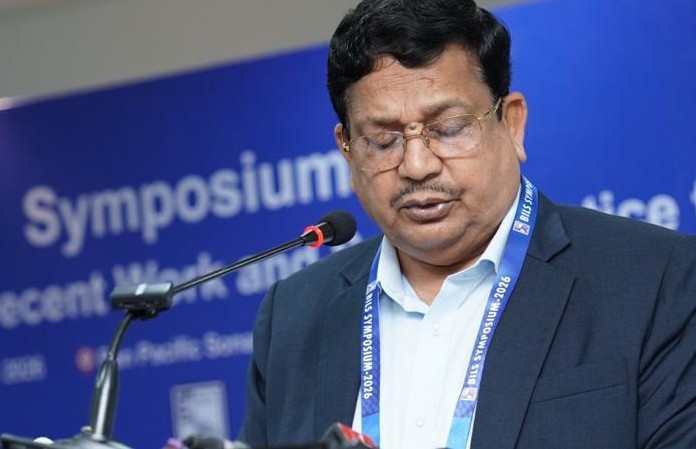
File Photo
Nationalist Labour Party coordinator Advocate Shamsur Rahman Shimul Biswas MP has called for ensuring workers’ safety, dignity, fair wages and rights in line with technological advancement and the changing nature of the workplace.
“We do not want a future where technology advances but workers are left behind. We want an economy where productivity increases, industries become more competitive and investment grows, but the foundation of that economy must be workers’ fair rights, safety and dignity,” he said.
Shimul Biswas made the remarks on Friday while speaking at an international labour symposium titled **“Future of Work: Decent Work and Social Justice for All”**, organised by the Bangladesh Institute of Labour Studies (BILS) at the conference lounge on the second floor of Hotel Sonargaon in the capital.
Prime Minister’s Adviser on Economic and Planning Affairs Dr Rashid Al Mahmud Titumir attended the event as the chief guest.
Shimul Biswas said the nature of work is changing rapidly. New forms of employment are emerging due to technological advancement, changes in production systems and climate change. However, he stressed that the safety, dignity, fair wages and rights of workers and their families must not be overlooked amid these changes.
A large portion of Bangladesh’s workforce is engaged in informal employment, he said. Millions of workers are employed in sectors including agriculture, construction, transport, domestic work, fisheries, small and cottage industries, home-based work and platform-based employment.
However, many of these workers still lack job security, legal protection, social security, healthcare and labour rights, he noted.
Highlighting workers’ fundamental demands, Shimul Biswas called for ensuring fair wages, implementation of an eight-hour workday, fair compensation for overtime, job security, safe working conditions, trade union rights, opportunities for collective bargaining, timely payment of wages, equal rights for women workers, social protection and dignity in the workplace.
He said various workers’ organisations have demanded that the national minimum wage be set at Tk 30,000.
He also stressed the need to adjust wage structures in line with inflation, properly implement working-hour regulations, create a database of informal workers and protect employment during periods of technological transition.
“Bangladesh’s Labour Law has already been amended. This is certainly an important step forward. But enacting a law is not the end of the process. The real measure of our success will be how effectively the law is implemented, how much protection workers receive and to what extent workers can exercise their rights in practice,” he said.
Emphasising the importance of social dialogue in resolving labour-sector challenges, Shimul Biswas said the government alone cannot solve all problems in the labour market.
“Neither employers nor workers’ organisations can solve these problems alone. The government, employers and workers must sit at the negotiating table with equal dignity and responsibility,” he said.
He called for strengthening collective bargaining, tripartite and multi-stakeholder dialogue, as well as democracy in the workplace.
“Labour policies can never be sustainable if workers’ voices are excluded from the policymaking process,” he added.
The symposium emphasised the need to make Bangladesh’s future labour policies worker-friendly, industry-friendly, productivity-oriented and based on justice.
Discussions also focused on skills development, social protection and greater participation of workers in technological transitions through social dialogue.
Representatives from Denmark, the Netherlands, Japan, Panama, the Philippines, Tunisia, the International Labour Organization (ILO), Pakistan, India and other countries took part in the symposium.
The event also produced a number of important views and recommendations on addressing future challenges in the labour sector.
-JB/HIS

Loading...
Loading...
Also read







Editor : Iqbal Sobhan Chowdhury
Published by the Editor on behalf of the Observer Ltd. from Globe Printers, 24/A, New Eskaton Road, Ramna, Dhaka.
Editorial, News and Commercial Offices : Aziz Bhaban (2nd floor), 93, Motijheel C/A, Dhaka-1000.
Phone: PABX- 41053001-06; Advertisement: 41053012; 01793317829, 01550707291, E-mail: [email protected], [email protected] Online: email: [email protected] 41053014; 01550707297 Advertisement: 01550707296
Published by the Editor on behalf of the Observer Ltd. from Globe Printers, 24/A, New Eskaton Road, Ramna, Dhaka.
Editorial, News and Commercial Offices : Aziz Bhaban (2nd floor), 93, Motijheel C/A, Dhaka-1000.
Phone: PABX- 41053001-06; Advertisement: 41053012; 01793317829, 01550707291, E-mail: [email protected], [email protected] Online: email: [email protected] 41053014; 01550707297 Advertisement: 01550707296


