



| HEADLINE |

|

Parliament’s third session to begin Thursday, heated debates expected on several issues
Published : Wednesday, 26 August, 2026 at 8:44 PM
Observer Online Report


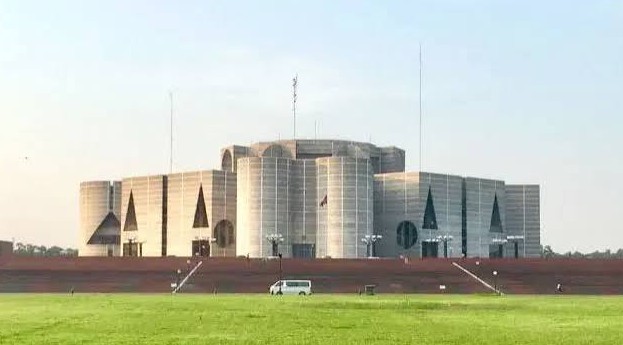
Symbolic Photo
The third session of the 13th Jatiya Sangsad is set to begin tomorrow, Thursday, with the session scheduled to start at 3pm. Several bills, including draft laws on preventing and addressing enforced disappearances and the National Human Rights Commission, are expected to be placed before Parliament.
The two draft laws have already sparked debate and criticism from various quarters. As a result, heated discussions are likely in Parliament over the bills. Issues such as the ongoing electricity and gas crises and fertilizer shortages could also lead to tense exchanges during the session.
Sessions convened around this time of year are generally not very long. The Business Advisory Committee of Parliament will determine the duration of the session before it begins.
Sources at the Parliament Secretariat said several bills may be introduced and passed during the session. So far, three bills, including the Enforced Disappearance Prevention and Redress Bill and the National Human Rights Commission Bill, have been submitted to the relevant section of the Parliament Secretariat. Several more bills are expected to be submitted. Overall, the session could continue for 10 to 11 working days.
During the tenure of the interim government, 133 ordinances were issued. In accordance with parliamentary rules, these were placed before Parliament at the first sitting of the first session of the 13th Parliament on March 12. The deadline for approving or rejecting the ordinances was April 10.
Sixteen ordinances were not converted into bills within the stipulated timeframe and consequently lost their legal effect. Another seven ordinances were repealed through repeal bills.
The government had said the 16 ordinances including those concerning the prevention of enforced disappearances, the Police Commission and amendments to the Anti-Corruption Commission law that were not placed before Parliament as bills within the deadline would be reviewed further before new bills were drafted. The draft law on preventing and addressing enforced disappearances is one of them.
Meanwhile, during the first session of the current Parliament, bills were passed to repeal three ordinances related to the National Human Rights Commission and revive the National Human Rights Commission Act, 2009. At the time, the government said the law would be further reviewed and strengthened.
On August 3, the Cabinet approved the draft Enforced Disappearance Prevention and Redress Act, while the draft National Human Rights Commission Act was approved on August 10.
Following approval of the two drafts, human rights activists, political parties and other stakeholders expressed concerns over several provisions. The drafts have also faced criticism on various grounds.
Transparency International Bangladesh (TIB), in a statement on August 12, said the two draft laws contained several positive provisions. However, it noted that provisions previously identified by stakeholders as potential obstacles to the independent and effective functioning of the National Human Rights Commission had been retained.
TIB also said the draft law on enforced disappearances retained several provisions that could facilitate impunity. It criticized the decision to place investigations into enforced disappearance cases solely under the police while keeping the National Human Rights Commission outside the investigation process.
The National Citizen Party (NCP), in a statement, said it believed the draft law on preventing and addressing enforced disappearances would perpetuate a culture of impunity and denial.
At a roundtable organized by the NCP’s Reform Implementation Committee, participants alleged that the draft law would weaken the Human Rights Commission’s authority to conduct independent investigations. They also argued that assigning investigations into enforced disappearance allegations to law enforcement agencies could hinder impartial investigations into allegations against state forces.
The two controversial bills are expected to be introduced during the upcoming session and could also be passed during the same session. Opposition sources have indicated that this could lead to heated debates in Parliament.
Normally, after the Cabinet approves a draft law, the relevant minister introduces it in Parliament as a bill. The bill is then sent to the relevant parliamentary standing committee for review and a report.
After the committee submits its report, the minister moves a motion in Parliament for consideration and passage of the bill. At this stage, lawmakers may propose sending the bill to a committee for further scrutiny and public consultation, and they are also allowed to speak in support of their proposals.
Lawmakers can subsequently propose amendments to the bill and participate in debates over those amendments.
Beyond regular parliamentary activities such as legislation, question-and-answer sessions and notices seeking the Speaker’s attention to matters of public importance, the session is also expected to see the formation of parliamentary standing committees related to different ministries.
Parliament has a total of 50 standing committees. So far in the current Parliament, 15 committees have been formed six subject-based committees and nine ministry-related committees.
Under the Rules of Procedure, the new Parliament is required to form ministry-related standing committees within its first three sessions. The remaining 35 parliamentary committees are expected to be formed during this session.
Abdul Moyeen Khan and Andalib Rahman Partha were previously appointed chairmen of the standing committees on the Planning Ministry and Law Ministry, respectively. As both have since taken oath as ministers, those two committees will also need to be reconstituted.
-HIS
Loading...
Loading...
Also read





Editor : Iqbal Sobhan Chowdhury
Published by the Editor on behalf of the Observer Ltd. from Globe Printers, 24/A, New Eskaton Road, Ramna, Dhaka.
Editorial, News and Commercial Offices : Aziz Bhaban (2nd floor), 93, Motijheel C/A, Dhaka-1000.
Phone: PABX- 41053001-06; Advertisement: 41053012; 01793317829, 01550707291, E-mail: [email protected], [email protected] Online: email: [email protected] 41053014; 01550707297 Advertisement: 01550707296
Published by the Editor on behalf of the Observer Ltd. from Globe Printers, 24/A, New Eskaton Road, Ramna, Dhaka.
Editorial, News and Commercial Offices : Aziz Bhaban (2nd floor), 93, Motijheel C/A, Dhaka-1000.
Phone: PABX- 41053001-06; Advertisement: 41053012; 01793317829, 01550707291, E-mail: [email protected], [email protected] Online: email: [email protected] 41053014; 01550707297 Advertisement: 01550707296


