



| HEADLINE |

|

Chattogram’s 'Kanchan Guava' earns Tk 6cr in season, finds overseas markets
Published : Tuesday, 25 August, 2026 at 2:41 PM
Observer Online Report


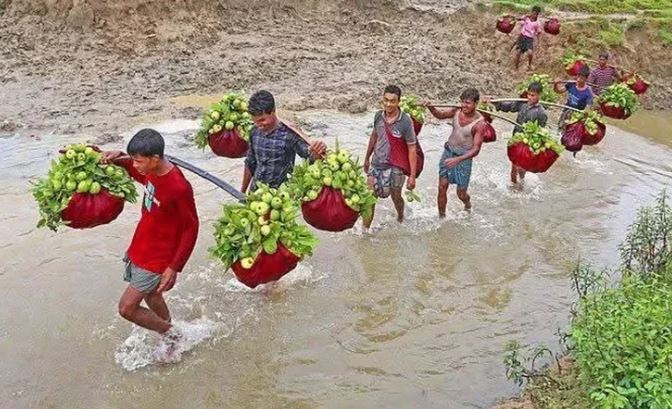
Collected Photo
'Kanchan Guava' cultivated in 830 acres of hilly terrain of Chandanaish and Patiya upazilas in Chattogram has begun arriving in local markets generating seasonal sales of over Tk six crore for farmers.
The reputation of the traditional 'Kanchan Guava' has transcended national boundaries. Its unmatched flavor, appealing color, distinctive fruit shape, and prolonged freshness have enabled this guava to secure a position in international markets.
Since early August, Kanchan Guava has been observed for sale in various locations throughout Chattogram.
Thanks to a bountiful harvest, farmers are actively engaged in collecting guava from their orchards and selling it to traders. Wholesalers from various regions, including Dhaka, Chattogram, Cumilla, Feni, Noakhali, Sylhet, Khulna, and Rajshahi, are sourcing guavas directly from the fields.
Moreover, these guavas from Chandanaish-Patiya are being exported to several countries worldwide, including Saudi Arabia, the United Arab Emirates, Oman, Qatar, and Kuwait in the Middle East.
This development has not only brought joy to farmers but has also created new opportunities for the agricultural economy of the country.
Local farmers, traders, and exporters have noted that Kanchan guava, grown in fertile soil and under favorable climatic conditions, has long been celebrated nationwide for its exceptional taste and quality.
Mohammad Ismail Chowdhury Hanif, proprietor of Chattogram Foods and Vegetables, a fruit and vegetable exporting company, said that although the demand for ‘Kanchan guava’ in the foreign market has increased, there are several structural limitations in the export process.
‘Kanchan guava’ has been exported abroad for about 10-15 years. About Tk 1.5 to two crore of ‘Kanchan guava’ and other varieties of guava are exported annually.
He said it is important to modernize the entire system from production to marketing aimed at fully establish ‘Kanchan guava’ as an exportable agricultural product.
To this end, he said emphasize has to be given on mainly two aspects - international standard packaging system, storage facilities and cold chain infrastructure.
“Without these, exports will not increase as per the potential. If an international standard 'packing house' is built from Chattogram Shah Amanat International Airport for the export of quality vegetables and fruits, it is possible to increase the amount of exports many times,” he said.
Runa Saha, Assistant Professor of the Department of Economics, University of Chattogram, said, 'If the export of agricultural products increases, it will create opportunities to earn foreign exchange.
On the other hand, it will increase jobs and farmers' income at the local level. It is known from talking to the agricultural office and local farmers that this guava has changed the lives of thousands of farmers and has also cut the unemployment problems.
In addition to Kanchannagar in Chandanaish, guava is cultivated in approximately 2,000 gardens spanning 750 hectares across various hilly regions, including Dhopachhari, Hashimpur, Jungle Hashimpur, Allahabad, Dohazari, and Jungle Jamizuri in the upazila.
Besides, around 80 hectares of land in the hilly areas of Shrimai, Kharna, and Haidgaon in Patiya upazila are also dedicated to guava cultivation. As guava is grown without the use of pesticides, the produce can be classified as organic guava.
Local guava farmers assert that the fruit is nutrient-rich and possesses a distinctive flavor. It is sweet, contains very few hard seeds, and is visually appealing.
When ripe, the flesh can be white, yellow, or reddish. The term 'Kanchan Guava' originates from the fact that this particular variety was first cultivated in Kanchannagar village of Chandanaish upazila in Chattogram.
This guava has bestowed a unique identity upon the village, which is now recognized as 'Guava Village,' and the fruit has achieved renown as 'Kanchan Guava.'
The cultivation of guava has since expanded to the adjacent upazila of Patiya and the surrounding hilly regions.
Farmer Jane Alam from Chandanaish said, “I have cultivated guava on approximately 8 acres of land. Ten workers are employed in the garden, earning between Tk 600-800 each”.
“A basket contains around 250 guavas. At the start of the current season, a pair of guava baskets was sold for Tk 2,500. However, the price tends to decline as the season progresses,” he added.
Farmer Sagir Ahmed noted that with diligent effort and proper garden maintenance, one can earn up to Tk 150,000 per acre during the season. If one works earnestly in the garden, it is possible to achieve profits that are double the initial investment.
In this context, he said due to the perishable nature of guava, farmers are unable to secure a reasonable price.
“After harvesting from the garden, it is imperative to sell the guava promptly. The establishment of cold storage facilities is essential for preserving guava in the region,” he added.
Rabiul Hossain, a guava farmer from Kharna village in Patiya, remarked that the lands that were previously used for Jum cultivation are now being effectively utilized for guava farming.
“This fruit is in high demand in remote areas. Although discussions have taken place regarding the construction of cold storage by the upazila administration, no tangible progress has been made yet," he said.
Local school teacher Subhash Mallick noted that during the guava season, temporary markets for guava are set up at various locations within the upazila, including Kanchannagar in Chandanaish, Kanchannagar Railway Station, in front of BGC Trust University, Khanhat, Gachbaria College Gate, Badamtal, Rawshan Hat, Bagicha Hat, Dohazari, Kamal Munshir Hat, and Kharna bus stand in Patiya. Wholesale traders frequently visit these markets.
Chandanaish Upazila Agriculture Officer Md. Azad Hossain said, "The agricultural office provides ongoing advice and technical support to farmers.”
The reputation of the traditional 'Kanchan Guava' has transcended national boundaries. Its unmatched flavor, appealing color, distinctive fruit shape, and prolonged freshness have enabled this guava to secure a position in international markets.
Since early August, Kanchan Guava has been observed for sale in various locations throughout Chattogram.
Thanks to a bountiful harvest, farmers are actively engaged in collecting guava from their orchards and selling it to traders. Wholesalers from various regions, including Dhaka, Chattogram, Cumilla, Feni, Noakhali, Sylhet, Khulna, and Rajshahi, are sourcing guavas directly from the fields.
Moreover, these guavas from Chandanaish-Patiya are being exported to several countries worldwide, including Saudi Arabia, the United Arab Emirates, Oman, Qatar, and Kuwait in the Middle East.
This development has not only brought joy to farmers but has also created new opportunities for the agricultural economy of the country.
Local farmers, traders, and exporters have noted that Kanchan guava, grown in fertile soil and under favorable climatic conditions, has long been celebrated nationwide for its exceptional taste and quality.
Mohammad Ismail Chowdhury Hanif, proprietor of Chattogram Foods and Vegetables, a fruit and vegetable exporting company, said that although the demand for ‘Kanchan guava’ in the foreign market has increased, there are several structural limitations in the export process.
‘Kanchan guava’ has been exported abroad for about 10-15 years. About Tk 1.5 to two crore of ‘Kanchan guava’ and other varieties of guava are exported annually.
He said it is important to modernize the entire system from production to marketing aimed at fully establish ‘Kanchan guava’ as an exportable agricultural product.
To this end, he said emphasize has to be given on mainly two aspects - international standard packaging system, storage facilities and cold chain infrastructure.
“Without these, exports will not increase as per the potential. If an international standard 'packing house' is built from Chattogram Shah Amanat International Airport for the export of quality vegetables and fruits, it is possible to increase the amount of exports many times,” he said.
Runa Saha, Assistant Professor of the Department of Economics, University of Chattogram, said, 'If the export of agricultural products increases, it will create opportunities to earn foreign exchange.
On the other hand, it will increase jobs and farmers' income at the local level. It is known from talking to the agricultural office and local farmers that this guava has changed the lives of thousands of farmers and has also cut the unemployment problems.
In addition to Kanchannagar in Chandanaish, guava is cultivated in approximately 2,000 gardens spanning 750 hectares across various hilly regions, including Dhopachhari, Hashimpur, Jungle Hashimpur, Allahabad, Dohazari, and Jungle Jamizuri in the upazila.
Besides, around 80 hectares of land in the hilly areas of Shrimai, Kharna, and Haidgaon in Patiya upazila are also dedicated to guava cultivation. As guava is grown without the use of pesticides, the produce can be classified as organic guava.
Local guava farmers assert that the fruit is nutrient-rich and possesses a distinctive flavor. It is sweet, contains very few hard seeds, and is visually appealing.
When ripe, the flesh can be white, yellow, or reddish. The term 'Kanchan Guava' originates from the fact that this particular variety was first cultivated in Kanchannagar village of Chandanaish upazila in Chattogram.
This guava has bestowed a unique identity upon the village, which is now recognized as 'Guava Village,' and the fruit has achieved renown as 'Kanchan Guava.'
The cultivation of guava has since expanded to the adjacent upazila of Patiya and the surrounding hilly regions.
Farmer Jane Alam from Chandanaish said, “I have cultivated guava on approximately 8 acres of land. Ten workers are employed in the garden, earning between Tk 600-800 each”.
“A basket contains around 250 guavas. At the start of the current season, a pair of guava baskets was sold for Tk 2,500. However, the price tends to decline as the season progresses,” he added.
Farmer Sagir Ahmed noted that with diligent effort and proper garden maintenance, one can earn up to Tk 150,000 per acre during the season. If one works earnestly in the garden, it is possible to achieve profits that are double the initial investment.
In this context, he said due to the perishable nature of guava, farmers are unable to secure a reasonable price.
“After harvesting from the garden, it is imperative to sell the guava promptly. The establishment of cold storage facilities is essential for preserving guava in the region,” he added.
Rabiul Hossain, a guava farmer from Kharna village in Patiya, remarked that the lands that were previously used for Jum cultivation are now being effectively utilized for guava farming.
“This fruit is in high demand in remote areas. Although discussions have taken place regarding the construction of cold storage by the upazila administration, no tangible progress has been made yet," he said.
Local school teacher Subhash Mallick noted that during the guava season, temporary markets for guava are set up at various locations within the upazila, including Kanchannagar in Chandanaish, Kanchannagar Railway Station, in front of BGC Trust University, Khanhat, Gachbaria College Gate, Badamtal, Rawshan Hat, Bagicha Hat, Dohazari, Kamal Munshir Hat, and Kharna bus stand in Patiya. Wholesale traders frequently visit these markets.
Chandanaish Upazila Agriculture Officer Md. Azad Hossain said, "The agricultural office provides ongoing advice and technical support to farmers.”
“If jam and jelly producers establish long-term contracts with guava farmers, the latter will receive a fair price. The guava production in Chandnaish and Patiya surpasses the market price of Tk 6 crore each season, according to the agricultural worker.
-AJM
Loading...
Loading...
Also read








Editor : Iqbal Sobhan Chowdhury
Published by the Editor on behalf of the Observer Ltd. from Globe Printers, 24/A, New Eskaton Road, Ramna, Dhaka.
Editorial, News and Commercial Offices : Aziz Bhaban (2nd floor), 93, Motijheel C/A, Dhaka-1000.
Phone: PABX- 41053001-06; Advertisement: 41053012; 01793317829, 01550707291, E-mail: [email protected], [email protected] Online: email: [email protected] 41053014; 01550707297 Advertisement: 01550707296
Published by the Editor on behalf of the Observer Ltd. from Globe Printers, 24/A, New Eskaton Road, Ramna, Dhaka.
Editorial, News and Commercial Offices : Aziz Bhaban (2nd floor), 93, Motijheel C/A, Dhaka-1000.
Phone: PABX- 41053001-06; Advertisement: 41053012; 01793317829, 01550707291, E-mail: [email protected], [email protected] Online: email: [email protected] 41053014; 01550707297 Advertisement: 01550707296


