



| HEADLINE |

|

Bangladesh's Energy Crisis
A Nation Running Out of Power, Policy and Time
Import dependence, shrinking gas reserves and geopolitical shocks have pushed Bangladesh into its most dangerous energy emergency in years
Published : Saturday, 22 August, 2026 at 12:00 AM
F&E Analysis


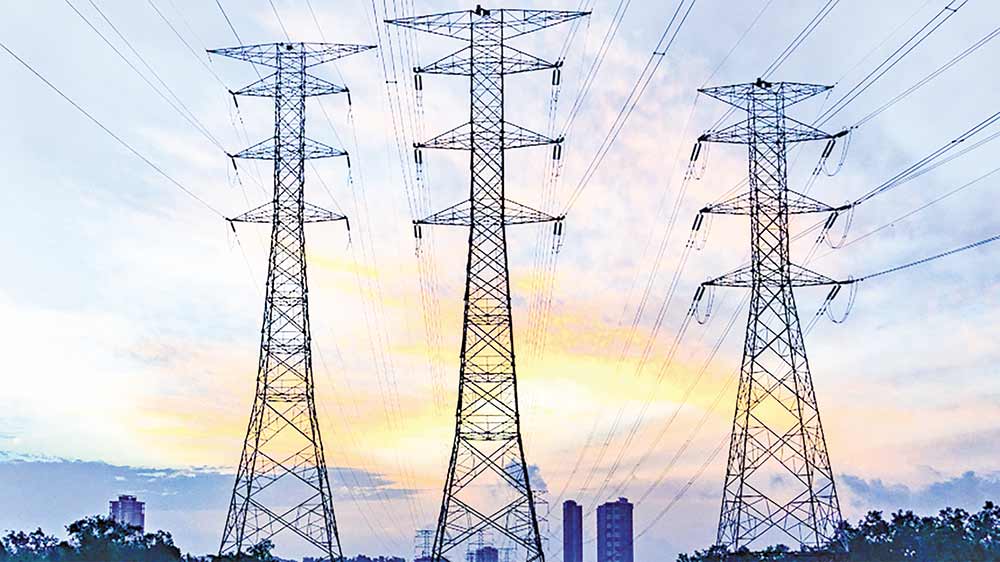 Bangladesh is once again in the grip of a crippling energy crisis.
 From rolling blackouts and fuel shortages to soaring electricity costs and an economy struggling to keep its engines running, the country is paying a heavy price for years of policy failures, declining domestic gas production and overwhelming dependence on imported fuel.
The latest crisis did not begin in Dhaka. It began thousands of miles away in the Middle East, where renewed geopolitical tensions disrupted global oil markets and threatened one of the world's most vital energy routes. For Bangladesh-a country that imports nearly all of its petroleum fuel and a growing share of its liquefied natural gas (LNG)-the shock has quickly turned into a national emergency.
The government has already imposed electricity-saving measures, reduced business hours and sought additional diesel supplies from India. These emergency actions reveal a painful reality: Bangladesh's energy security has become dangerously fragile.
For decades, Bangladesh relied on abundant domestic natural gas to power industries, generate electricity and fuel economic growth. That advantage is disappearing rapidly. Production from major gas fields has been falling while demand has continued to rise with industrialisation, urbanisation and a population of more than 170 million.
Instead of discovering enough new gas reserves, Bangladesh increasingly turned to imported LNG, coal and furnace oil. Today, about 95 per cent of petroleum demand comes from imports, exposing the economy to every fluctuation in international energy prices and every geopolitical conflict.
This dependence has become Bangladesh's biggest strategic weakness.
The country's foreign exchange reserves, already strained by high import bills and weaker export earnings, have made the situation even worse. Energy imports require billions of dollars every year. When reserves come under pressure, Bangladesh cannot purchase enough fuel or LNG, forcing power plants to operate below capacity and increasing load shedding across the country.
The result is a vicious cycle. Expensive fuel imports weaken reserves, weaker reserves reduce fuel purchases, reduced fuel purchases create electricity shortages, and electricity shortages slow economic activity.
The crisis is no longer confined to households sitting in darkness. It has spread across factories, farms, transport networks and financial markets.
Garment factories and export-oriented industries have reported interruptions in gas supply, forcing many plants to reduce production or rely on expensive diesel generators. Small and medium-sized enterprises are struggling to absorb higher energy costs while maintaining competitiveness in global markets.
Transport operators face higher diesel prices, increasing logistics costs that eventually raise the prices of food and consumer goods. Inflation, already a major concern, receives another push from rising fuel and electricity costs.
Every litre of imported diesel now carries not only an international price but also the burden of Bangladesh's weakening currency and foreign exchange shortages.
The geopolitical dimension of the crisis is equally alarming. Much of Bangladesh's imported crude oil and LNG travels through the Strait of Hormuz, a narrow maritime corridor that handles a significant share of global oil exports. Any disruption there immediately threatens supplies to energy-importing nations across Asia.
Fearing prolonged supply disruptions, Dhaka has formally requested additional diesel from India beyond the existing bilateral supply arrangement through the India-Bangladesh Friendship Pipeline. New Delhi is reportedly considering the request, highlighting how energy has become both an economic necessity and a diplomatic bargaining tool.
Bangladesh's growing dependence on neighbouring countries for emergency fuel supplies underscores a broader question: can a fast-growing economy remain energy-secure while relying overwhelmingly on imported fossil fuels?
The answer increasingly appears uncertain.
The roots of today's crisis also lie in years of inconsistent energy planning. Bangladesh expanded electricity generation capacity dramatically over the past decade, but much of that capacity depends on imported fuel. Several plants remained underutilised because fuel was unavailable or too expensive, while the government continued paying capacity charges to idle power plants, creating a significant fiscal burden.
Meanwhile, investment in domestic gas exploration lagged behind demand. Offshore exploration in the Bay of Bengal progressed slowly despite considerable potential, and renewable energy remained a small contributor to the national power mix.
The country effectively built power plants before securing long-term fuel security. That strategic mismatch has now become painfully visible.
Bangladesh's energy crisis should serve as a wake-up call rather than another temporary emergency managed through rationing and subsidies. The country needs a comprehensive energy reset.
Accelerating offshore and onshore gas exploration is essential. Renewable energy-particularly solar power-must move from policy speeches to large-scale implementation. Energy efficiency should become a national priority in industries, transport and urban infrastructure. Strategic petroleum reserves need expansion so Bangladesh can withstand global supply disruptions without immediate panic.
Most importantly, energy policy must become less dependent on short-term imports and more focused on long-term resilience.
Bangladesh aspires to become an upper-middle-income economy, but that ambition cannot be achieved with an energy system vulnerable to every geopolitical tremor. Reliable and affordable energy is the foundation of industrial growth, investment, exports and employment.
The current crisis is therefore much more than a shortage of diesel or electricity. It is a test of Bangladesh's economic resilience, policy credibility and national security.
The lights may return after the present emergency subsides. But unless Bangladesh reforms the foundations of its energy strategy, the next global oil shock could once again plunge the nation into darkness-and this time, the economic cost could be far greater.
Loading...
Loading...
Also read



Editor : Iqbal Sobhan Chowdhury
Published by the Editor on behalf of the Observer Ltd. from Globe Printers, 24/A, New Eskaton Road, Ramna, Dhaka.
Editorial, News and Commercial Offices : Aziz Bhaban (2nd floor), 93, Motijheel C/A, Dhaka-1000.
Phone: PABX- 41053001-06; Advertisement: 41053012; 01793317829, 01550707291, E-mail: [email protected], [email protected] Online: email: [email protected] 41053014; 01550707297 Advertisement: 01550707296
Published by the Editor on behalf of the Observer Ltd. from Globe Printers, 24/A, New Eskaton Road, Ramna, Dhaka.
Editorial, News and Commercial Offices : Aziz Bhaban (2nd floor), 93, Motijheel C/A, Dhaka-1000.
Phone: PABX- 41053001-06; Advertisement: 41053012; 01793317829, 01550707291, E-mail: [email protected], [email protected] Online: email: [email protected] 41053014; 01550707297 Advertisement: 01550707296


