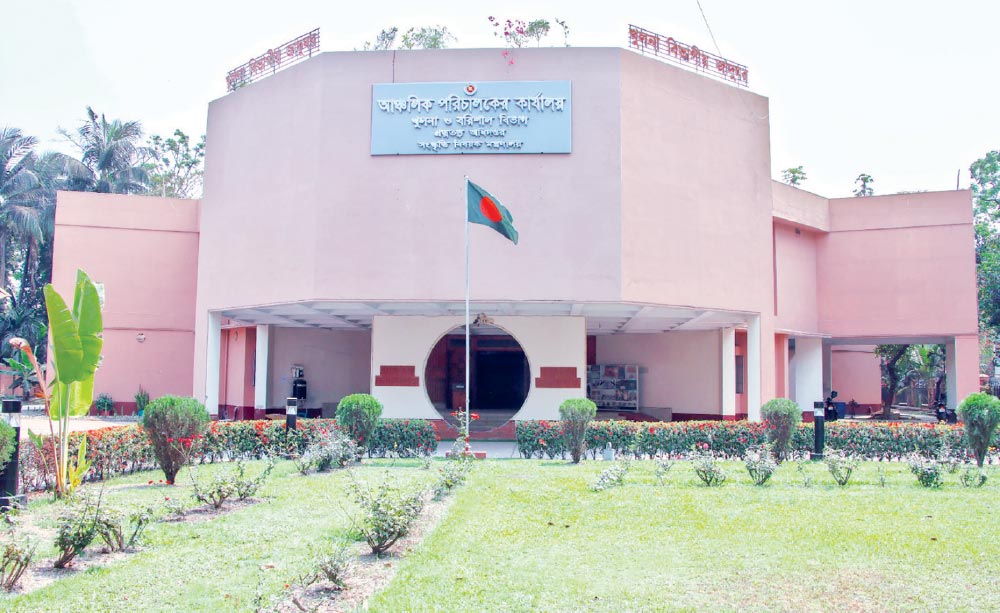
KHULNA, June 18: The Khulna Divisional Museum has been playing a significant role in preserving and showcasing the archaeological heritage, culture and history of southern Bangladesh, attracting visitors of all ages every day.
Located near the bustling Shibbari intersection, the museum is housed in a specially designed octagonal building with six exhibition galleries, offering visitors an immersive journey through time.
The Khulna Divisional Museum, inaugurated on September 12, 1998, by the Bangladesh Archaeological Department, serves as an important centre for education and cultural awareness by presenting valuable archaeological collections from different periods of the region’s history.
During a visit on Wednesday, this correspondent talked with some visitors. One of them, Sonia Rahman, a student of Bangla Discipline at Khulna University and hailing from Amtoli Upazila of Barguna District, said, “I heard the story from my school teacher mother about the history of Bharat Bhayana Buddhist Temple. But I knew the history about the temple and various historical mosques, including Khanjahan Ali.”
Fatema-Tuz-Zohra, a student of the Mass Communication and Journalism Department at Northern University of Business and Technology Khulna, said, “We are not only learning history from books, but also experiencing and understanding it directly through these artefacts.”
A museum curator said the institution’s goal is not only to preserve historical objects but also to make the younger generation aware of their roots and cultural identity.
Regional Director of Khulna Divisional Museum Md Mahidul Islam said to The Daily Observer that the museum has been established on one acre of land and regularly receives both local and foreign visitors. The museum houses a rich collection of archaeological artifacts from the Gupta, Pal, Sen, Mughal and British periods, including terracotta objects, stone sculptures, replicas of ancient coins, household utensils and a dedicated Sundarban Gallery.
He also said, the exhibits include decorated terracotta bricks, inscriptions, and pottery, stamped and cast coins, glazed tiles, Arabic and Persian manuscripts dating from the 17th to 19th centuries, a century-old wooden bed, and various metal and stone household items from the 18th and 19th centuries.
In addition to its permanent collections, the Khulna Divisional Museum hosts temporary exhibitions and cultural events throughout the year, providing visitors with new and engaging experiences.
These events often highlight local artists and contemporary themes, ensuring that each visit to the museum is unique.
Museum authorities said the museum remains closed on Sundays and for half a day on Mondays, as well as on all government holidays. It remains open to visitors on other days.





