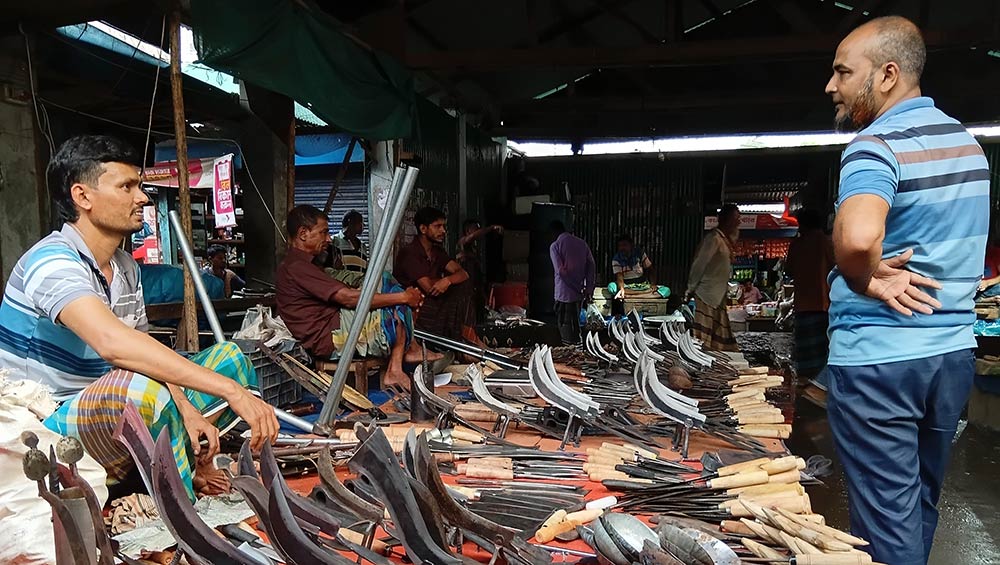
SIRAJGANJ, May 24: Blacksmiths in Sirajganj are experiencing a surge in workload ahead of Eid-ul-Azha as demand rises for essential slaughtering tools such as knives, cleavers, and choppers.
With only a few days left before the festival, the rhythmic sound of hammers has filled blacksmith workshops in both urban and rural areas, while furnaces continue to burn from morning until late night.
Across the district, over a hundred blacksmiths are now busy producing new tools and sharpening old ones as customers flock to their workshops. Many are ordering new knives and cleavers, while others are getting their old equipment sharpened for Eid preparations.
Locals say the seasonal demand has turned the blacksmith trade into an important part of the rural economy, with steady demand continuing despite the rise of modern machinery.
At Kadamtola in Salanga bazar of Ullapara, blacksmith Abdus Samad said workload increases significantly during Eid season. "From morning till night we keep working, yet it becomes difficult to complete all orders," he said.
Another blacksmith from Charabottola, Moyez Uddin, said orders for knives and cleavers increase every year ahead of Eid. "This time is no exception. We are working day and night to meet demand," he said.
At Unukha Bazar, blacksmith Saheb Ali said his workload also includes sharpening agricultural tools during harvest season. "Income increases during this period compared to the rest of the year," he added.
At Ghurka Bazar in Raiganj, blacksmith Subal Das said he charges Tk 100 for sharpening old knives, while new knives are sold between Tk 500 and Tk 1,200 depending on size.
However, blacksmith Rahij Uddin from Nolka Mor said rising raw material costs have also pushed up prices. "Iron prices have increased, so production costs are higher than before," he said.
Customers also expressed satisfaction with the service. Abdur Rahim Master from Maltinagar Village said sharp tools are essential for proper Qurbani preparations, so he visits blacksmiths every year before Eid.
Sirajganj Chamber of Commerce and Industries Director Haji Abdul Sattar said although the trade may seem small, it plays a significant role in the rural economy.
"Many families depend on this profession. While they work year-round, demand increases during harvest and Eid seasons, making it an important part of rural economic activity," he said.





