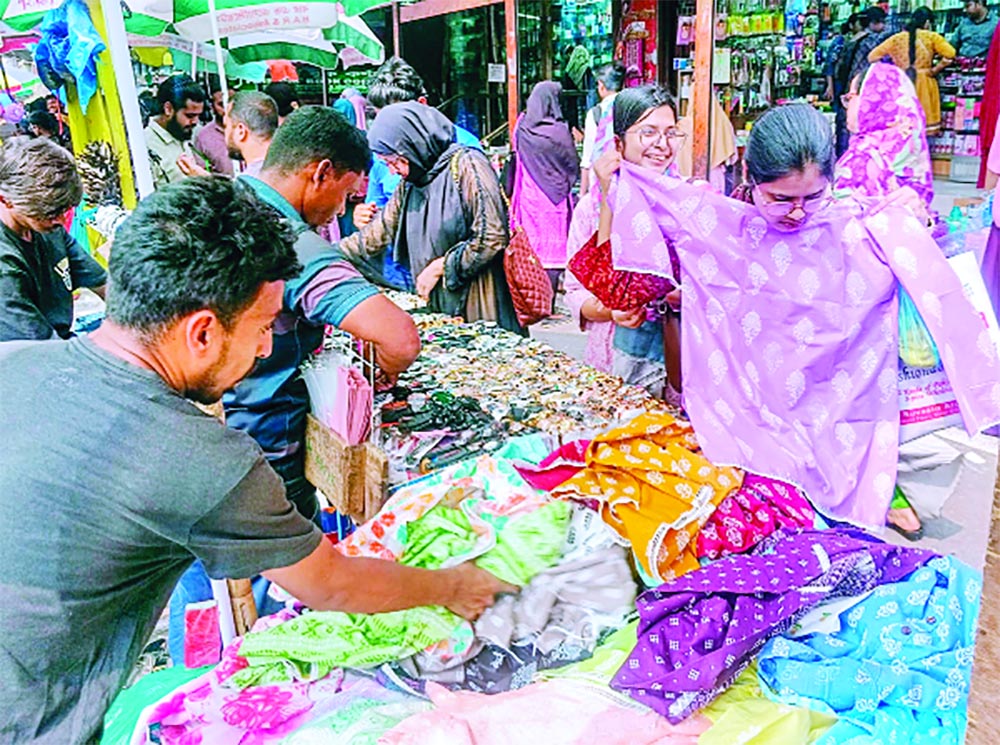
"I have the desire, but not the means. The Eid market is now beyond the reach of the lower-middle class and the poor."
With a sigh of frustration, Salma Begum, aged 55 captured the quiet struggle many families in the capital are facing as Eid approaches. Travelling from the Paltan area to the crowded lanes of New Market, she had hoped to buy new clothes for her children ahead of the festival.
Instead, she found herself repeatedly checking price tags, pausing at shop windows and reconsidering almost every purchase.
"I promised my children new dresses for Eid," she said, moving slowly through the tightly packed shops. "But when I see the prices, I feel helpless. Everything is more expensive this year."
Like Salma Begum, many families are reconsidering how they will celebrate the festival. Some urban workers are planning to spend Eid in their village homes rather than in the city, where living costs are higher and festive shopping can quickly strain family finances.
During a visit to Dhaka's major Eid markets on Friday, this correspondent found almost all shopping hubs-including New Market, Elephant Road and Bashundhara City Shopping Complex-crowded with shoppers from every walk of life.
According to both buyers and traders, the price of many garments has increased by between 10 and 20 per cent compared with last year. Retailers attribute the rise to higher transportation costs, import expenses and persistent inflation across the wider economy.
Many shoppers, however, question whether the increases are fully justified.
The ripple effects of global economic tensions are also being felt in local markets. Ongoing conflicts in the Middle East have pushed global oil prices upward, raising transportation and logistics costs worldwide. Although a significant share of clothing sold in Bangladesh is produced locally, traders say the rising cost of fuel, electricity and supply chains has inevitably driven retail prices higher.
"For wholesalers and retailers, operational costs have increased significantly," said a garment trader at New Market who requested anonymity. "Transport, electricity, shop rent and labour costs have all gone up. We are not making excessive profit; we are simply adjusting to the market reality."
For many consumers-particularly those from lower and middle-income households-such explanations offer little comfort.
Manjurul Islam, a private employee visiting the market with his wife and two children, said his Eid budget had already been stretched. "Last year I bought two dresses for my daughter at a reasonable price," he said. "This year one dress costs almost the same as two did last year."
"I will probably buy only the essential items and save the rest of the money for travel," Manjurul said. "At least in the village we can celebrate with the whole family without spending too much."
Despite the financial pressure, Dhaka's markets remain packed with shoppers. On Friday-just days before Eid-ul-Fitr-major shopping centres were crowded well beyond their usual capacity. From Saturday, many city residents are expected to begin leaving the capital to celebrate the festival with relatives in rural areas.
The Eid season is widely regarded as the busiest retail period of the year in Bangladesh, generating enormous economic activity across multiple sectors. Industry stakeholders expect that total transactions during the Eid market could exceed Tk 2 lakh crore (around USD 18-20 billion) this year under a stable political and social environment.
This year, lighter clothing suited to the summer heat appears to be dominating sales. Traders say three-piece dresses and cotton outfits are among the most sought-after items.
Many shopkeepers in major shopping malls also noted a noticeable shift in fashion trends, with a growing number of women opting for Pakistani-style dresses rather than Indian designs-marking a distinct change in consumer preferences this season.
Baby wear, men's panjabis, shirts and trousers are also selling briskly as families complete their Eid shopping.
"We are mostly looking for cotton dresses this year because of the heat," said Shamima Akter, a shopper at Elephant Road. "Prices are a bit higher than last year, so we are trying to buy only the necessary items."
Meanwhile, vendors along the pavements say their stalls are attracting customers who cannot afford the prices inside large shopping centres. Many shoppers spend hours comparing prices between branded stores and street vendors in search of more affordable options.
Market analysts say the Eid season remains a crucial economic driver, providing a temporary boost to retailers, small businesses and transport operators across the country. Yet economists warn that persistent inflation could gradually erode the purchasing power of lower and middle-income groups.





