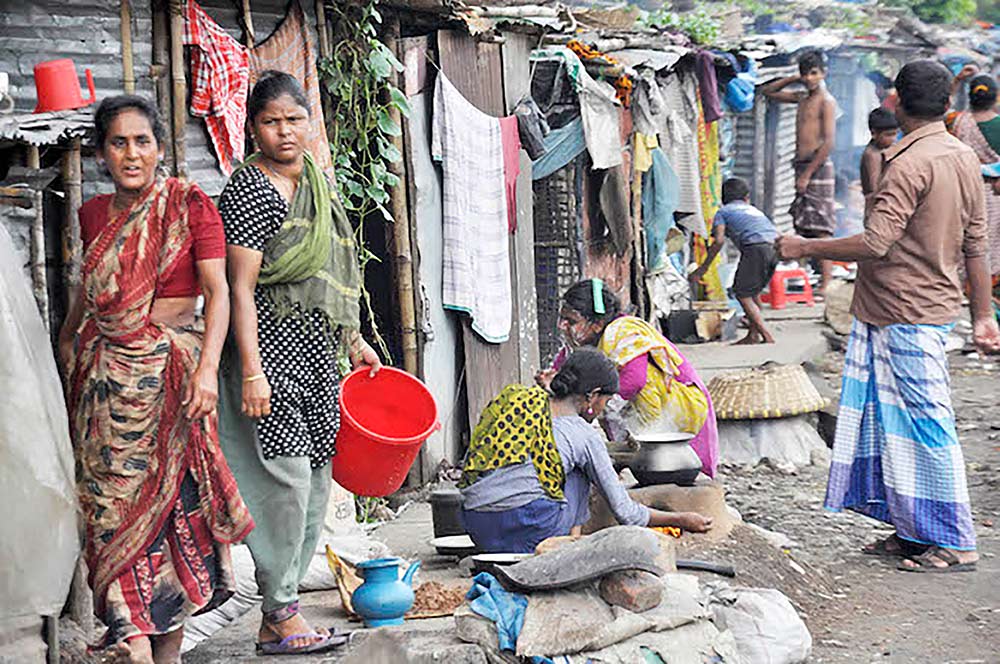
The incoming government led by BNP Chairman Tarique Rahman is set to confront a daunting economic challenge as Bangladesh grapples with a sharp reversal in its long-standing poverty reduction trajectory.
According to data from the Power and Participation Research Centre (PPRC), the national poverty rate surged to 27.93% in early 2025, marking a dramatic setback after nearly 12 years of steady decline.
The spike reflects a deepening economic crisis, characterised by double-digit inflation, stagnant wages, and widespread job losses.
Extreme poverty has nearly doubled, rising to 9.35% in 2025 from 5.6% in 2022, leaving approximately 62 million people-one-third of the population-vulnerable to falling back into poverty amid economic shocks or natural disasters.
Urban areas, particularly Dhaka, have been hit hardest: city poverty more than doubled from 8.6% in 2022 to 18.87% in 2024, exposing the strain on households amidst a shrinking labour market.
The World Bank projects the national poverty rate could rise further to 22.9%, driven by persistent inflation above 10% and the loss of roughly 2 million jobs between 2023 and 2024. Analysts warn that without urgent and targeted interventions, decades of progress-reducing poverty from 41.5% in 2006 to 18.7% in 2022-could be reversed.
To address this crisis, the Tarique Rahman-led government has unveiled a multi-pronged strategy aimed at immediate relief and structural reforms.
Central to the plan is the rollout of Family Cards, which will provide monthly stipends or subsidised essential goods to low-income households. Complementing this are Unemployment Allowances and large-scale vocational training programmes to integrate youth into IT, technical, and service sectors.
Rural economies are expected to benefit from interest-free small loans and Farmer Cards, intended to modernise agriculture, secure food supply chains, and protect farmers from climate-induced shocks.
A senior BNP official said these measures aim to strengthen "upazila and village economies," enabling households to gradually achieve self-reliance while stimulating local economic activity.
Economists stress that job creation, stabilising the Taka, and reforming the banking sector will be critical to reducing the cost of living, the principal driver of urban poverty.
The previous government had introduced a credit guarantee scheme for cottage and small enterprises, designed to revive micro-industries and urban small-scale manufacturing. However, political instability following the unrest in 2024 severely disrupted these businesses.
According to the Bangladesh Small and Cottage Enterprise Association (BSCEA), 38% of small enterprises in urban areas and 27% in rural districts suffered significant operational losses, forcing many to lay off workers or suspend operations temporarily.
Cottage and small enterprises form the backbone of Bangladesh's job market, particularly in semi-urban and rural areas.
Political uncertainty and economic shocks have amplified unemployment risks, undermining poverty reduction efforts.
The new administration has pledged to revamp the scheme, expanding credit guarantees and providing technical and financial support to vulnerable entrepreneurs.
Officials emphasise that restoring confidence in small businesses is critical not only for employment but also for sustaining domestic production and local economies in the post-election, post-pandemic context.
As Bangladesh confronts this unprecedented economic and social pressure, the government faces a monumental task: reviving the celebrated 'Bangladesh Miracle', safeguarding millions from slipping back into poverty, and restoring stability to both urban and rural economies across the country.





