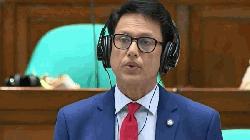
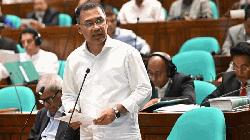
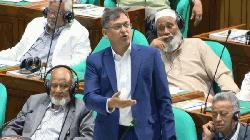
Bangladesh Nationalist Party (BNP) Chairman Tarique Rahman on Saturday said winning public trust and convincing people to cast their votes on his party's favor was the BNP’s only form of “engineering” in 13th parliamentary elections, stressing that the party succeeded by persuading people rather than manipulating the process.
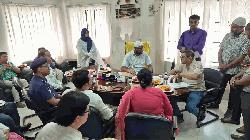
Tarique Rahman made the remarks while responding to questions at a post-election press conference at Hotel InterContinental in Dhaka, two days after the BNP secured more than a two-thirds majority in the national election and moved closer to forming the next government.
Responding to a question from New York-based journalist Khaled Mohiuddin of Thikana about whether his party engaged in vote engineering, the BNP chairman said, “Our engineering was convincing the people.”
Tarique acknowledged that the election was not easy for the BNP. He said ensuring a fair and positive electoral environment by convincing voters was the most challenging part of the campaign. “Bringing the people to our side and earning their confidence was our strategy. Alhamdulillah, we were successful,” he added.
“Any meaningful goal requires effort,” he said, adding that achieving public confidence through democratic means was inherently difficult but necessary.
Foreign Policy and Regional Relations
During the wide-ranging press conference, local and international journalists questioned Tarique on foreign policy, economic recovery and governance priorities.
Asked about Bangladesh’s relations with India, Tarique said the BNP would shape its foreign policy strictly around protecting Bangladesh’s national interests and the interests of its people.
On how a future BNP government would balance relations with India, Pakistan and China, Tarique’s party colleague Amir Khasru Mahmud Chowdhury said foreign policy would be applied equally toward all countries, without favoring any particular state.
Responding to a question from a journalist of The Independent on whether corruption cases against former prime minister Sheikh Hasina and her niece, UK MP Tulip Siddiq, would proceed, Tarique said such matters would depend on legal processes.
Governance Challenges Ahead
A journalist from Al Jazeera asked what the BNP’s biggest challenges would be after forming the government. Tarique said restoring the economy, improving law and order and depoliticizing state institutions would be among the new administration’s top priorities.
“The previous government politicized almost every institution,” he said. “Ensuring good governance will be a major task.”
China, BRI and Economic Policy
Replying to questions from Chinese journalists, Tarique said China would remain an important development partner for Bangladesh. On the Belt and Road Initiative, he said the BNP would evaluate any involvement based on whether it served Bangladesh’s economic interests.
“If it supports our economy, we will consider it. If it does not benefit the people, we will not,” he said.
Economic revival was also a key theme. Asked by the Financial Times about plans to revive a struggling economy, Tarique said a BNP government would focus on attracting investment, expanding business activity and creating new jobs.
Youth, Rule of Law and SAARC
On the role of young people, Tarique said the BNP would listen to youth voices while ensuring policies reflected the needs of all segments of society, including women, older citizens and people with disabilities.
Asked by Pakistan’s Geo News about reviving the South Asian Association for Regional Cooperation, Tarique said Bangladesh had originally played a key role in forming SAARC and that a BNP government would seek to reactivate the forum through dialogue after taking office.
On the issue of justice for Sheikh Hasina, Tarique reiterated that it would be determined by the legal system. Commitment to Democratic Economy
Addressing concerns about oligarchs and economic concentration under the previous government, Tarique said the BNP envisioned a democratic economy where businesses would operate based on merit and capability, without special privileges for select groups.
“No particular group will be given undue advantage,” he said. “Everyone will have equal opportunity to do business.”
Published by the Editor on behalf of the Observer Ltd. from Globe Printers, 24/A, New Eskaton Road, Ramna, Dhaka.
Editorial, News and Commercial Offices : Aziz Bhaban (2nd floor), 93, Motijheel C/A, Dhaka-1000. Phone: PABX- 41053001-06; Online: 41053014; Advertisement: 41053012.
E-mail: district@dailyobserverbd.com, news@dailyobserverbd.com, advertisement@dailyobserverbd.com, For Online Edition: mailobserverbd@gmail.com