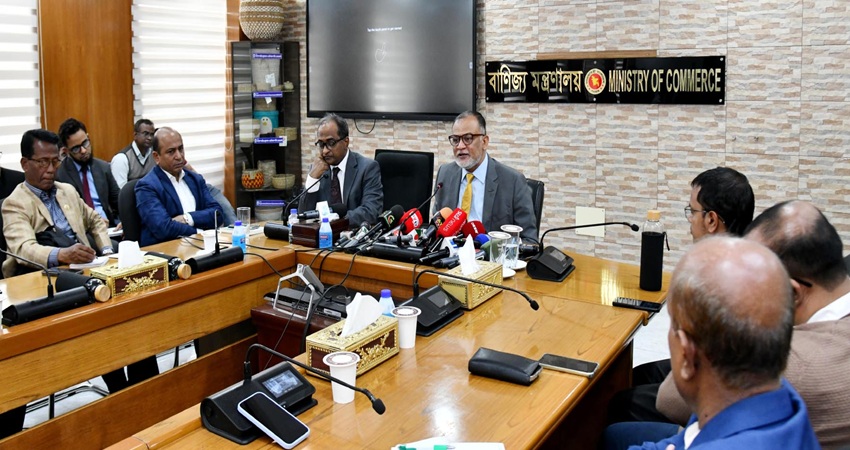
Commerce Adviser Sheikh Bashir Uddin, on Tuesday, said that the government has made significant progress in ensuring improved access for Bangladeshi exports to the United States market.
Speaking at a press conference at the Secretariat marking the signing of the Agreement on Reciprocal Trade (ART) between Bangladesh and the United States, he said that 85–86 percent of Bangladeshi export products will now enjoy zero-duty benefits in the US market, if RMG made of US cotton.
The Commerce Adviser described the US as a highly sensitive and important market for Bangladesh. He said that following negotiations, the government initially succeeded in reducing an additional tariff imposed by the US from 37 percent to 20 percent. Through further negotiations under the ART, the tariff has now been reduced to 19 percent.
As a result, Bangladeshi products exported to the US will face a reciprocal tariff of 19 percent, bringing the total tariff rate down from the previous 35 percent to 34 percent. The remaining 14–15 percent of Bangladeshi exports will be subject to this 19 percent duty.
Sheikh Bashir Uddin said one of the key outcomes of the agreement is that around 86 percent of Bangladesh’s garment exports made using US cotton will receive zero-duty access to the US market. He noted that although many garments are currently produced using artificial or synthetic fibers, the use of US cotton featured prominently in the negotiations.
Bangladesh is one of the world’s largest cotton importers, with only about 2 percent of cotton used in the garment sector produced domestically. The Commerce Adviser said that increased use of US cotton would benefit both countries and help reduce Bangladesh’s trade deficit with the United States, which currently exceeds $6 billion.
To further narrow the trade gap, Bangladesh is also considering increased imports of US agricultural products, energy products, and traditional metal scrap, he added.
The Commerce Adviser said the agreement includes an exit clause, allowing Bangladesh to withdraw with appropriate notice if any future government determines that the deal is no longer in the national interest.