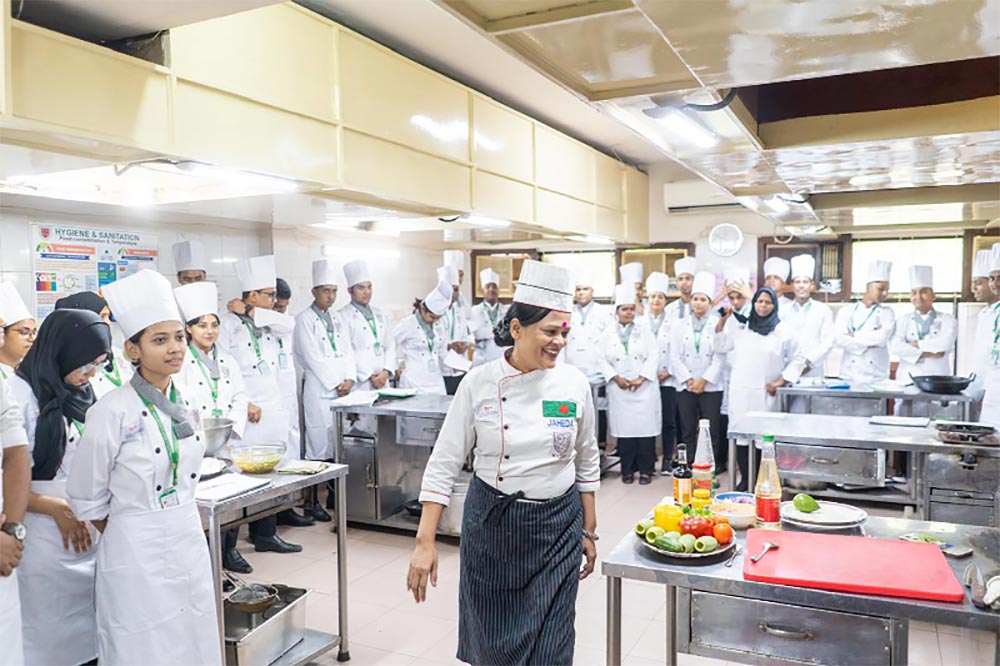
In recent years, Bangladesh has emerged as a vibrant destination on the global culinary map. From the sizzle of street-side kebabs and the crunch of fuchka to the sophisticated heritage of panta bhat and ilish bhaji, our food culture is a powerful magnet for domestic and international tourists alike. Yet, as we celebrate this gastronomic renaissance, a stark irony remains: while the Bangladeshi home kitchen is almost exclusively a woman's domain, the professional, industrial kitchen remains an overwhelmingly male bastion.
Beneath the promising landscape of culinary tourism lies a persistent gender imbalance. Current industry estimates suggest that men constitute approximately 85-90% of the formal workforce in hotels, resorts, and catering services. Women make up a mere 10-15% of professional cooks, and in senior leadership roles-such as Executive Chef or Sous Chef-they are virtually invisible.
Why are women underrepresented in a field they have historically mastered at home? The reasons are multifaceted, rooted in both culture and infrastructure.
First, there is a "cultural paradox." Traditional mindsets often view domestic cooking as "women's work" but transition to seeing professional kitchens as "men's spaces" once a salary is attached. Furthermore, the grueling nature of the industry-long hours, physically demanding labor, and late-night shifts-creates a significant hurdle for women who often bear the brunt of family responsibilities.
Beyond the clock, safety and mobility remain major concerns. Lack of secure transport for late shifts and limited access to affordable, formal vocational training often nip promising careers in the bud before they can even begin.
To transform the professional kitchen into an inclusive space, we need more than just intent; we need a targeted recipe for change.
This begins with expanding culinary training specifically for women through scholarships and subsidized programs. However, skills alone aren't enough. We must foster mentorship programs where successful female chefs can guide the next generation, breaking stereotypes and building the confidence required to lead in a high-pressure environment.
Simultaneously, the industry must modernize its HR policies. Flexible scheduling, safe working environments, and public awareness campaigns are essential to convince both families and the community that a culinary career is a prestigious, viable, and safe path for women.
The benefits of empowering women in this sector extend far beyond the restaurant floor. Culinary education is a potent tool for public health. Trained women become ambassadors of nutrition, equipped to combat malnutrition by preparing balanced, hygienic, and nutrient-rich meals for their families and communities.
Furthermore, the economic implications are global. For many marginalized women, professional culinary certification is a golden ticket to overseas employment. Female culinary professionals migrating to the Middle East, Southeast Asia, or Europe send home vital remittances that educate children and build household resilience. When they return, they bring back world-class standards that elevate our local hospitality sector.
Culinary education is, at its core, a tool for empowerment. It provides women with economic independence, social confidence, and a professional identity. As women start their own home-based food businesses, catering services, and "food trucks," they become the engine of the SME sector-the cornerstone of sustainable economic growth.
Tourism professionals have long noted that food-centered experiences increase tourist satisfaction and lengthen stays. By integrating women into this sector-as chefs, entrepreneurs, and cultural ambassadors-we enrich Bangladesh's tourism portfolio and create a more equitable society.
Jaheda Begum is the Head of Culinary Training at the National Hotel & Tourism Training Institute and a Manager at the Bangladesh Parjatan Corporation.





